 +91 88281
11034
+91 88281
11034
 Need Help?




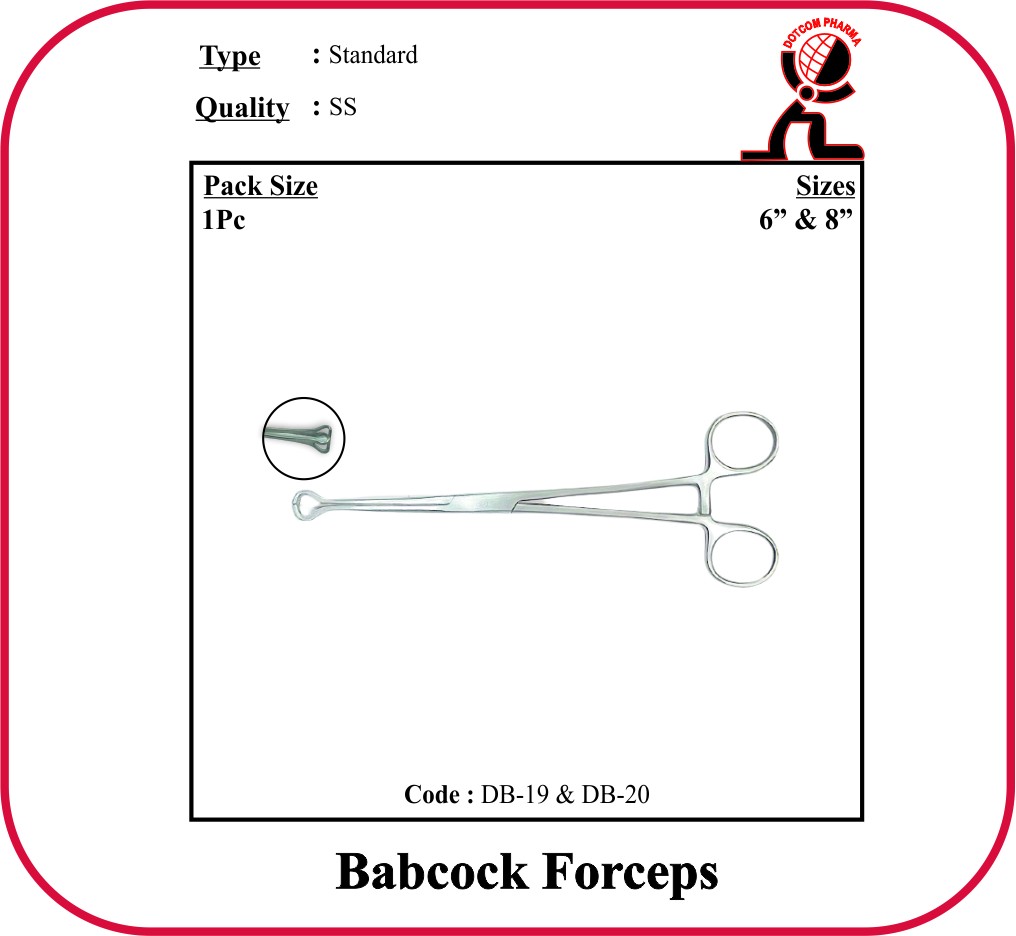
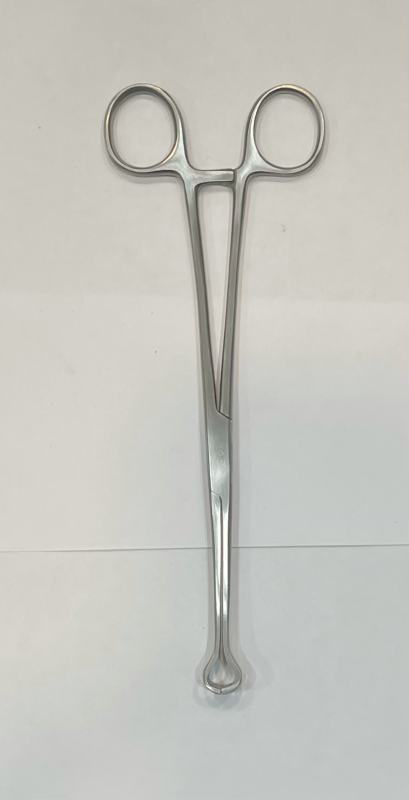
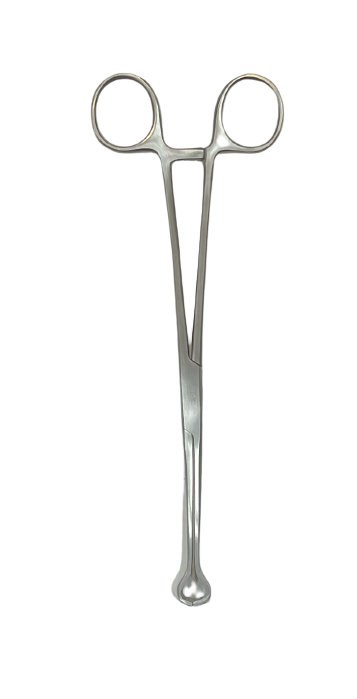
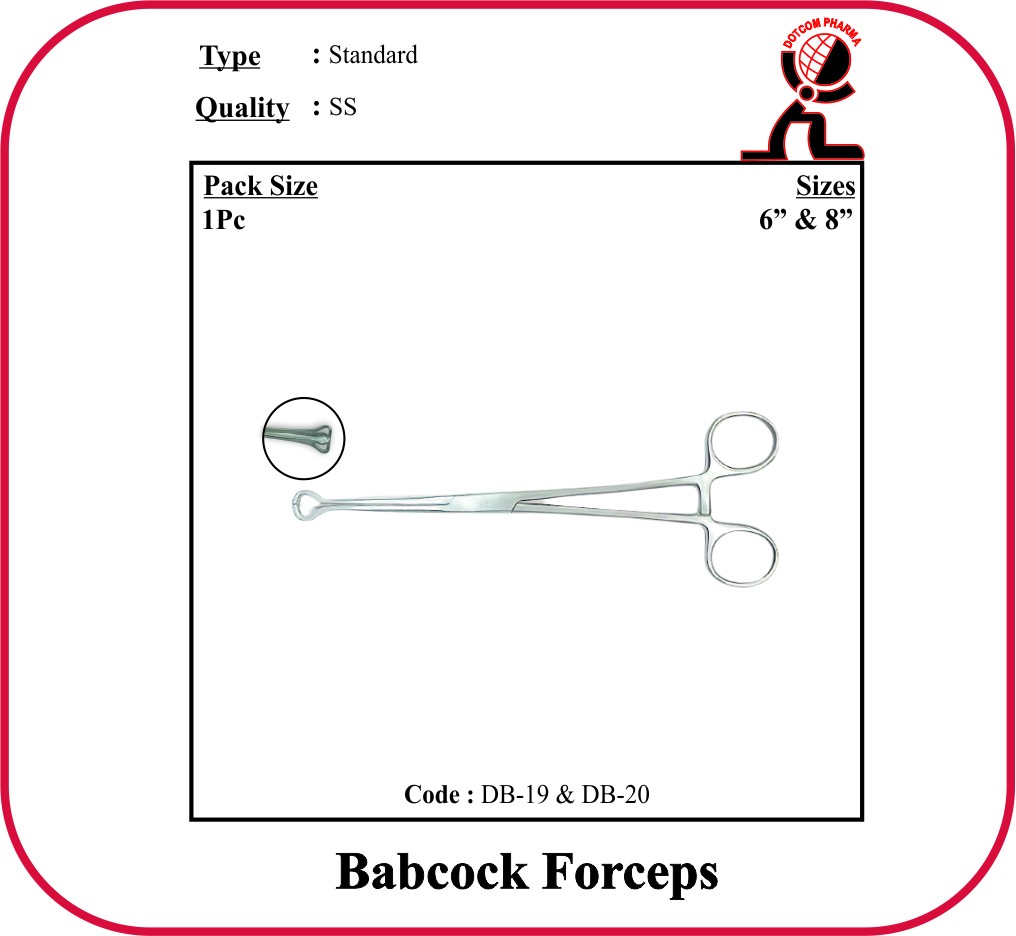
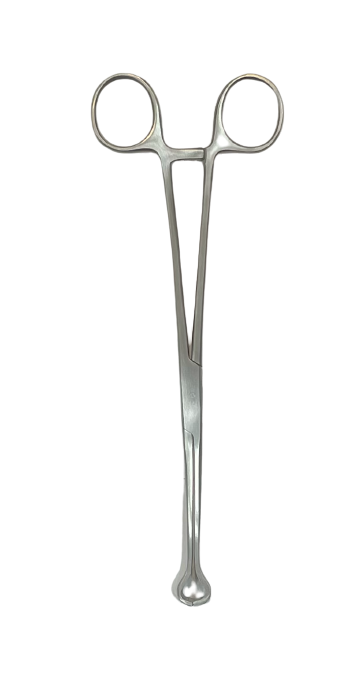
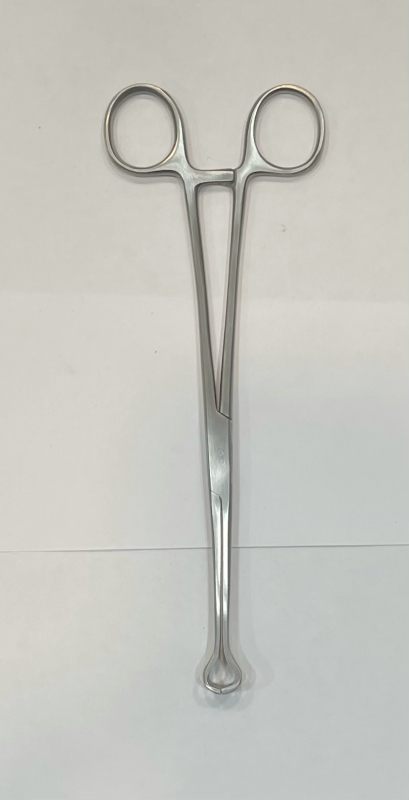
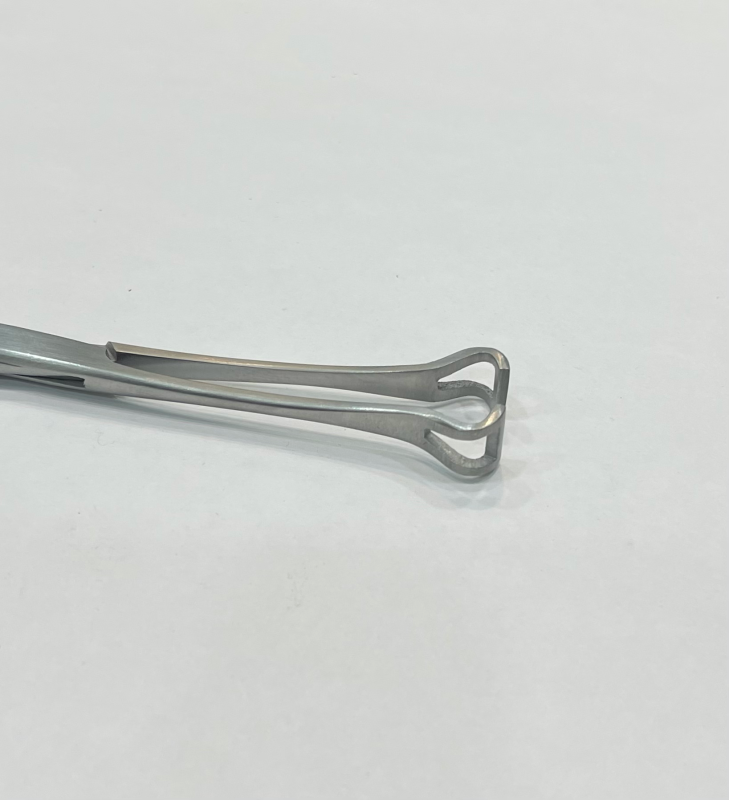
Babcook Forceps
Drug Name
: NA
Drug Role
: Atraumatic Tissue Grasping
NA
No
Ceritifcations:










Please login / register to buy or to get detailed information of the product
SKU:
Stock Available:
Batch / Lot. No:
Shelf life:
Manufacturing Date:
-
Expiry Date:
-
Minimum Pack Size:
Minimum Order Qty:
1
Pharma Categories:
Surgical Instruments
Product Form:
Forceps
Category:
Instruments
Group:
N/A
Type:
Surgical Instrument
Material:
SS
Tags
HSN Code:
7117.9090
HS Code:
9018
Country of Origin:
Imported
TAX:
5%
Qty per Piece:
Weight Of Each Piece(gm):
Piece Dimensions (L×W×H):
Qty per Buffer Box / Shrink Pack:
Weight of Buffer Box / Shrink Pack:
Buffer Dimensions (L×W×H):
Total Qty per Case:
Total Weight per Case:
Case Dimensions (L×W×H):
Weight / Volume:
Dimensions:
Inhouse product
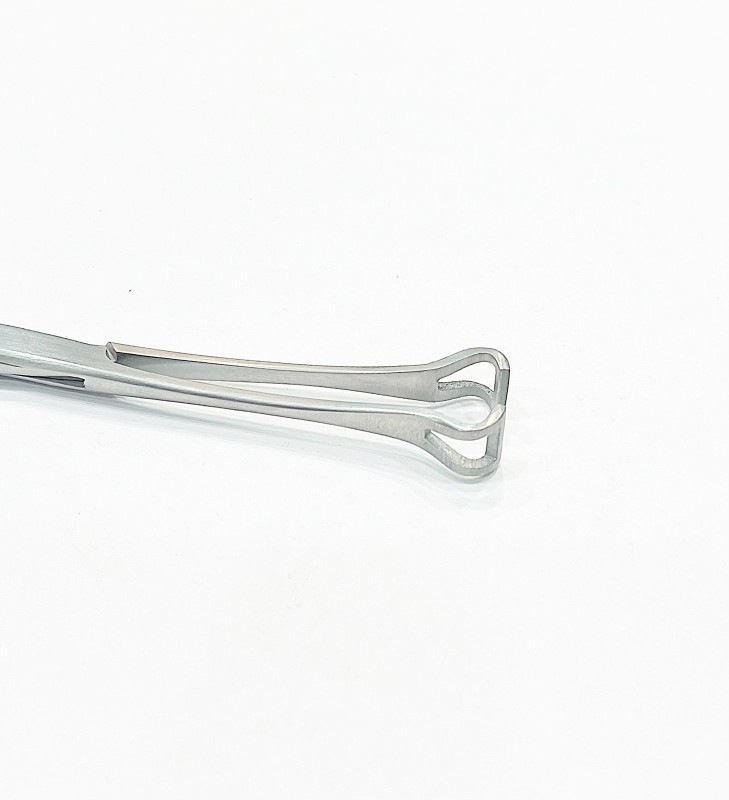
Babcock Forceps are surgical instruments used to grasp delicate, soft, or tubular tissues (like intestines or fallopian tubes) traumatically. They feature rounded, fenestrated jaws with no sharp teeth, and a ratchet lock for secure handling during procedures.
Feature Description
Instrument Name Babcock Tissue Forceps (With Lock)
Jaw Type Fenestrated (open ring), smooth edges
Locking Mechanism Ratchet-style lock
Handle Type Ring handle with thumb and finger grip
Tip Width 5 mm (laparoscopic), 8–10 mm (standard)
Length Options 6" – 10" (standard), 330 mm / 450 mm (laparoscopic)
Material Stainless Steel (medical grade)
Finish Matte / Satin (non-reflective)
Reusability Yes (Autoclavable)
Sterilization Required before each use
Type Length Application
Standard 6" – 8.25" Open surgery (GI, OB/GYN)
Laparoscopic 330 mm – 450 mm Minimally invasive surgery
Bariatric 450 mm+ Deep abdominal access
• Medical-grade stainless steel
• Non-corrosive and autoclavable/ Optional silicone-coated handles (rare)
• Category: Surgical Instruments → Grasping & Holding Instruments
• Form: Reusable hand-held instrument with locking mechanism
Used In:
• General Surgery
• Gastrointestinal (GI) procedures
• Gynaecology (fallopian tube handling)
• Urology
• Veterinary surgery (for small animal intestines or delicate organs)
Tissue Types Grasped:
• Intestines
• Appendix
• Fallopian tubes
• Bladder walls
• Soft tissue masses
• Atraumatic tissue handling – minimizes injury
• Secure locking mechanism – hands-free grip
• Multiple sizes – suitable for open and laparoscopic surgeries
• Sterilizable and reusable
• Ideal for hollow organs and tubular structures
• Not suitable for heavy or fibrous tissue
• Can cause trauma if over-tightened
• Requires proper cleaning to avoid rust or locking malfunction
• May be expensive in high-quality laparoscopic form
• Always lock gently; avoid overtightening
• Clean thoroughly after each use to prevent debris in locking ratchet
• Sterilize before every procedure
• Do not use if tips are misaligned or lock is jammed
• Cleaning: Use enzymatic cleaner after surgery
• Sterilization: Autoclave (121°C for 15–20 mins)
• Storage: In dry, sterile surgical trays
• Lubrication: Apply surgical-grade lubricant at hinge/ratchet if needed
Use Area Application Example
Human Surgery Intestinal resection, gynecology, laparoscopy
Veterinary Use Grasping intestines/organs in cats, dogs, and large animals.
Region HS/HSN Code Description
India 9018.90 Surgical instruments, others
International 9018 Instruments/appliances for medical/surgical use
Q1. Is Babcock Forceps traumatic to tissue?
No, it's designed to handle delicate tissue gently without crushing.
Q2. Can Babcock Forceps be autoclaved?
Yes, stainless steel versions are fully autoclavable.
Q3. What's the difference between Babcock and Allis forceps?
Allis has teeth (more traumatic), Babcock has smooth fenestrated jaws.
Q4. Can this be used in laparoscopic surgery?
Yes, laparoscopic Babcock forceps are available with 330–450 mm shafts.
Q5. Are locking forceps better than non-locking?
Yes, for long procedures they maintain grip without constant finger pressure.
Secure Transaction
100% secure payment
Top Brand
Trusted quality
Non Return
Due to hygiene