 +91 88281
11034
+91 88281
11034
 Need Help?



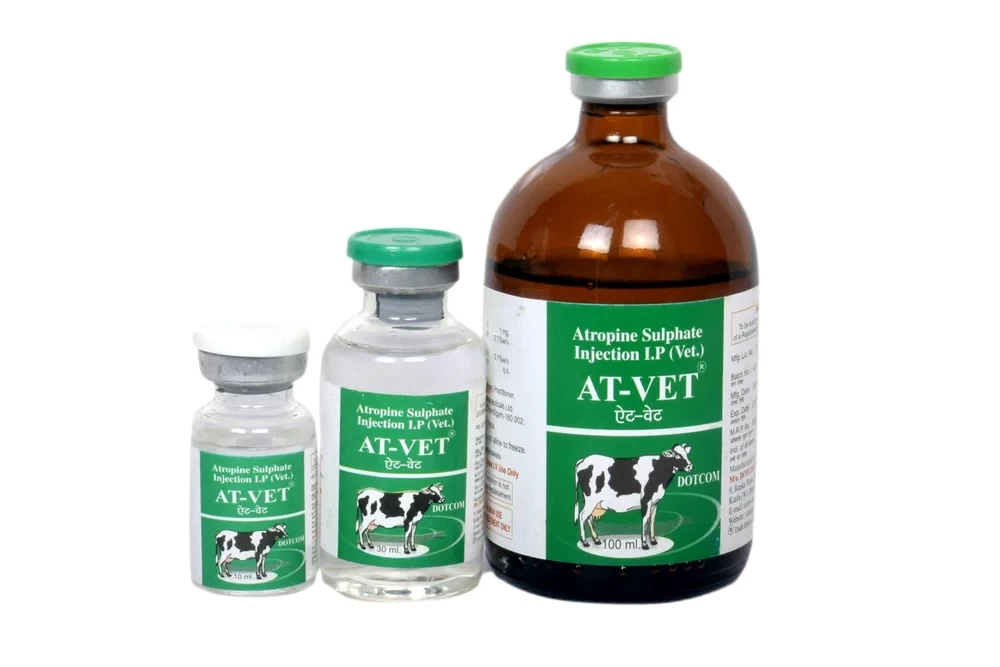
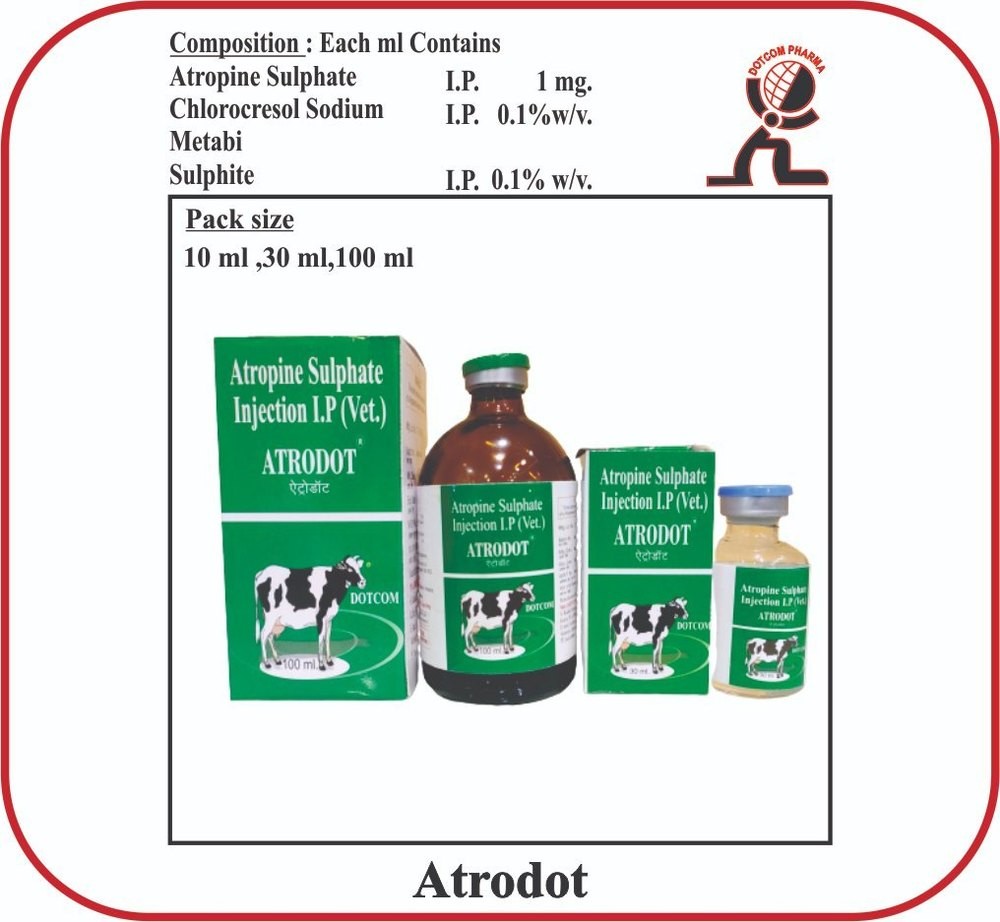
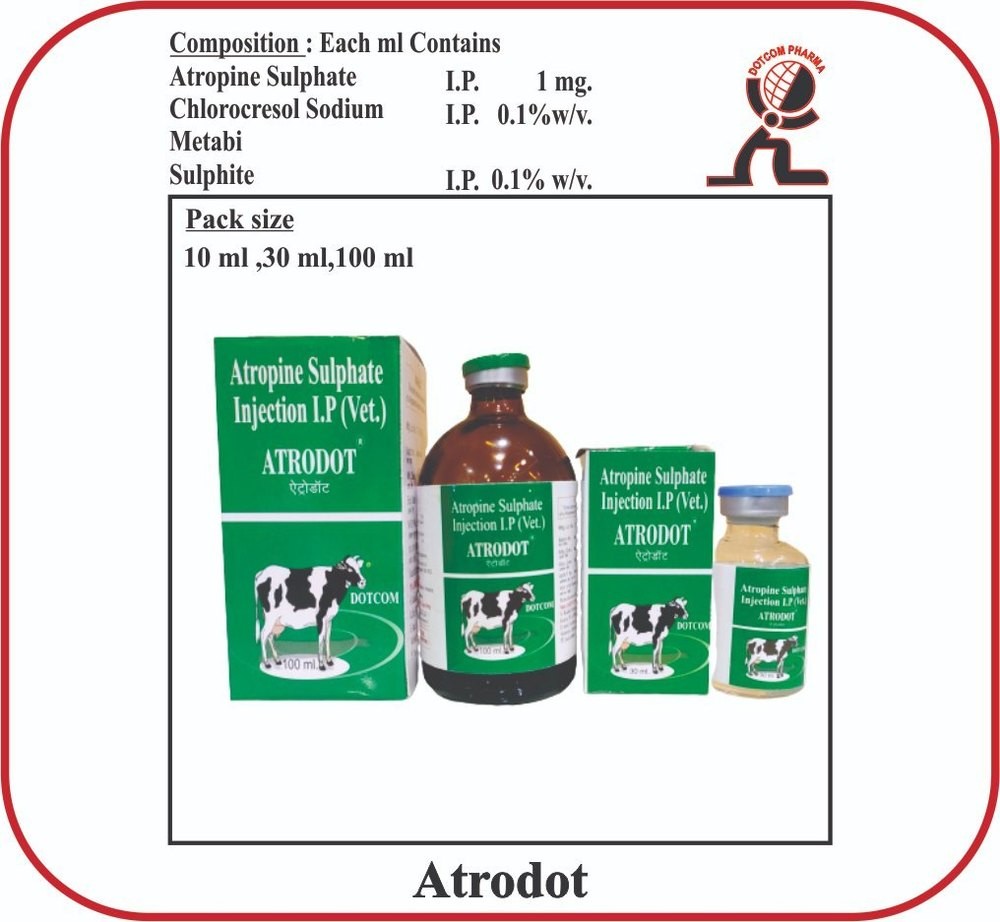
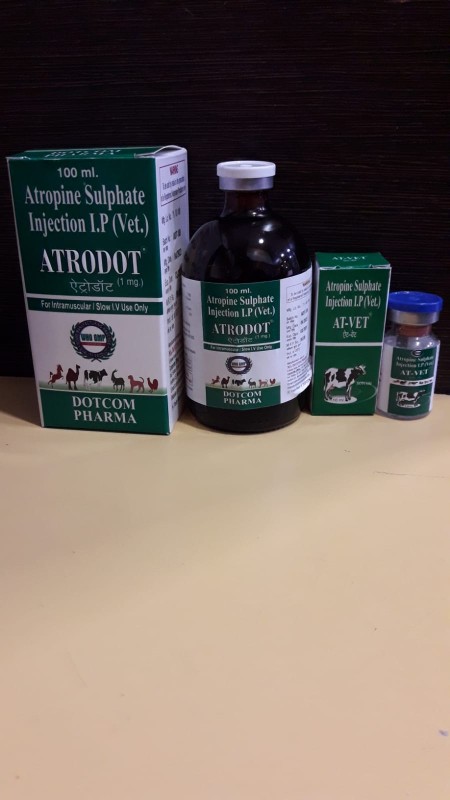
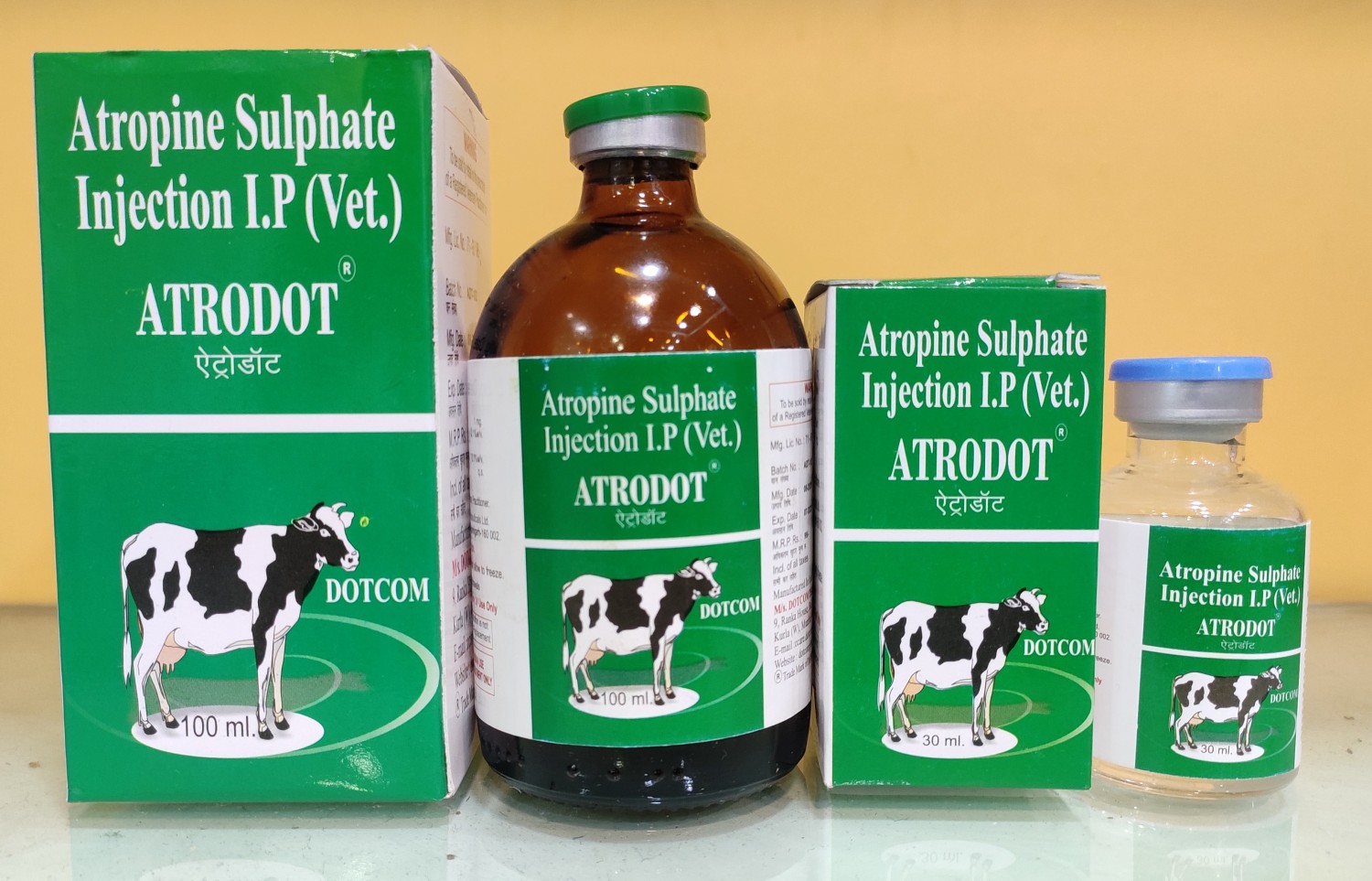
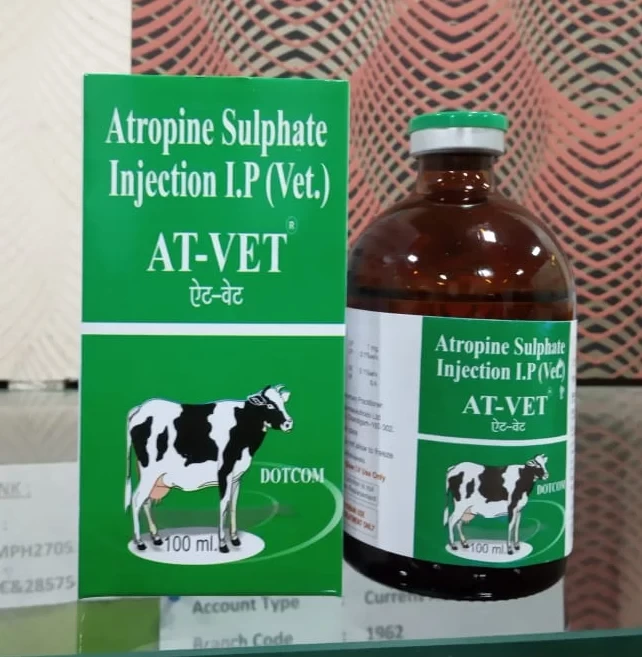
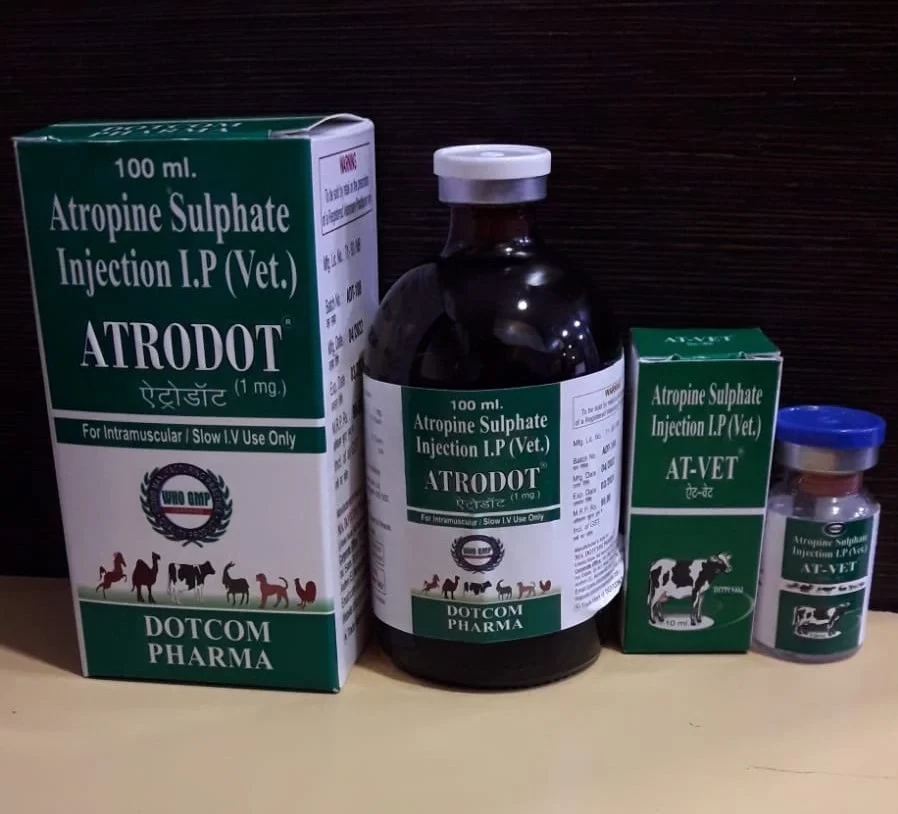
ATRODOT
Drug Name
: Atropine Sulphate I.P. 1.0 mg Injection for Veterinary Use
Drug Role
: Anticholinergic . Parasympatholytic
NA
No
Ceritifcations:









Please login / register to buy or to get detailed information of the product
SKU:
Stock Available:
Batch / Lot. No:
Shelf life:
Manufacturing Date:
-
Expiry Date:
-
Minimum Pack Size:
Minimum Order Qty:
40
Pharma Categories:
Anticholinergic agent (Parasympatholytic) • Veterinary emergency and supportive care drug
Product Form:
Sterile injectable solution • Concentration: Atropine Sulphate 1.0 mg/mL with 0.10% Chloro-m-Cresol • Pack sizes: Commonly 10 mL, 30 mL, 100 mL vials or ampoules
Category:
Liquid Injection
Group:
N/A
Type:
Liquid injection
Material:
Liquid
Tags
HSN Code:
3004
HS Code:
2933.99
Country of Origin:
India
TAX:
5%
Qty per Piece:
Weight Of Each Piece(gm):
Piece Dimensions (L×W×H):
Qty per Buffer Box / Shrink Pack:
Weight of Buffer Box / Shrink Pack:
Buffer Dimensions (L×W×H):
Total Qty per Case:
Total Weight per Case:
Case Dimensions (L×W×H):
Weight / Volume:
Dimensions:
Inhouse product
Atropine Sulphate is a potent anticholinergic agent derived from Atropa belladonna. It competitively inhibits the neurotransmitter acetylcholine at parasympathetic sites, producing effects such as pupil dilation, decreased salivation, and increased heart rate. Chloro-m-Cresol is included as a preservative to maintain sterility and stability of the injectable solution. This combination is commonly used in veterinary medicine to treat bradycardia, reduce salivary secretions during anaesthesia, and as an antidote for organophosphate poisoning.
• Active Ingredients:
o Atropine Sulphate I.P.: 1.0 mg/mL
o Chloro-m-Cresol I.P.: 0.10% w/v
• Appearance: Clear, colourless sterile injectable solution
• pH: Approximately 4.5 - 6.5
• Sterility: Sterile and pyrogen-free
• Packaging: Supplied in sterile glass vials or ampoules, typically 10 mL, 30 mL, 100 mL
• Atropine Sulphate I.P.: 1.0 mg per mL
• Chloro-m-Cresol I.P.: 0.10% (Preservative)
• Excipients: Sterile water for injection, stabilizers
• Anticholinergic agent (Parasympatholytic)
• Veterinary emergency and supportive care drug
• Treatment of bradycardia (slow heart rate) in animals
• Pre-anaesthetic to reduce salivation and respiratory secretions
• Antidote for organophosphate and carbamate poisoning
• Relief of gastrointestinal spasms and colic in certain species
• Dose:
o Typically, 0.02 mg/kg to 0.05 mg/kg body weight intravenously or intramuscularly
o Dose may vary depending on species and clinical condition
• Route: Intravenous (IV) or intramuscular (IM) injection
• Frequency: Single or repeated doses as advised by a veterinarian
• Sterile injectable solution
• Concentration: Atropine Sulphate 1.0 mg/mL with 0.10% Chloro-m-Cresol
• Pack sizes: Commonly 10 mL, 30 mL, 100 mL vials or ampoules
• Administer under veterinary supervision
• Use aseptic technique for injection
• Monitor animal response during treatment
• Avoid rapid intravenous injection to prevent adverse reactions
• Rapid onset of action with effective control of bradycardia
• Useful in anaesthesia to reduce secretions
• Effective antidote for organophosphate poisoning
• Stable due to preservative Chloro-m-Cresol
• Wide species applicability in veterinary medicine
• Tachycardia (increased heart rate) if overdosed
• Dry mouth, dilated pupils, blurred vision
• Urinary retention and constipation with prolonged use
• CNS effects such as restlessness or excitation in some animals
• Avoid use in animals with glaucoma or severe cardiac disease
• Meat: Generally, 7 days or as per local regulatory guidelines
• Milk: Follow specific guidelines as per veterinary advice
• Store at 15°C to 30°C
• Protect from light and freezing
• Keep out of reach of children and animals
• Use before expiry date
• Handle with care; avoid skin and eye contact
• Wear gloves when administering
• In case of accidental exposure, rinse thoroughly with water
• Dispose of unused product and containers responsibly
• HS Code: 2933.99 (Alkaloids and derivatives)
• HSN Code (India): 2933.99.90
• For veterinary use only
• Use only under veterinary supervision
• Monitor animals closely for adverse reactions during treatment
• Not recommended for use in animals with known hypersensitivity to atropine
• Veterinary Use: Treatment of cardiac, gastrointestinal, and poisoning emergencies in animals
• Human Use: Atropine formulations exist for human use but veterinary formulations are separate and not interchangeable
Q1: What is Atropine Sulphate?
A: A parasympatholytic agent that blocks acetylcholine effects, used to increase heart rate and reduce secretions.
Q2: What is the role of Chloro-m-Cresol?
A: It acts as a preservative to maintain sterility of the injection.
Q3: How is the injection administered?
A: Intravenous or intramuscular injection.
Q4: What doses is used for animals?
A: Usually 0.02 to 0.05 mg/kg body weight, depending on species and condition.
Q5: What are possible side effects?
A: Tachycardia, dry mouth, urinary retention, and CNS excitement.
Q6: How should this drug be stored?
A: Store between 15°C and 30°C, protected from light.
Q7: Can it be used in animals with glaucoma?
A: No, it is contraindicated in animals with glaucoma.
Secure Transaction
100% secure payment
Top Brand
Trusted quality
Non Return
Due to hygiene