 +91 88281
11034
+91 88281
11034
 Need Help?



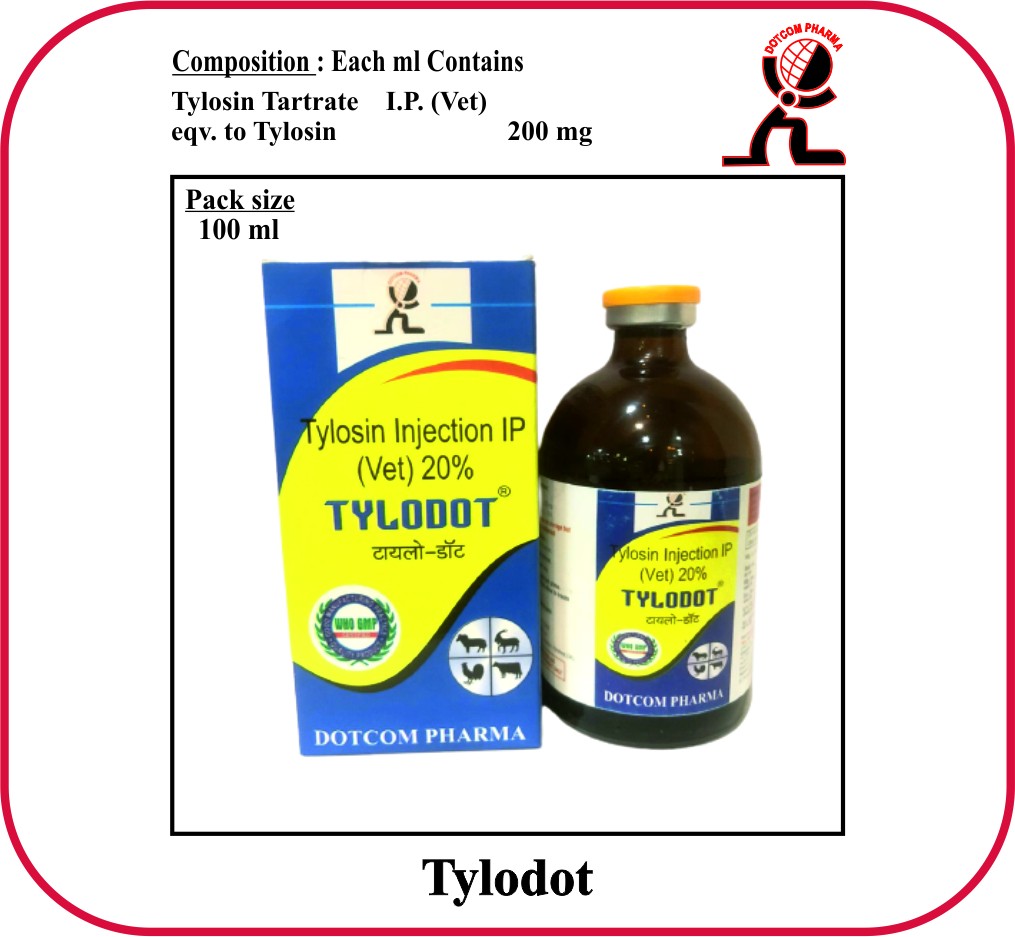
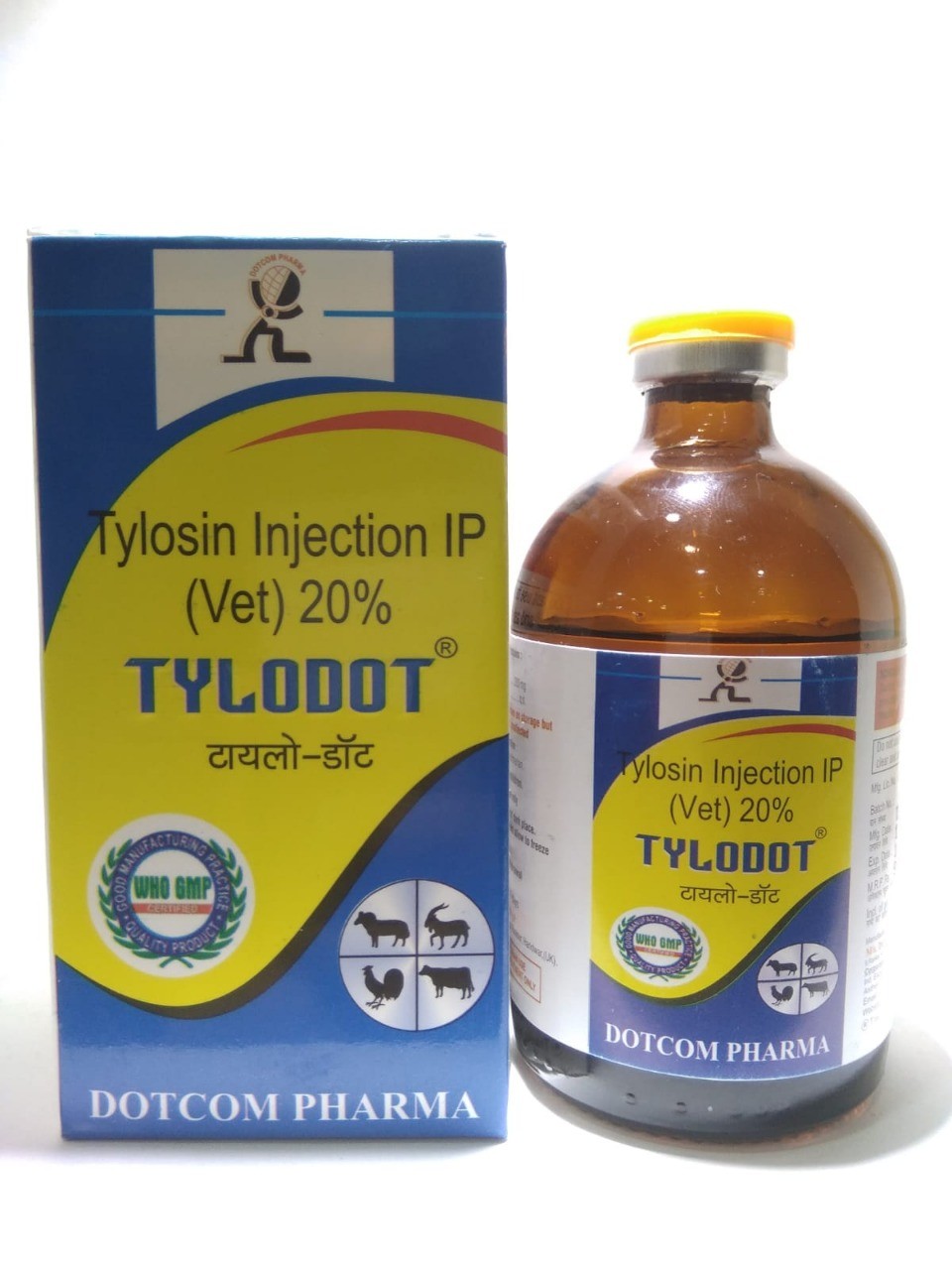
TYLODOT
Drug Name
: Tylosin -20% Injection for Veterinary Use
Drug Role
: Antibiotic . Antibacteria
NA
No
Ceritifcations:










Please login / register to buy or to get detailed information of the product
SKU:
Stock Available:
Batch / Lot. No:
Shelf life:
Manufacturing Date:
-
Expiry Date:
-
Minimum Pack Size:
Minimum Order Qty:
6
Pharma Categories:
Macrolide Antibiotic Injection
Product Form:
Sterile Injectable Solution
Category:
Liquid Injection
Group:
N/A
Type:
Liquid Injection
Material:
Liquid
Tags
HSN Code:
2941
HS Code:
2941.20
Country of Origin:
India
TAX:
5%
Qty per Piece:
Weight Of Each Piece(gm):
Piece Dimensions (L×W×H):
Qty per Buffer Box / Shrink Pack:
Weight of Buffer Box / Shrink Pack:
Buffer Dimensions (L×W×H):
Total Qty per Case:
Total Weight per Case:
Case Dimensions (L×W×H):
Weight / Volume:
Dimensions:
Inhouse product
Tylosin is a macrolide antibiotic derived from Streptomyces species, widely used in veterinary medicine for its effectiveness against gram-positive bacteria and some mycoplasma species. The 20% injectable formulation contains tylosin base dissolved in a suitable solvent, designed for intramuscular or intravenous administration to treat bacterial infections in livestock.
Tylosin works by inhibiting bacterial protein synthesis, thus preventing the growth and proliferation of susceptible pathogens.
• Active Ingredient: Tylosin base 20% w/v (200 mg/ml)
• Excipients: Suitable solvents and stabilizers as per pharmacopeial standards
• Packaged in 100 ml amber glass vial for protection against light
• Appearance: Clear to slightly yellowish sterile solution
• Assay: 90% – 110% of labelled tylosin content
• Sterility: Complies with I.P./USP/BP sterility standards
• pH: Approximately 4.5 – 6.5
• Free from visible particulates and pyrogens
• Treatment of respiratory, enteric, and soft tissue infections caused by tylosin-sensitive bacteria in cattle, swine, poultry, sheep, and other food-producing animals
• Control of mycoplasmas and other bacterial infections responsive to macrolides
• Adjunct therapy in bacterial infections resistant to other antibiotics
• Dosage: Generally 4–10 mg tylosin base per kg body weight per day, depending on species and severity of infection
• For 20% solution, this corresponds to 0.2–0.5 ml per kg body weight
• Route: Intramuscular or intravenous injection, as directed by a veterinarian
• Duration: Typically 3–5 days or as prescribed
Sterile injectable solution supplied in 100 ml amber glass vial to maintain product stability and potency
• Broad-spectrum macrolide antibiotic effective against common veterinary pathogens
• Suitable for use in multiple animal species
• High concentration formulation allows accurate dosing and minimal injection volume
• Useful in respiratory and enteric infections, improving animal health and productivity
• Local injection site reactions such as pain, swelling, or abscess formation
• Rare hypersensitivity or allergic reactions
• Use with caution in animals with known macrolide sensitivity
• Avoid intravenous injection in horses due to risk of severe reactions
• Meat: Minimum 28 days withdrawal period before slaughter
• Milk: 10 days withdrawal period after last administration
• Follow local veterinary guidelines strictly
• For veterinary use only
• Use aseptic technique during administration
• Avoid extravasation during injection to reduce tissue irritation
• Not for use in animals intended for human consumption without observing withdrawal times
• Store vial tightly sealed and protected from light
• Store at 15°C to 30°C (59°F to 86°F)
• Protect from direct sunlight and freezing
• Keep vial sealed until use
• Wear gloves while handling and administering
• Avoid accidental self-injection
• Dispose of used vials and syringes safely according to biohazard protocols
• HS Code: 2941.20 (Antibiotics)
• HSN Code: 2941 (Antibiotics and other organic compounds)
• Strictly follow veterinary prescription and dosing recommendations
• Monitor animals for adverse effects during treatment
• Maintain treatment records and observe withdrawal periods to ensure food safety
• Tylosin is a veterinary antibiotic; human formulations differ and are not interchangeable
• Essential in managing bacterial infections in food-producing animals to ensure herd health
• Helps reduce reliance on critically important antibiotics by targeting specific pathogens
Q1: What is Tylosin 20% Injection?
A: A macrolide antibiotic injection used to treat bacterial infections in animals.
Q2: How is it administered?
A: By intramuscular or intravenous injection under veterinary supervision.
Q3: What animals can receive this medication?
A: Commonly cattle, swine, poultry, sheep, and other food animals.
Q4: Are there side effects? A: Possible injection site pain and rare allergic reactions.
Secure Transaction
100% secure payment
Top Brand
Trusted quality
Non Return
Due to hygiene