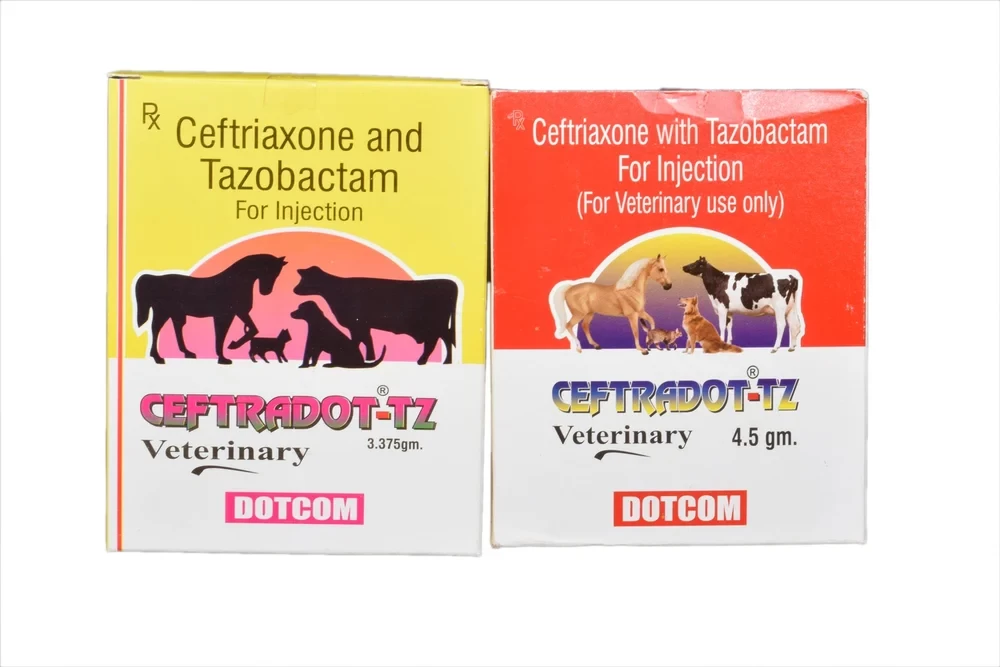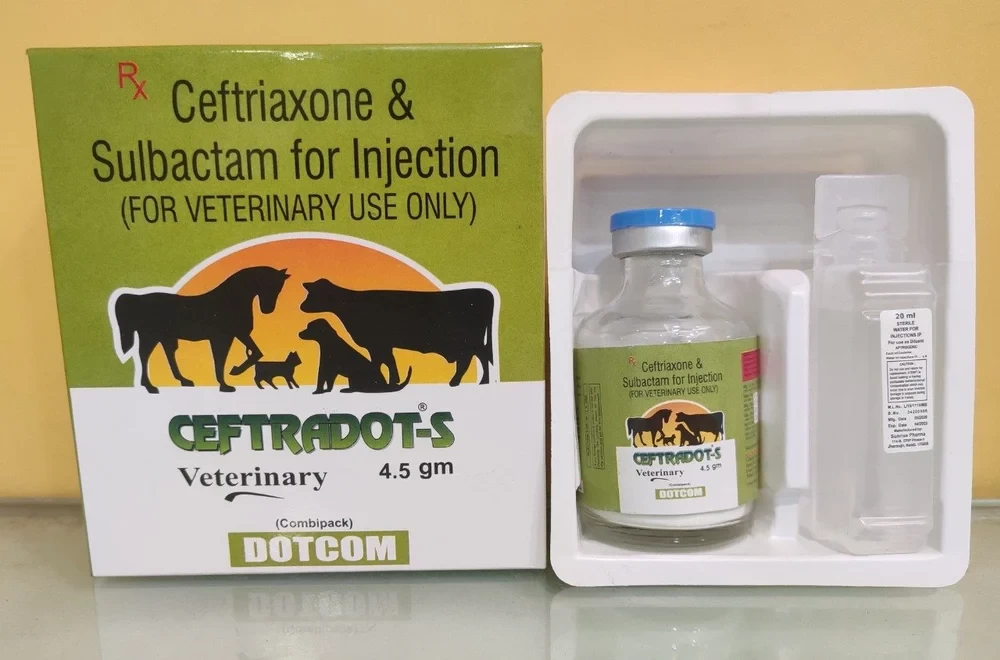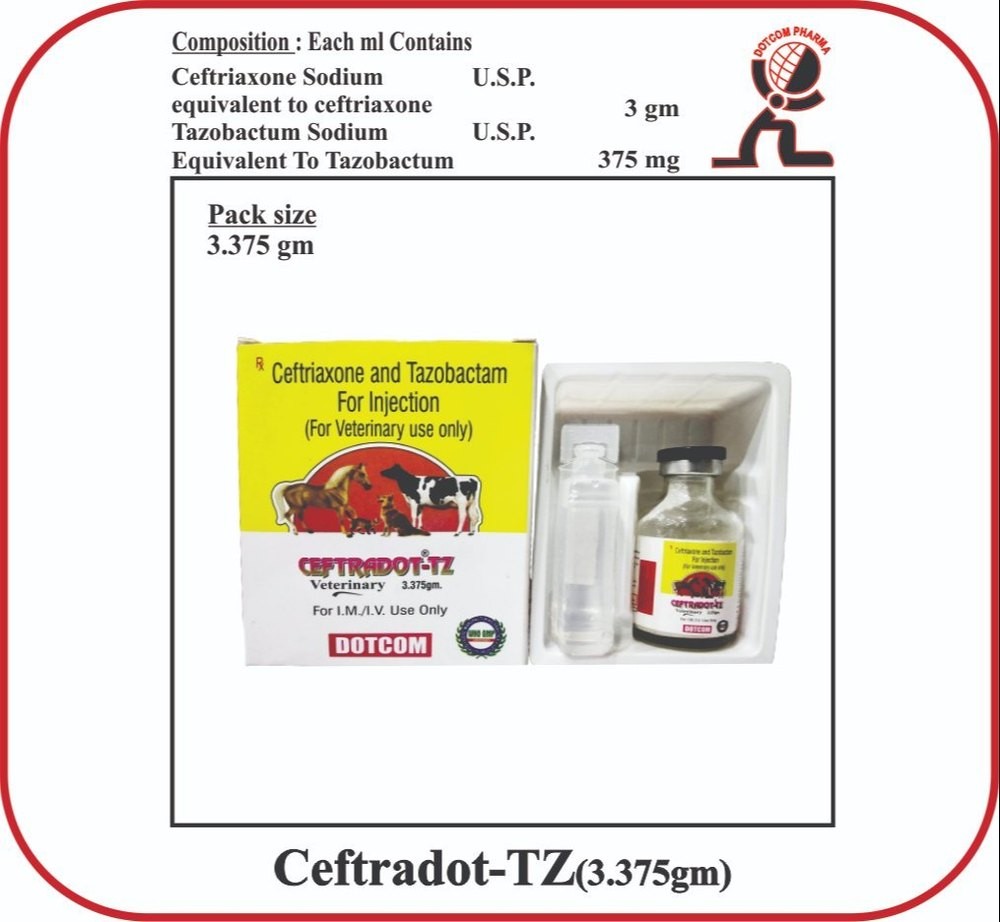
CEFTRADOT-TZ

Drug Name

: Ceftriaxone and Tazobactam for Dry Injection (Veterinary Use)

Drug Role

: Therapeutic Class: Antimicrobial agent • Drug Class: β-lactam antibiotic (cephalosporin) + β-lactamase inhibitor • Mechanism of Action: o Ceftriaxone: Inhibits bacterial cell wall synthesis by binding to penicillin-binding proteins o Tazobactam

Schedule:
NA
Prescription Required:
No
Brand / Mfg:
DOTCOM PHARMA
/ Piece
MRP: Inclusive of all taxes
Discount Applied:
MRP
-
Price
-
-
Discount
-
-
+ Tax
-
-
Total You Save
-
You Save:
Pack Size
Quantity
(20 available)
Total Amount Product Wise:

Ceritifcations:

Certificate
Certificate
Certificate
Certificate
Certificate
Certificate
Certificate
Certificate
Certificate
Certificate

Please login / register to buy or to get detailed information of the product

SKU:

Stock Available:

Batch / Lot. No:

Shelf life:

Manufacturing Date:

-

Expiry Date:

-

Minimum Pack Size:

Minimum Order Qty:

10

Pharma Categories:

• Therapeutic Class: Antimicrobial agent • Drug Class: β-lactam antibiotic (cephalosporin) + β-lactamase inhibitor • Mechanism of Action: o Ceftriaxone: Inhibits bacterial cell wall synthesis by binding to penicillin-binding proteins o Tazobactam: Inhibits β-lactamase enzymes, preventing the inactivation of Ceftriaxone

Product Form:

Sterile lyophilized powder for injection

Category:

Veterinary

Group:

N/A

Type:

veterinary Dry injection

Material:

Dry Injection

HSN Code:

3004.20.90

HS Code:

3004.20

Country of Origin:

india

TAX:

5%

Qty per Piece:

Weight Of Each Piece:

Piece Dimensions (L×W×H):

Qty per Buffer Box / Shrink Pack:

Weight of Buffer Box / Shrink Pack:

Buffer Dimensions (L×W×H):

Total Qty per Case:

Total Weight per Case:

Case Dimensions (L×W×H):

Weight / Volume:

Dimensions:

Inhouse product

Ceftriaxone and Tazobactam for Injection is a sterile dry powder combination formulated for parenteral use in veterinary species. The product contains Ceftriaxone, a third-generation cephalosporin with broad-spectrum bactericidal activity, and Tazobactam, a β-lactamase inhibitor that protects Ceftriaxone from enzymatic degradation.

The formulation is designed for once-daily dosing and provides effective therapy against both Gram-positive and Gram-negative organisms, including β-lactamase producing strains.

After reconstitution with sterile water, the solution is administered via intramuscular or intravenous injection in animals. It is used in livestock and companion animals for a wide range of bacterial infections.

•  Dosage Form: Sterile lyophilized powder for injection

•  Appearance (Dry): White to off-white crystalline powder

•  Appearance (After Reconstitution): Clear to slightly opalescent solution

•  pH of Reconstituted Solution: 6.0 to 8.0 (typically)

•  Sterility: Must comply with pharmacopeial sterility tests

•  Bacterial Endotoxins: Within pharmacopeial limits

•  Assay (Active Content): 90–110% of labelled claim

•  Moisture Content: Within specified pharmacopeial limits

•  Container Closure System: Type I glass vial sealed with rubber stopper and aluminium cap

•  Packaging Integrity: Must maintain sterility and prevent contamination under storage conditions

Each vial contains:

•  Ceftriaxone Sodium U.S.P., equivalent to Ceftriaxone: 3.0 gm or 4.0 gm

•  Tazobactam Sodium U.S.P., equivalent to Tazobactam: 375 mg or 500 mg

•  Excipients: q.s. (bulking agents, stabilizers, buffers as required)

•  Sterile Water for Injection: Supplied in a separate ampoule or vial for reconstitution

•  Therapeutic Class: Antimicrobial agent

•  Drug Class: β-lactam antibiotic (cephalosporin) + β-lactamase inhibitor

•  Mechanism of Action:

o  Ceftriaxone: Inhibits bacterial cell wall synthesis by binding to penicillin-binding proteins

o  Tazobactam: Inhibits β-lactamase enzymes, preventing the inactivation of Ceftriaxone

Indicated for use in animals (large and small) for the treatment of infections caused by susceptible bacteria, including:

•  Respiratory tract infections

•  Urinary tract infections

•  Skin and soft tissue infections

•  Mastitis, metritis, and reproductive tract infections

•  Post-operative and post-parturient infections

•  Septicaemia

•  Gastrointestinal tract infections

Applicable for species such as: cattle, buffalo, sheep, goats, pigs, dogs, and cats.

Route:

•  Intramuscular (I.M.)

•  Intravenous (I.V.)

Dosage Guidelines:

•  Large Animals (e.g., cattle, buffalo): 20–30 mg/kg body weight once daily

•  Small Animals (e.g., dogs, cats): 25–50 mg/kg body weight once daily

Duration of Treatment: 3–5 days or as advised by a registered veterinary practitioner Reconstitution: Use the entire contents of sterile water ampoule to dissolve the powder immediately before use.

•  Form: Sterile dry powder for injection

•  Pack Sizes:

o  3.375 gm vial (Ceftriaxone 3 gm + Tazobactam 375 mg)

o  4.5 gm vial (Ceftriaxone 4 gm + Tazobactam 500 mg)

•  Each pack contains:

o  1 vial of sterile powder

o  1 ampoule/vial of sterile water for reconstitution

•  Broad-spectrum antibacterial activity

•  Effective against β-lactamase producing organisms

•  Once-daily dosing improves compliance

•  Rapid onset with high tissue penetration

•  Can be used in both companion and food-producing animals

•  Supports faster clinical recovery in severe infections

•  Local reactions: Pain, redness, swelling at injection site

•  Allergic responses: Rash, hypersensitivity, anaphylaxis (rare)

•  Gastrointestinal effects: Vomiting, diarrhoea (especially in small animals)

•  Prolonged use may affect liver or kidney function (monitor in long-term cases)

•  Do not use in animals with known allergy to cephalosporins or penicillin’s

•  Use with caution in animals with impaired kidney or liver function

•  Avoid concurrent administration with calcium-containing IV fluids

•  Not for prophylactic use unless explicitly indicated by a veterinarian

•  Use only under prescription and supervision of a registered veterinarian

•  Meat: 28 days after last administration

•  Milk: 7 days after last administration

Ensure full compliance with local withdrawal period regulations for food-producing animals.

•  Store below 25°C in a dry place, away from light and moisture

•  Do not freeze

•  Use immediately after reconstitution

•  Discard unused reconstituted solution

•  Handle using aseptic precautions

•  Prescription Drug – Veterinary

•  Schedule H1 / equivalent (varies by country)

•  For use only by or on the order of a licensed veterinary practitioner

•  HS Code (International): 3004.20 – Antibiotics for retail

•  HSN Code (India): 3004.20.90 – Other antibiotic formulations

•  Reconstitute using only the sterile water provided

•  Use culture and sensitivity data where possible before initiating therapy

•  Complete the full course as prescribed to avoid resistance

•  Do not reuse partially used vials

•  Follow all local regulations on antibiotic stewardship and veterinary medicine use

•  Dispose of used containers and medical waste responsibly

Q1: What is U.S.P.?

 A: United States Pharmacopeia – an official standard-setting authority for drug quality and purity.

Q2: Why is Tazobactam combined with Ceftriaxone?

A: Tazobactam inhibits β-lactamase enzymes that can degrade Ceftriaxone, enhancing the drug’s spectrum and efficacy.

Q3: Can it be used in lactating animals?

A: Yes, but only under veterinary advice. Observe milk withdrawal periods strictly.

Q4: Can this formulation be used in all animals?

A: It is formulated for use in commonly treated veterinary species like cattle, sheep, goats, dogs, and cats. Avoid extra-label use without veterinary prescription.

Q5: What if the animal shows an allergic reaction?

A: Stop treatment immediately and administer appropriate antihistamines or corticosteroids as directed by a veterinarian.

Q6: Can the reconstituted solution be stored?

A: No. It must be used immediately after preparation unless otherwise stated by the manufacturer.

Q7: What is the purpose of the withdrawal period?

A: To ensure that animal-derived food products (milk, meat) are free of drug residues, protecting public health.

Secure Transaction

100% secure payment

Top Brand

Trusted quality

Non Return

Due to hygiene
Refund
Not Applicable
Share
Top Selling Products
0 out of 5.0
(0 reviews)
There have been no reviews for this product yet.

Ceftriaxone and Tazobactam for Injection is a sterile dry powder combination formulated for parenteral use in veterinary species. The product contains Ceftriaxone, a third-generation cephalosporin with broad-spectrum bactericidal activity, and Tazobactam, a β-lactamase inhibitor that protects Ceftriaxone from enzymatic degradation.

The formulation is designed for once-daily dosing and provides effective therapy against both Gram-positive and Gram-negative organisms, including β-lactamase producing strains.

After reconstitution with sterile water, the solution is administered via intramuscular or intravenous injection in animals. It is used in livestock and companion animals for a wide range of bacterial infections.

•  Dosage Form: Sterile lyophilized powder for injection

•  Appearance (Dry): White to off-white crystalline powder

•  Appearance (After Reconstitution): Clear to slightly opalescent solution

•  pH of Reconstituted Solution: 6.0 to 8.0 (typically)

•  Sterility: Must comply with pharmacopeial sterility tests

•  Bacterial Endotoxins: Within pharmacopeial limits

•  Assay (Active Content): 90–110% of labelled claim

•  Moisture Content: Within specified pharmacopeial limits

•  Container Closure System: Type I glass vial sealed with rubber stopper and aluminium cap

•  Packaging Integrity: Must maintain sterility and prevent contamination under storage conditions

Each vial contains:

•  Ceftriaxone Sodium U.S.P., equivalent to Ceftriaxone: 3.0 gm or 4.0 gm

•  Tazobactam Sodium U.S.P., equivalent to Tazobactam: 375 mg or 500 mg

•  Excipients: q.s. (bulking agents, stabilizers, buffers as required)

•  Sterile Water for Injection: Supplied in a separate ampoule or vial for reconstitution

•  Therapeutic Class: Antimicrobial agent

•  Drug Class: β-lactam antibiotic (cephalosporin) + β-lactamase inhibitor

•  Mechanism of Action:

o  Ceftriaxone: Inhibits bacterial cell wall synthesis by binding to penicillin-binding proteins

o  Tazobactam: Inhibits β-lactamase enzymes, preventing the inactivation of Ceftriaxone

Indicated for use in animals (large and small) for the treatment of infections caused by susceptible bacteria, including:

•  Respiratory tract infections

•  Urinary tract infections

•  Skin and soft tissue infections

•  Mastitis, metritis, and reproductive tract infections

•  Post-operative and post-parturient infections

•  Septicaemia

•  Gastrointestinal tract infections

Applicable for species such as: cattle, buffalo, sheep, goats, pigs, dogs, and cats.

Route:

•  Intramuscular (I.M.)

•  Intravenous (I.V.)

Dosage Guidelines:

•  Large Animals (e.g., cattle, buffalo): 20–30 mg/kg body weight once daily

•  Small Animals (e.g., dogs, cats): 25–50 mg/kg body weight once daily

Duration of Treatment: 3–5 days or as advised by a registered veterinary practitioner Reconstitution: Use the entire contents of sterile water ampoule to dissolve the powder immediately before use.

•  Form: Sterile dry powder for injection

•  Pack Sizes:

o  3.375 gm vial (Ceftriaxone 3 gm + Tazobactam 375 mg)

o  4.5 gm vial (Ceftriaxone 4 gm + Tazobactam 500 mg)

•  Each pack contains:

o  1 vial of sterile powder

o  1 ampoule/vial of sterile water for reconstitution

•  Broad-spectrum antibacterial activity

•  Effective against β-lactamase producing organisms

•  Once-daily dosing improves compliance

•  Rapid onset with high tissue penetration

•  Can be used in both companion and food-producing animals

•  Supports faster clinical recovery in severe infections

•  Local reactions: Pain, redness, swelling at injection site

•  Allergic responses: Rash, hypersensitivity, anaphylaxis (rare)

•  Gastrointestinal effects: Vomiting, diarrhoea (especially in small animals)

•  Prolonged use may affect liver or kidney function (monitor in long-term cases)

•  Do not use in animals with known allergy to cephalosporins or penicillin’s

•  Use with caution in animals with impaired kidney or liver function

•  Avoid concurrent administration with calcium-containing IV fluids

•  Not for prophylactic use unless explicitly indicated by a veterinarian

•  Use only under prescription and supervision of a registered veterinarian

•  Meat: 28 days after last administration

•  Milk: 7 days after last administration

Ensure full compliance with local withdrawal period regulations for food-producing animals.

•  Store below 25°C in a dry place, away from light and moisture

•  Do not freeze

•  Use immediately after reconstitution

•  Discard unused reconstituted solution

•  Handle using aseptic precautions

•  Prescription Drug – Veterinary

•  Schedule H1 / equivalent (varies by country)

•  For use only by or on the order of a licensed veterinary practitioner

•  HS Code (International): 3004.20 – Antibiotics for retail

•  HSN Code (India): 3004.20.90 – Other antibiotic formulations

•  Reconstitute using only the sterile water provided

•  Use culture and sensitivity data where possible before initiating therapy

•  Complete the full course as prescribed to avoid resistance

•  Do not reuse partially used vials

•  Follow all local regulations on antibiotic stewardship and veterinary medicine use

•  Dispose of used containers and medical waste responsibly

Q1: What is U.S.P.?

 A: United States Pharmacopeia – an official standard-setting authority for drug quality and purity.

Q2: Why is Tazobactam combined with Ceftriaxone?

A: Tazobactam inhibits β-lactamase enzymes that can degrade Ceftriaxone, enhancing the drug’s spectrum and efficacy.

Q3: Can it be used in lactating animals?

A: Yes, but only under veterinary advice. Observe milk withdrawal periods strictly.

Q4: Can this formulation be used in all animals?

A: It is formulated for use in commonly treated veterinary species like cattle, sheep, goats, dogs, and cats. Avoid extra-label use without veterinary prescription.

Q5: What if the animal shows an allergic reaction?

A: Stop treatment immediately and administer appropriate antihistamines or corticosteroids as directed by a veterinarian.

Q6: Can the reconstituted solution be stored?

A: No. It must be used immediately after preparation unless otherwise stated by the manufacturer.

Q7: What is the purpose of the withdrawal period?

A: To ensure that animal-derived food products (milk, meat) are free of drug residues, protecting public health.

0 out of 5.0
(0 reviews)
There have been no reviews for this product yet.

Similar Products

More From Injections

Top Selling Products
Search any image
Drag an image here or upload a file
Or