 +91 88281
11034
+91 88281
11034
 Need Help?




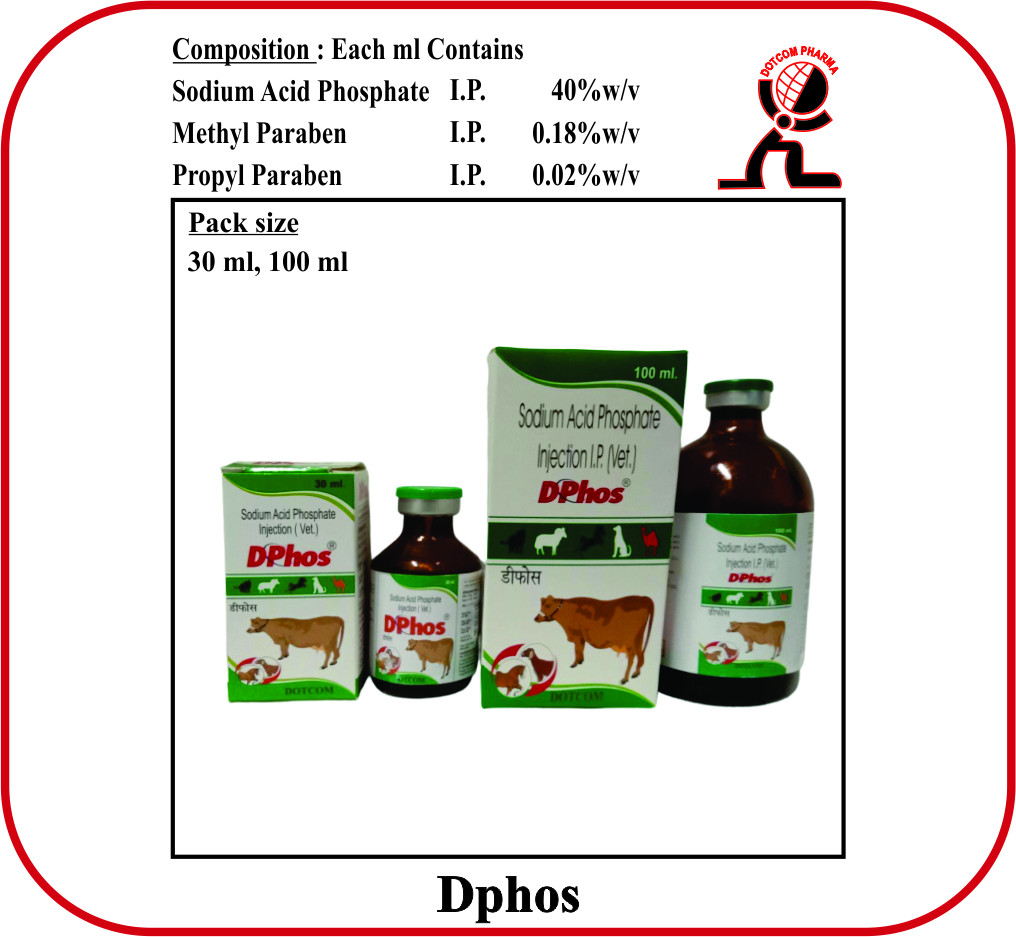
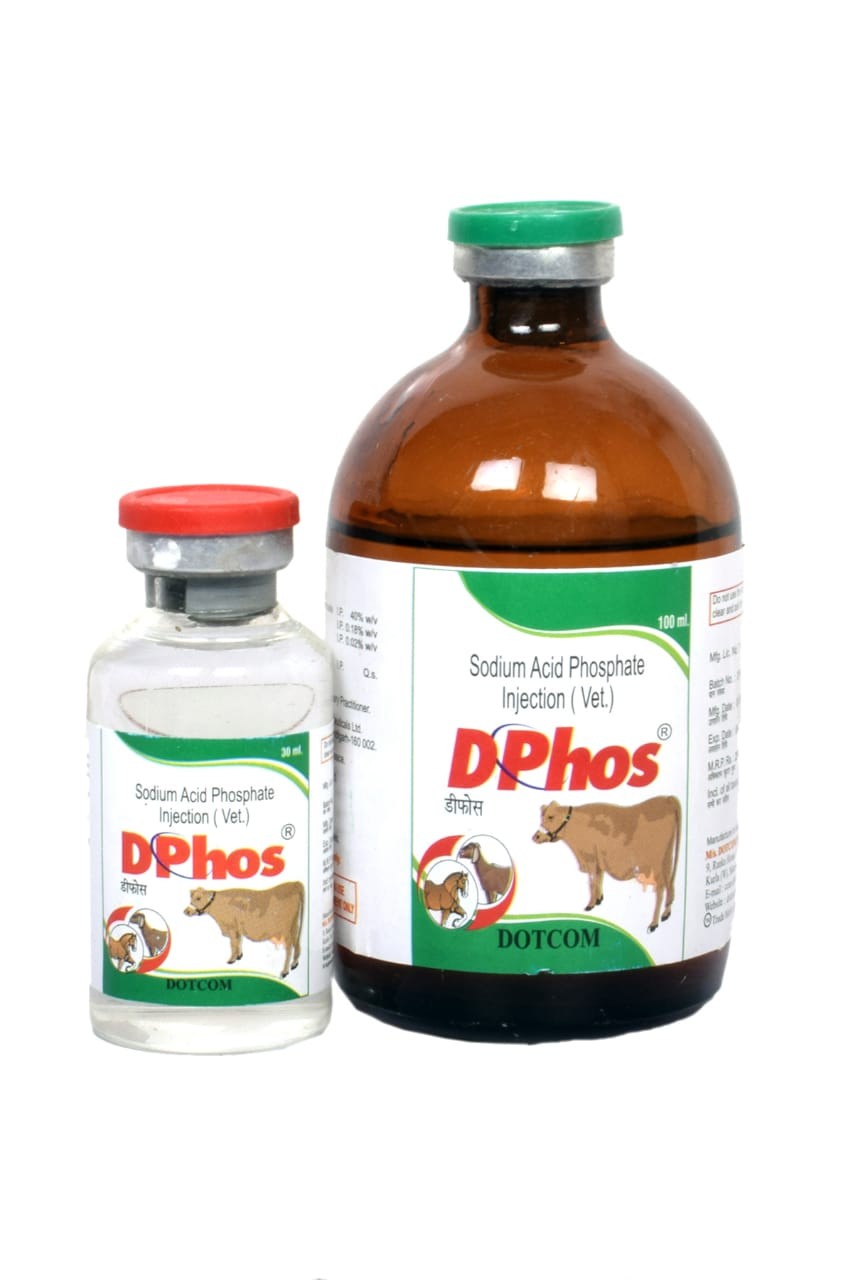
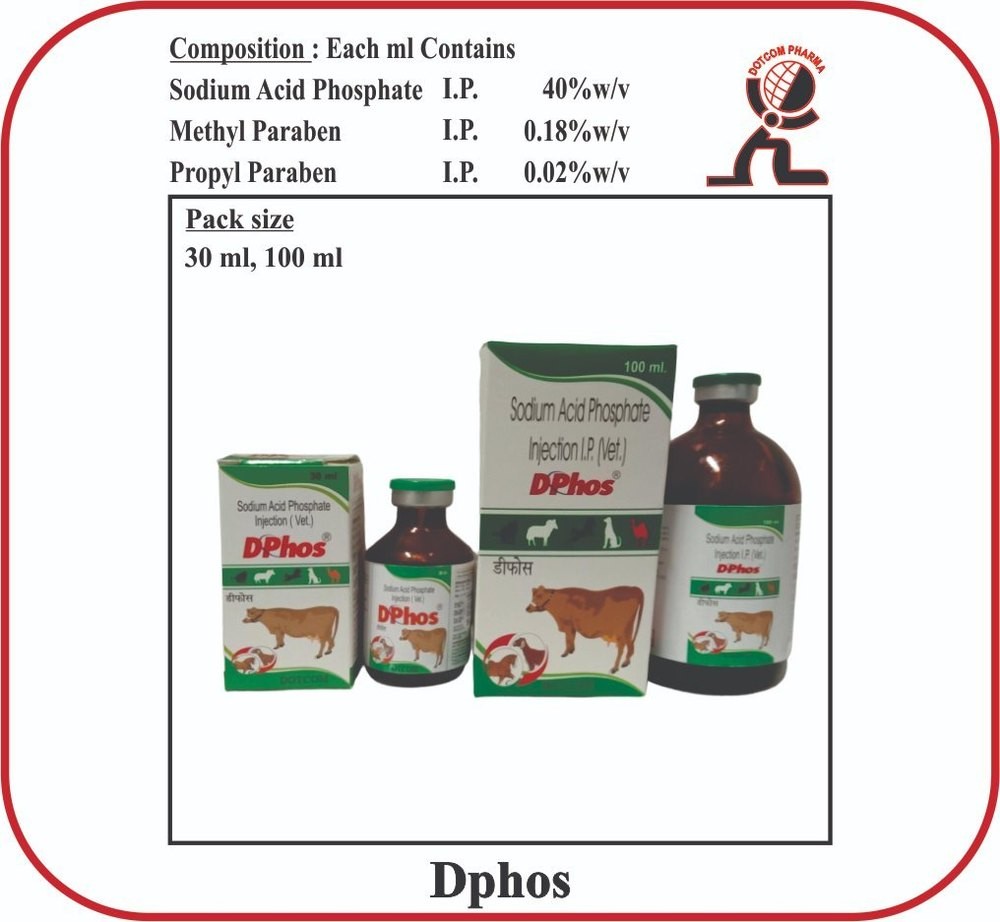
D-PHOS
Drug Name
: Sodium Acid Phosphate I.P. 40% w/v Injection for Veterinary Use
Drug Role
: Phosphorus Supplement . Metabolic Support
NA
No
Ceritifcations:








Please login / register to buy or to get detailed information of the product
SKU:
Stock Available:
Batch / Lot. No:
Shelf life:
Manufacturing Date:
Aug 2025
Expiry Date:
Jul 2027
Minimum Pack Size:
Minimum Order Qty:
20
Pharma Categories:
• Electrolyte solution • Acidifying agent • Metabolic corrector
Product Form:
• Sterile, aqueous injectable solution • Packaged in amber or clear glass vials • Available in multiple vial sizes (commonly 30 mL & 100 mL)
Category:
Liquid Injection
Group:
N/A
Type:
Liquid injection
Material:
Liquid
Tags
HSN Code:
2835.39.90
HS Code:
2835.39
Country of Origin:
India
TAX:
5%
Qty per Piece:
Weight Of Each Piece(gm):
Piece Dimensions (L×W×H):
Qty per Buffer Box / Shrink Pack:
Weight of Buffer Box / Shrink Pack:
Buffer Dimensions (L×W×H):
Total Qty per Case:
Total Weight per Case:
Case Dimensions (L×W×H):
Weight / Volume:
Dimensions:
Inhouse product
Sodium Acid Phosphate is an acidifying agent and buffering electrolyte used in veterinary medicine to correct metabolic alkalosis and acidosis, maintain acid-base balance, and restore electrolyte levels. It is often administered parenterally to improve animal health in cases of digestive disorders, urinary alkalinity, or metabolic imbalances. The sterile aqueous solution facilitates rapid absorption and systemic effect.
• Active Ingredient: Sodium Acid Phosphate I.P. 40% w/v
• Appearance: Clear, colourless to pale yellow sterile solution
• pH: 4.0 – 6.0
• Sterility: Sterile, pyrogen-free
• Packaging: 30 mL / 100 mL glass vials
• Sodium Acid Phosphate I.P.: 400 mg (40% w/v)
• Water for Injection: q.s.
• Electrolyte solution
• Acidifying agent
• Metabolic corrector
• Treatment of metabolic alkalosis and acidosis
• Correction of phosphate deficiencies/ Adjunct in parenteral nutrition
• Supportive therapy in digestive and urinary disorders
• Acid-base balance restoration in stressed or debilitated animals
• Cattle, Buffaloes, Horses: 10–20 mL IV/IM daily depending on condition
• Sheep, Goats, Dogs: 2–5 mL IV/IM daily
• Route: Intravenous (IV) or Intramuscular (IM) injection
• Frequency: Once daily or as directed by veterinarian
• Sterile, aqueous injectable solution
• Packaged in amber or clear glass vials
• Available in multiple vial sizes (commonly 30 mL & 100 mL)
• Inspect vial for clarity before use
• Use aseptic technique during administration
• Administer slowly IV to prevent irritation
• Avoid mixing with incompatible drugs
• Rapid correction of acid-base imbalance
• Supports metabolic functions and enzyme activity
• Helps replenish phosphate stores efficiently
• Compatible with many veterinary therapeutic protocols
• Mild local irritation or pain at injection site
• Rare allergic reactions
• Overdose may cause electrolyte imbalance—monitor carefully
• Follow specific regulatory guidelines based on animal species and use
• Generally, 3–7 days before slaughter (consult veterinarian)
• Store at 15°C–30°C
• Protect from light and freezing
• Keep vial tightly closed
• Wear gloves during handling
• Use sterile syringes and needles
• Dispose of sharps and vials according to biohazard norms
• HS Code: 2835.39 (Phosphates)
• HSN Code (India): 2835.39.90
• For veterinary use only
• Not to be mixed with alkaline solutions or incompatible drugs
• Monitor animal’s electrolyte and acid-base status during treatment
• Use under veterinary supervision
• Veterinary Use: Widely used in livestock and companion animals for metabolic correction
• Human Use: Similar compounds used in medicine but this formulation is veterinary-specific
Q1: What conditions does Sodium Acid Phosphate treat?
A: It treats metabolic acidosis/alkalosis and phosphate deficiencies.
Q2: How is this injection administered?
A: By slow intravenous or intramuscular injection under vet supervision.
Q3: Can this be used in all animals?
A: Yes, with species-specific dosing and veterinary guidance.
Q4: What precautions should I take during administration?
A: Use aseptic techniques and monitor animal electrolyte levels.
Q5: Can this be mixed with other drugs?
A: Avoid mixing with alkaline or incompatible drugs in the same syringe.
Secure Transaction
100% secure payment
Top Brand
Trusted quality
Non Return
Due to hygiene