 +91 88281
11034
+91 88281
11034
 Need Help?



MEGLUDOT
Drug Name
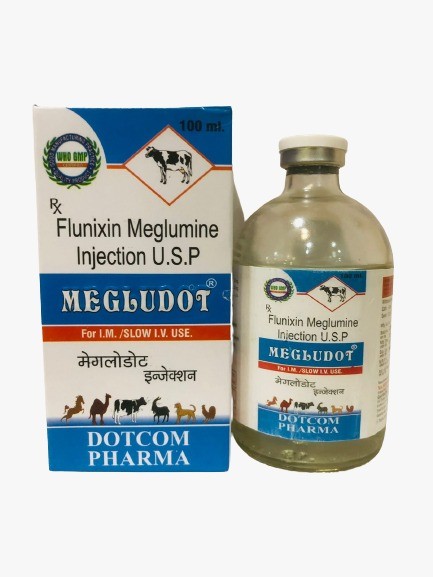
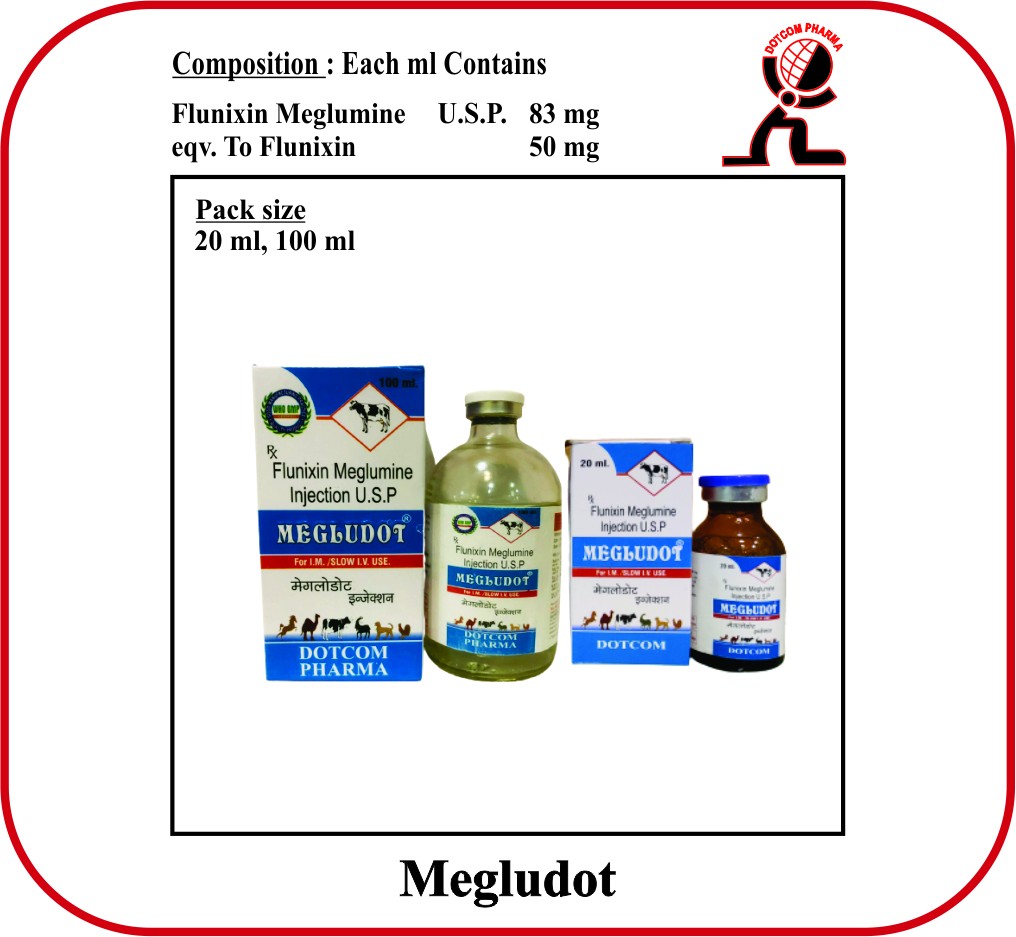
: Flunixin Meglumine Injection USP 83.3 mg ≈ 50 mg Flunixin
Drug Role
: Anti-inflammatory . Analgesic
NA
No
Ceritifcations:










Please login / register to buy or to get detailed information of the product
SKU:
Stock Available:
Batch / Lot. No:
Shelf life:
Manufacturing Date:
-
Expiry Date:
-
Minimum Pack Size:
Minimum Order Qty:
6
Pharma Categories:
NSAID – Non-Steroidal Anti-Inflammatory Drug Used for analgesic, anti-inflammatory, and antipyretic purposes in veterinary medicine.
Product Form:
• Form: Sterile injectable solution
Category:
Liquid Injection
Group:
N/A
Type:
Veterinary Liquid Injection
Material:
Liquid
Tags
HSN Code:
3004
HS Code:
30049099
Country of Origin:
India
TAX:
5%
Qty per Piece:
Weight Of Each Piece(gm):
Piece Dimensions (L×W×H):
Qty per Buffer Box / Shrink Pack:
Weight of Buffer Box / Shrink Pack:
Buffer Dimensions (L×W×H):
Total Qty per Case:
Total Weight per Case:
Case Dimensions (L×W×H):
Weight / Volume:
Dimensions:
Inhouse product
Flunixin Meglumine is a potent non-steroidal anti-inflammatory drug (NSAID) used for the management of inflammation, pain, and fever in animals. It acts by inhibiting the cyclooxygenase enzyme (COX), reducing prostaglandin synthesis and providing rapid symptomatic relief. This formulation delivers Flunixin 50 mg per mL, suitable for both large and small animals, packed in 20 ml and 100 ml sterile vials for multiple dosing flexibility.
• Flunixin Meglumine – 83.3 mg
• Equivalent to Flunixin – 50 mg
• Benzyl Alcohol I.P. – Preservative
• Sterile aqueous base – q.s. to 1 mL
NSAID – Non-Steroidal Anti-Inflammatory Drug Used for analgesic, anti-inflammatory, and antipyretic purposes in veterinary medicine.
• Form: Sterile injectable solution
• Colour: Clear to slightly yellow
• Odour: Characteristic, mild
• Sterility: Conforms to pharmacopeial standards
• Pack Sizes: 20 ml & 100 ml amber glass vials
• Seal: Rubber stopper with aluminium cap
• Inflammation and pain management in musculoskeletal conditions
• Pyrexia (fever) associated with respiratory diseases
• Colic in horses
• Mastitis, endotoxemia, and post-operative pain in cattle
• Supportive therapy during infections or injuries
• Cattle & Buffaloes: 1–2 mL/45 kg body weight
• Horses: 1.1 mg/kg (1 mL/45 kg) for colic & musculoskeletal pain
• Pigs: 2 mg/kg (usually 2 mL/45 kg)
• Dogs & Cats: 0.25–0.5 mL/10 kg (with caution)
• Route: IV (Intravenous), IM (Intramuscular), or SC (Subcutaneous)
• Frequency: Once daily, up to 3 days or as per veterinary advice
• Available Sizes: 20 ml & 100 ml multi-dose vials
• Clear, aqueous injectable solution
• Supplied in amber glass vials – 20 ml & 100 ml
• Multi-dose with preservative (Benzyl Alcohol)
• Sterile, resealable closure
• Rapid pain and fever control
• Effective in acute inflammation, injuries, infections
• Non-sedating – animal remains alert
• Useful in pre-surgical and post-surgical pain management
• Compatible with antibiotics and other supportive therapies
• Injection site swelling or irritation (rare)
• Long-term use may lead to GI ulceration or renal effects
• Avoid in animals with existing renal, hepatic, or GI disorders
• Use cautiously in pregnant or lactating animals under veterinary supervision
• Meat: 4 days
• Milk: 24 hours
Always follow local regulations and vet direction
• Store below 25°C, in a dry, dark place
• Do not freeze
• Use sterile syringe for each withdrawal
• Shake well if separation is observed
• Keep tightly sealed after each use
• Veterinary use only
• Not for human use
• Do not exceed recommended dose
• Do not mix with other injectables in same syringe unless advised
• Use under registered veterinarian supervision only
• HS Code: 30049099
• HSN Code: 3004
• Strictly for veterinary application
• In case of accidental human contact or injection – seek medical attention immediately
• Handle with gloves if possible; wash thoroughly after handling
• Q1: What is Flunixin Meglumine used for?
It’s used to reduce pain, inflammation, and fever in animals – especially during infections, colic, mastitis, and surgeries.
• Q2: Can it be used in lactating animals?
Yes, but under supervision. Follow milk withdrawal period strictly (24 hrs).
• Q3: What’s the route of administration?
Usually IV or IM depending on species. SC may be used in some animals.
• Q4: Can it be given with antibiotics?
Yes! It’s often combined with antibiotics for better comfort during infections.
• Q5: Is it safe for dogs and cats?
It can be, but must be used carefully with exact weight-based dosing. Always consult a vet.
Secure Transaction
100% secure payment
Top Brand
Trusted quality
Non Return
Due to hygiene