 +91 88281
11034
+91 88281
11034
 Need Help?



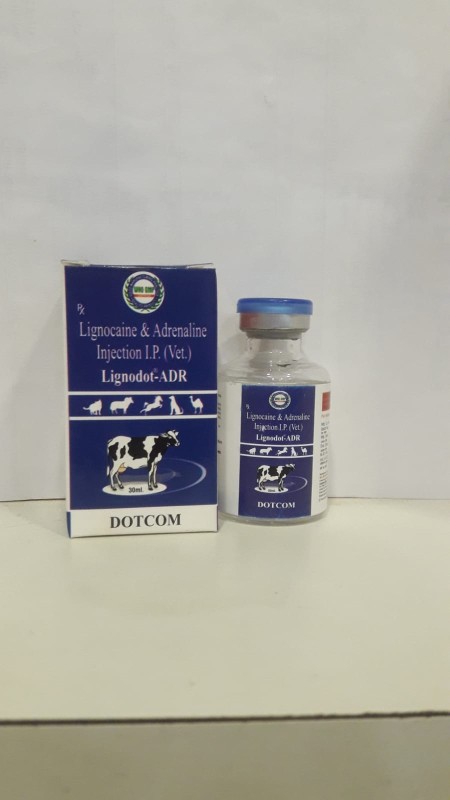
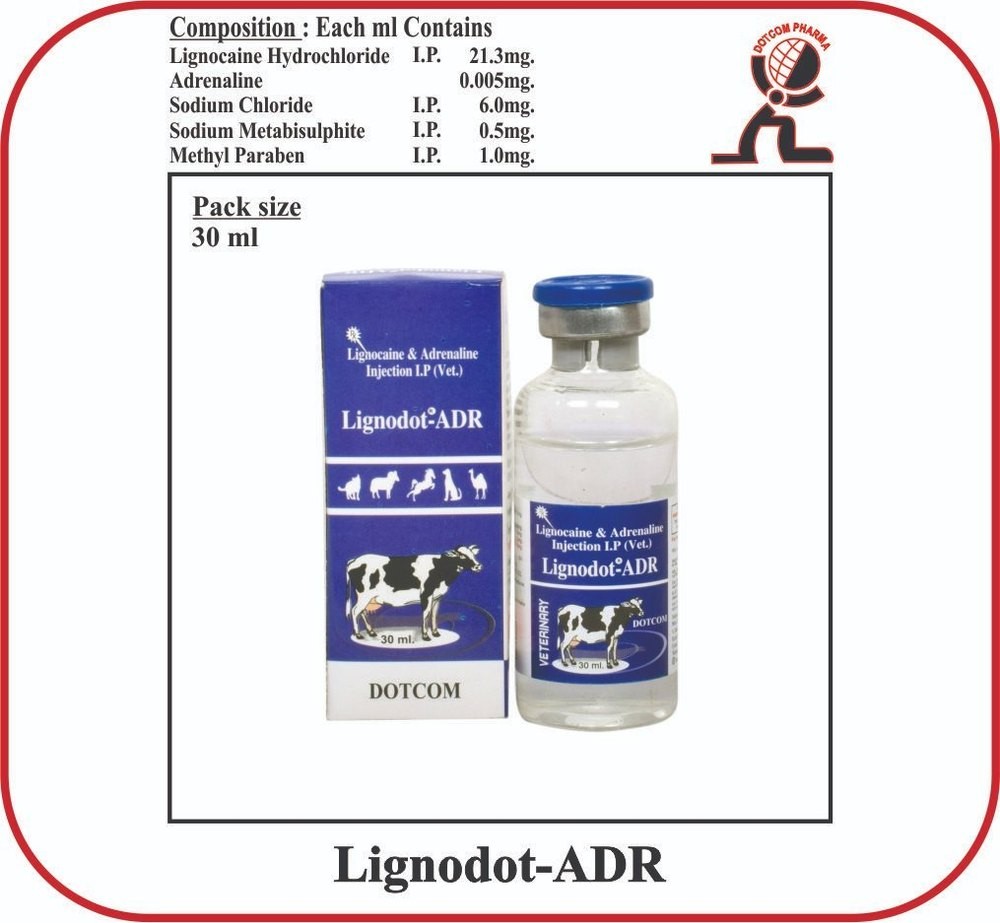
LIGNODOT-ADR
Drug Name
: Lignocaine Hydrochloride IP 21.3 mg + Adrenaline IP 0.005 mg Injection For Veterinary Use
Drug Role
: Local Anaesthetic . Vasoconstrictor
NA
No
Ceritifcations:






Please login / register to buy or to get detailed information of the product
SKU:
Stock Available:
Batch / Lot. No:
Shelf life:
Manufacturing Date:
Feb 2026
Expiry Date:
Jan 2028
Minimum Pack Size:
Minimum Order Qty:
20
Pharma Categories:
• Local anaesthetic with vasoconstrictor • Veterinary injectable anaesthetic agent
Product Form:
• Sterile injectable solution • Available in amber glass vials of 30 mL
Category:
Liquid Injection
Group:
N/A
Type:
Liquid Injection
Material:
liquid
Tags
HSN Code:
3004
HS Code:
3004909099
Country of Origin:
India
TAX:
5%
Qty per Piece:
Weight Of Each Piece(gm):
Piece Dimensions (L×W×H):
Qty per Buffer Box / Shrink Pack:
Weight of Buffer Box / Shrink Pack:
Buffer Dimensions (L×W×H):
Total Qty per Case:
Total Weight per Case:
Case Dimensions (L×W×H):
Weight / Volume:
Dimensions:
Inhouse product
This is a sterile injectable local anaesthetic solution containing Lignocaine Hydrochloride, a fast-acting amide-type anaesthetic agent that provides temporary nerve block for pain relief. It is combined with Adrenaline (as Adrenaline Bitartrate), a vasoconstrictor that prolongs the duration of anaesthesia, reduces systemic absorption of lignocaine, and minimizes local bleeding.
This combination is used in veterinary procedures requiring regional or local anaesthesia, particularly in surgeries and wound treatments.
• Appearance: Clear, colourless to faintly yellow solution
• Lignocaine Hydrochloride concentration: 21.3 mg/mL
• Adrenaline (as bitartrate) concentration: 0.005 mg/mL
• pH: 3.3 – 5.5
• Sterility: Must comply with sterile injection standards
• Shelf life: Typically 2 years when stored under recommended conditions
• Lignocaine Hydrochloride IP: 21.3 mg per mL
• Adrenaline IP (as Adrenaline Bitartrate): 0.005 mg per mL
• Adrenaline Bitartrate equivalent: 0.009 mg per mL
• Sodium chloride
• Sodium metabisulfite (as antioxidant)
• Hydrochloric acid or sodium hydroxide (for pH adjustment)
• Water for injection
• Local anaesthetic with vasoconstrictor
• Veterinary injectable anaesthetic agent
• Local or regional anaesthesia during minor surgical and diagnostic veterinary procedures
• Dental extractions
• Suturing of wounds
• Minor skin surgeries
• Nerve blocks or infiltration anaesthesi
Dosage must be individualized by the attending veterinarian. General guidelines:
• Large animals (Cattle, horses): 5–20 mL depending on site and depth
• Small ruminants (Sheep, goats): 2–5 mL
• Dogs, cats: 0.5–5 mL
• Maximum total dose of lignocaine: Not to exceed 4 mg/kg body weight
• Use the lowest effective dose
• Infiltration
• Nerve block
• Epidural (in certain formulations)
• Intra-articular or intravenous regional anaesthesia (IVRA) (Always under expert veterinary guidance)
• Sterile injectable solution
• Available in amber glass vials of 30 mL
Used for short-term anaesthesia in various veterinary species, especially for minor surgeries, dental procedures, wound management, and local blocks in livestock and companion animals.
• Rapid onset of local anaesthesia
• Adrenaline prolongs anaesthetic effect and reduces blood loss
• Minimizes need for systemic anaesthesia
• Reduced systemic absorption = lower toxicity risk
• Allows quick, field-based procedures without general anaesthesia
• Local irritation or tissue necrosis (rare)
• Systemic toxicity (tremors, hypotension, CNS effects) if dosage is exceeded or injected intravascularly
• Allergic reactions (sulphite sensitivity due to preservative)
• Delayed wound healing at injection site due to vasoconstriction
Prescription-only veterinary pharmaceutical (Rx).
Use under licensed veterinary professional supervision only.
• Always aspirate before injecting to avoid intravascular administration
• Avoid use in extremities where circulation is compromised (due to vasoconstrictor)
• Use cautiously in animals with cardiac issues or hypersensitivity
• Avoid exceeding recommended dose
• Discontinue if signs of systemic toxicity occur
• Meat: 3 days (recommended)
• Milk: 48 hours (recommended) (Subject to local regulations — always verify with veterinary authority)
• Store below 25°C in a cool, dark place
• Protect from light
• Do not freeze
• Discard unused portion after opening
• Use aseptic technique when drawing and administering
• Do not use if solution is discoloured or contains particulate matter
• Dispose of used vials and materials according to veterinary biomedical waste regulations
• HS Code: 3004909099
• HSN Code: 3004 (Medicaments containing mixed or unmixed products for therapeutic or prophylactic use)
• Use only under strict veterinary supervision
• Do not mix with other injectable agents unless compatibility is verified
• Not for use in animals with known hypersensitivity to amide-type anaesthetics or sulphites
• Strictly for veterinary use only
• Not intended for human use due to dosage, formulation, and regulatory differences
Q1: What is the role of Lignocaine in this injection?
Lignocaine acts as a fast-acting local anaesthetic that temporarily blocks nerve signals, providing pain relief during minor procedures.
Q2: Why is Adrenaline included?
Adrenaline constricts local blood vessels, which slows absorption of lignocaine, prolongs its effect, and minimizes bleeding.
Q3: Is this injection safe for all animals?
Yes, when used at recommended doses under veterinary supervision. Caution is required in animals with cardiac conditions.
Q4: What is the maximum safe dose of Lignocaine?
Not more than 4 mg/kg body weight in most animals. Exceeding this may cause toxicity.
Q5: Can this be used during pregnancy in animals?
Only if deemed essential by the attending veterinarian.
Q6: Is a withdrawal period necessary?
Yes, 3 days for meat and 48 hours for milk are generally recommended.
Q7: Can this be given IV?
Not directly. It is meant for local or regional administration. IV use of lignocaine is only for specific indications and formulations.
Secure Transaction
100% secure payment
Top Brand
Trusted quality
Non Return
Due to hygiene