 +91 88281
11034
+91 88281
11034
 Need Help?



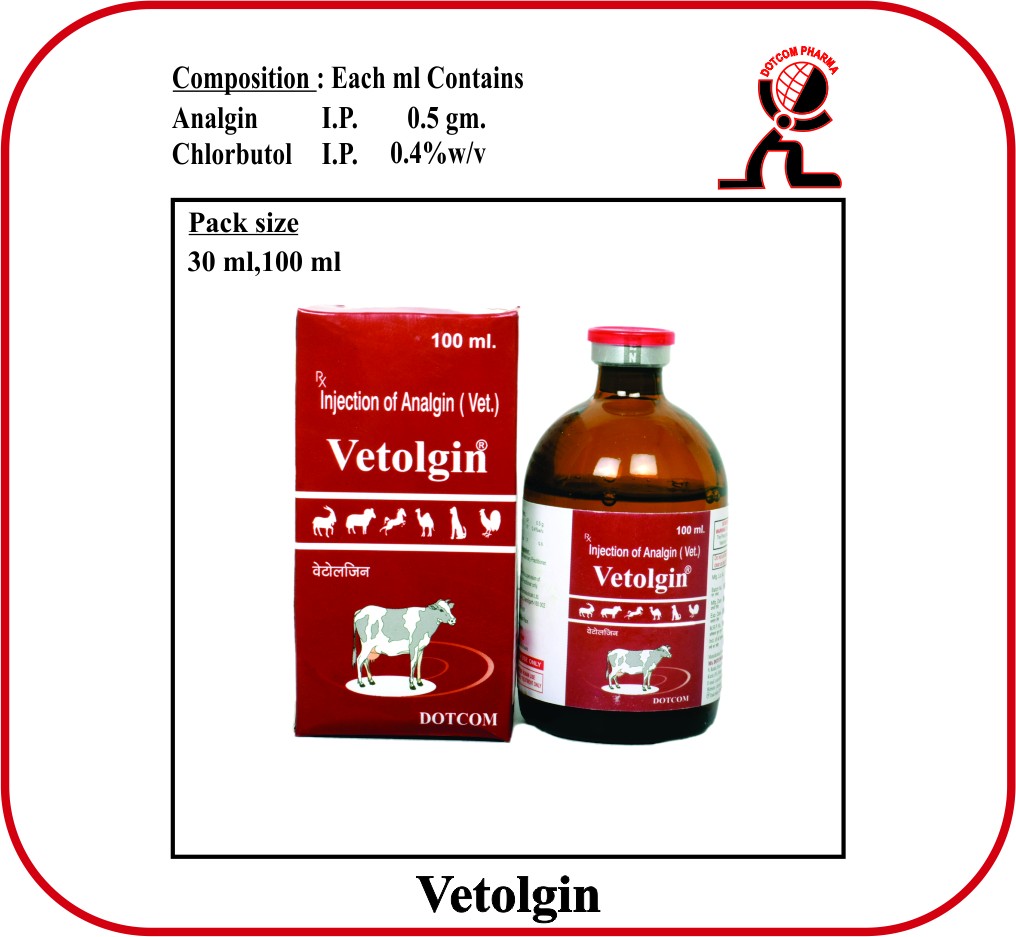
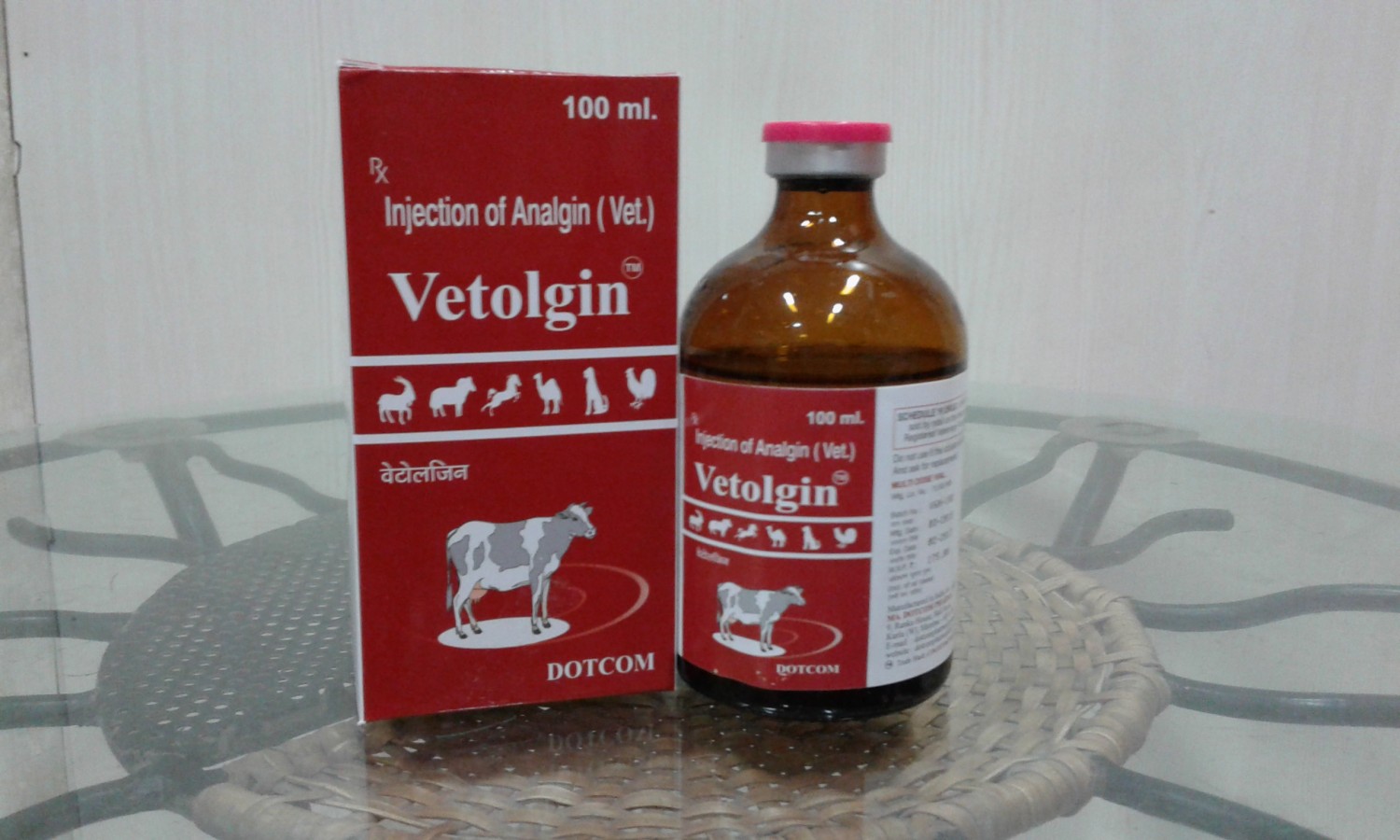
Vetolgin
Drug Name
: Analgin I.P. 0.5 gm Injection for Veterinary Use
Drug Role
: Analgesic.Antipyretic
NA
No
Ceritifcations:










Please login / register to buy or to get detailed information of the product
SKU:
Stock Available:
Batch / Lot. No:
Shelf life:
Manufacturing Date:
-
Expiry Date:
-
Minimum Pack Size:
Minimum Order Qty:
1
Pharma Categories:
• Non-opioid analgesic and antipyretic • Veterinary pain management agent
Product Form:
• Sterile injectable solution • Concentration: 0.5 gm per vial/ampoule • Pack sizes: Typically, 30 mL, 100 mL
Category:
Liquid Injection
Group:
N/A
Type:
Liquid Injection
Material:
Liquid
Tags
HSN Code:
2936.29.90
HS Code:
2936.29
Country of Origin:
India
TAX:
5%
Qty per Piece:
Weight Of Each Piece(gm):
Piece Dimensions (L×W×H):
Qty per Buffer Box / Shrink Pack:
Weight of Buffer Box / Shrink Pack:
Buffer Dimensions (L×W×H):
Total Qty per Case:
Total Weight per Case:
Case Dimensions (L×W×H):
Weight / Volume:
Dimensions:
Inhouse product
Analgin (Metamizole Sodium) is a non-opioid analgesic and antipyretic with potent pain-relieving and fever-reducing properties. It is widely used in veterinary medicine for relief of moderate to severe pain, inflammation, and fever in various animal species. The injectable form provides rapid onset of action and is often used in conditions such as colic, trauma, and postoperative pain.
• Active Ingredient: Metamizole Sodium (Analgin) I.P. 0.5 gm per vial/ampoule
• Appearance: Clear to slightly yellow sterile injectable solution
• pH: Typically, 6.0 - 7.0
• Sterility: Sterile and pyrogen-free
• Packaging: Supplied in sterile glass vials or ampoules, commonly 30 mL, 100 mL
• Metamizole Sodium I.P. (Analgin): 0.5 gm per vial/ampoule
• Excipients: Sterile water for injection, stabilizers
• Non-opioid analgesic and antipyretic
• Veterinary pain management agent
• Relief of moderate to severe pain in animals
• Treatment of fever associated with infections or inflammation
• Analgesia in colic, trauma, surgery, and musculoskeletal disorders
• Adjunct therapy in inflammatory conditions requiring pain control
• Dose: Usually 10-20 mg/kg body weight (0.01-0.02 gm/kg)
• Route: Intramuscular (IM) or intravenous (IV) injection
• Frequency: As prescribed, generally 1-2 times daily depending on severity
• Duration depends on clinical response and veterinary advice
• Sterile injectable solution
• Concentration: 0.5 gm per vial/ampoule
• Pack sizes: Typically, 30 mL, 100 mL
• Use aseptic technique during administration
• Shake well before use
• Administer slowly via IV or as a deep IM injection
• Follow veterinary dosage and duration recommendations
• Rapid onset of analgesic and antipyretic effects
• Effective pain and fever control in a wide range of animals
• Alternative to NSAIDs for animals sensitive to those drugs
• Suitable for use in food-producing animals with adherence to withdraw periods
• Rare risk of agranulocytosis (severe drop in white blood cells)
• Hypersensitivity reactions including anaphylaxis (rare)
• Hypotension if injected too rapidly intravenously
• Local irritation at injection site
• Meat: Minimum 7 days or as per regulatory guidelines
• Milk: Minimum 72 hours or according to local regulations
• Store between 15°C and 30°C
• Protect from light and freezing
• Keep out of reach of children and animals
• Do not use after expiry date
• Wear gloves while handling
• Avoid skin and eye contact
• In case of accidental exposure, rinse affected area thoroughly
• Dispose of unused material safely
• HS Code: 2936.29 (Pyrazolone derivatives)
• HSN Code (India): 2936.29.90
• For veterinary use only
• Use under veterinary supervision
• Monitor animals for adverse reactions during treatment
• Avoid use in animals with known hypersensitivity to pyrazolones
• Veterinary Use: Pain and fever management in food-producing and companion animals
• Human Use: Analgin is banned or restricted in many countries for humans due to risk of agranulocytosis; veterinary use is regulated separately
Q1: What is Analgin?
A: A non-opioid analgesic and antipyretic used to relieve pain and reduce fever.
Q2: How is it administered?
A: Intramuscular or intravenous injection.
Q3: What is the recommended dose?
A: 10-20 mg/kg body weight depending on species and condition.
Q4: Are there any side effects?
A: Rare risk of agranulocytosis, allergic reactions, and injection site irritation.
Q5: How should it be stored?
A: Between 15°C and 30°C, protected from light and freezing.
Q6: What is the withdrawal period?
A: Meat: Minimum 7 days; Milk: Minimum 72 hours.
Q7: Can Analgin be used in humans?
A: It is banned or restricted in many countries for human use but allowed in veterinary medicine under strict regulation.
Secure Transaction
100% secure payment
Top Brand
Trusted quality
Non Return
Due to hygiene