 +91 88281
11034
+91 88281
11034
 Need Help?



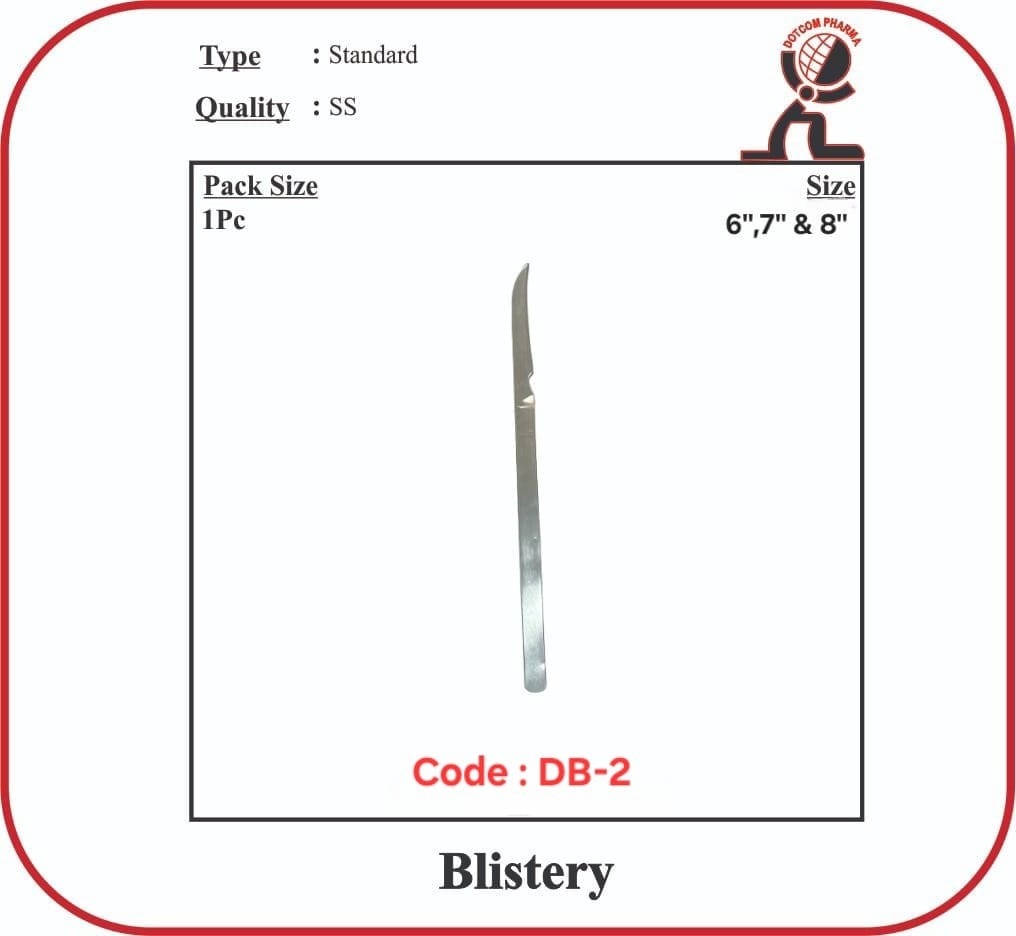
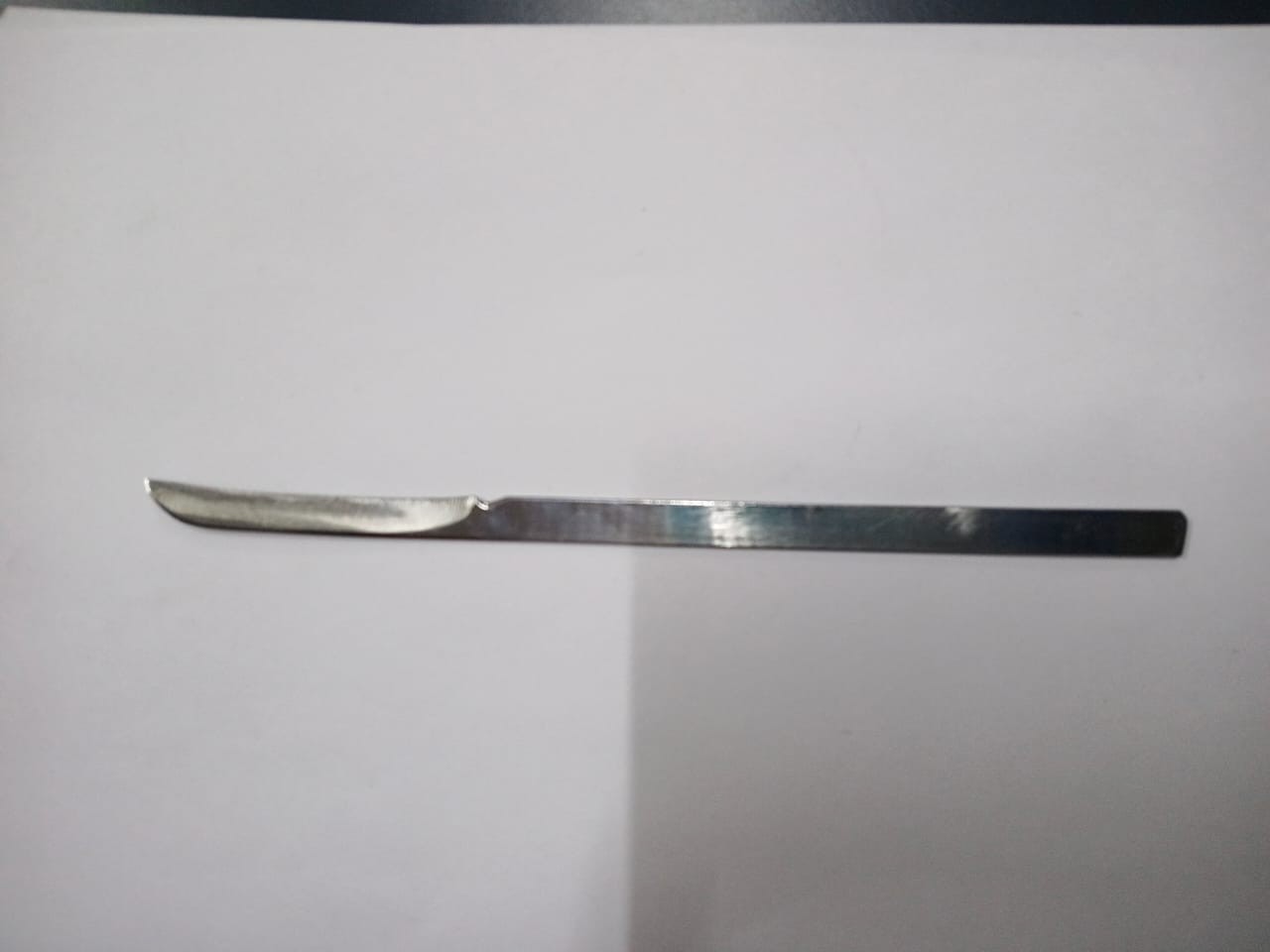
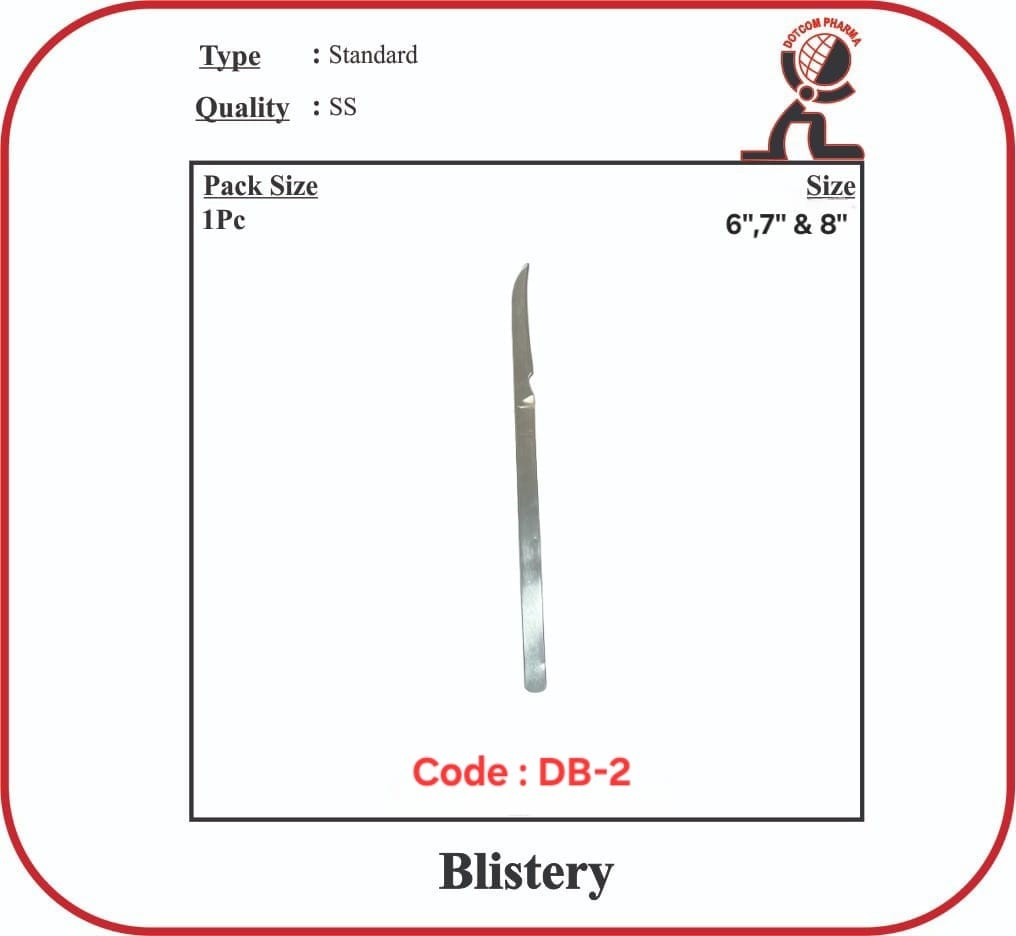
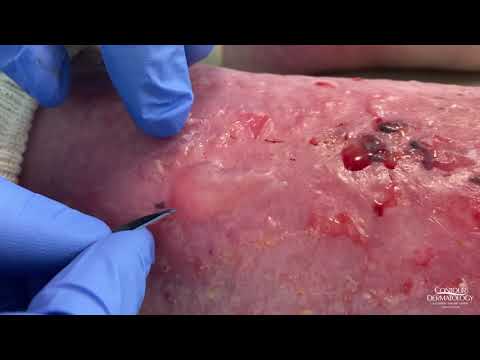
Blistery
Drug Name
: NA
Drug Role
: Counter-Irritation Therapy
NA
No
Ceritifcations:









Please login / register to buy or to get detailed information of the product
SKU:
Stock Available:
Batch / Lot. No:
Shelf life:
Manufacturing Date:
-
Expiry Date:
-
Minimum Pack Size:
Minimum Order Qty:
1
Pharma Categories:
Veterinary Treatment Instruments
Product Form:
Blistering Iron
Category:
Instruments
Group:
N/A
Type:
Veterinary Instrument
Material:
Stainless Steel
Tags
HSN Code:
90189099
HS Code:
9018.90
Country of Origin:
Indian
TAX:
5%
Qty per Piece:
Weight Of Each Piece(gm):
Piece Dimensions (L×W×H):
Qty per Buffer Box / Shrink Pack:
Weight of Buffer Box / Shrink Pack:
Buffer Dimensions (L×W×H):
Total Qty per Case:
Total Weight per Case:
Case Dimensions (L×W×H):
Weight / Volume:
Dimensions:
Inhouse product
Blistery is your go-to solution for blister prevention and care. Whether you're breaking in new shoes, hiking for miles, or just on your feet all day, Blistery provides a powerful barrier that cushions skin, reduces friction, and promotes rapid healing. Designed with advanced hydrocolloid technology, it stays in place for all-day protection while blending seamlessly with your skin.
• Blister Curette: For cleaning and scraping blistered tissue
• Blister Lance/Needle: For draining fluid from blisters or abscesses
• Blister Dressing Instruments: For applying ointments and dressings
• High-grade stainless steel (Surgical SS 304/316) for durability and corrosion resistance
• Plastic or rubber-coated handles for comfort
• Handheld instrument
• Single or multi-piece set/ Sterile or sterilizable form
• Treatment of blisters and abscesses in livestock (cattle, sheep, goats) and companion animals (dogs, horses)
• Draining and cleaning infected areas
• Application of topical medicines and ointments
• Surgical assistance for minor blister-related interventions
• Precise handling and treatment of blisters and wounds
• Reduces infection risk by effective drainage
• Durable and sterilizable for repeated use
• Ergonomic design improves veterinarian comfort
• Requires skilled handling to avoid tissue damage
• Risk of cross-contamination if not sterilized properly
• Limited to external use and minor blister treatment
• Always sterilize instrument before and after use
• Use gloves and maintain aseptic techniques
• Avoid excessive force during blister drainage
• Dispose of any single-use parts properly
• Monitor animal post-procedure for infection
• Autoclaving at 121°C for 15-30 minutes recommended
• Use of chemical sterilant (e.g., glutaraldehyde) if autoclave unavailable
• Proper drying and storage after sterilization
• Clean with disinfectant immediately after use
• Avoid dropping or damaging sharp edges
• Regularly inspect for rust or damage
• Store in sterilized containers or instrument trays
Code Type Code Description
HS Code 9018.90 Instruments and appliances used in medical, surgical, dental or veterinary sciences, n.e.s. (includes blister instruments)
HSN Code 90189000 Veterinary surgical instruments including blister instruments (India)
Q1: What is a blistery instrument used for in veterinary care?
It’s used for treating and draining blisters, wounds, and abscesses on animals.
Q2: Can blistery instruments be reused?
Yes, but only after thorough sterilization.
Q3: Are these instruments painful for animals?
If used properly with skill and care, discomfort is minimal.
Q4: How to sterilize blistery instruments?
Autoclaving at 121°C for 15-30 minutes is the standard method.
Q5: What materials are blistery instruments made of?
Mostly high-grade stainless steel with plastic or rubber handles.
Secure Transaction
100% secure payment
Top Brand
Trusted quality
Non Return
Due to hygiene