 +91 88281
11034
+91 88281
11034
 Need Help?



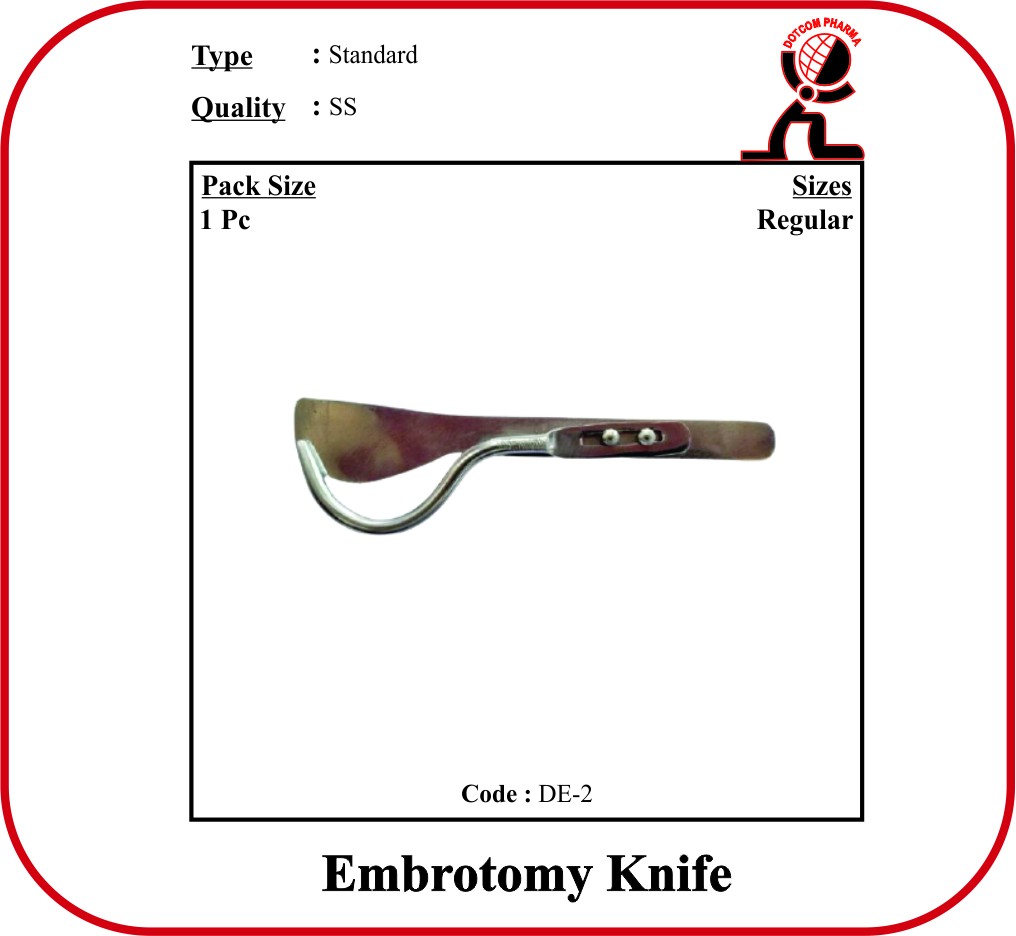
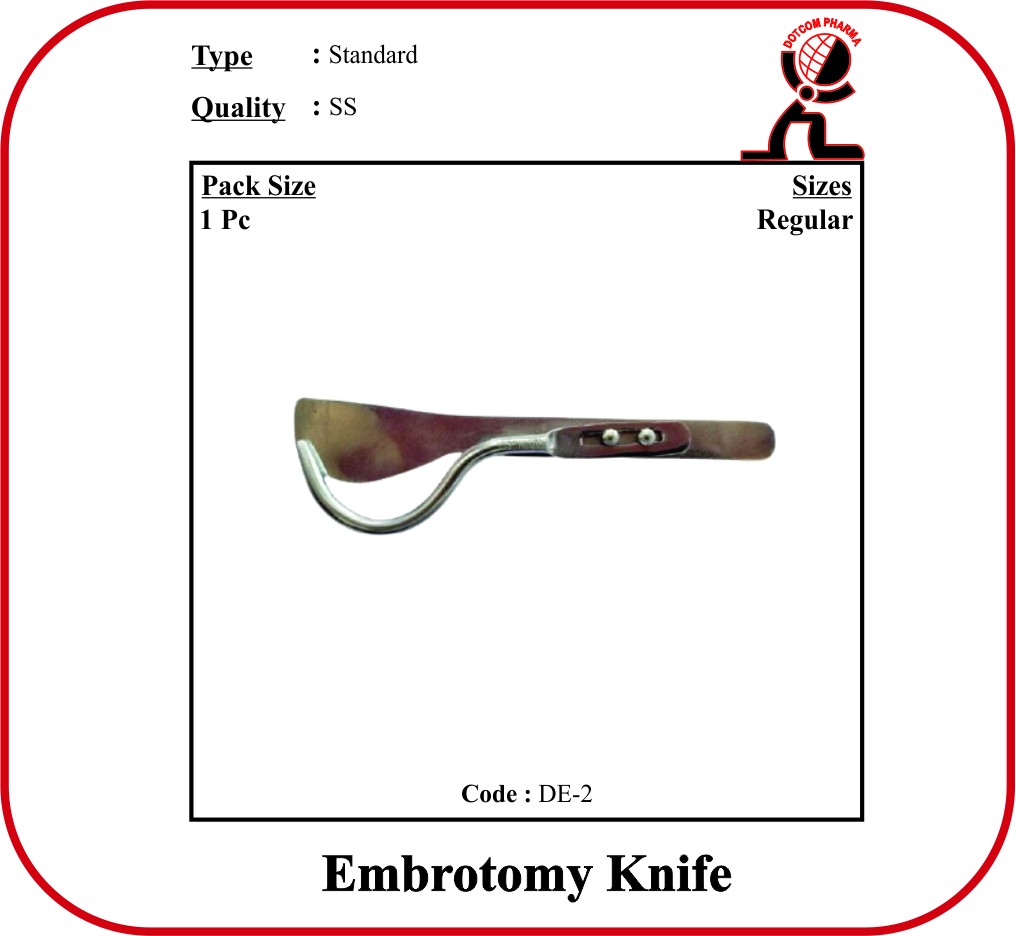
Embrotomy Knife
Drug Name
: NA
Drug Role
: Fetal Dissection
NA
No
Ceritifcations:










Please login / register to buy or to get detailed information of the product
SKU:
Stock Available:
Batch / Lot. No:
Shelf life:
Manufacturing Date:
-
Expiry Date:
-
Minimum Pack Size:
Minimum Order Qty:
1
Pharma Categories:
Veterinary Reproductive Instruments
Product Form:
Knife
Category:
Instruments
Group:
N/A
Type:
Veterinary Obstetrical Instrument
Material:
Stainless Steel
Tags
HSN Code:
9018.90
HS Code:
9018.90.30
Country of Origin:
Imported
TAX:
5%
Qty per Piece:
Weight Of Each Piece(gm):
Piece Dimensions (L×W×H):
Qty per Buffer Box / Shrink Pack:
Weight of Buffer Box / Shrink Pack:
Buffer Dimensions (L×W×H):
Total Qty per Case:
Total Weight per Case:
Case Dimensions (L×W×H):
Weight / Volume:
Dimensions:
Inhouse product
The Embryotomy Knife is a specialised veterinary obstetrical surgical instrument designed for use during difficult parturition and advanced reproductive procedures in large animals. It is primarily utilised in embryotomy procedures, where controlled dissection or reduction of a deceased fetus is required to facilitate safe removal during obstructed labour (dystocia). This instrument plays an important role in veterinary obstetrics by assisting veterinarians in managing complicated delivery cases while helping reduce trauma to the birth canal and surrounding tissues.
Regular
• Stainless Steel: Durable, rust-resistant, and easy to sterilize.
Veterinary Instruments
Veterinary obstetrical procedures
Embryotomy during difficult labour (dystocia)
• Human Applications: Not Applicable
• Veterinary Applications: Veterinary Obstetrical Surgical Instrument designed for use during difficult parturition and advanced reproductive procedures in large animals.
- Use only by qualified veterinarians or trained veterinary professionals.
- Inspect the instrument before each use for signs of damage, corrosion, or blade defects.
- Ensure the knife is properly sterilised prior to every procedure.
- Handle with extreme care to avoid accidental injury due to the sharp cutting edge.
- Use only for its intended veterinary obstetrical purpose.
- Avoid excessive force that may damage surrounding tissues.
- Maintain proper restraint and positioning of the animal before use.
- Follow established veterinary obstetrical protocols during embryotomy procedures.
- Keep out of reach of unauthorised personnel and children.
- Replace or service the instrument if the cutting edge becomes damaged or excessively worn.
• HS Code: 9018.90.30 (Medical and Surgical Instruments)
• HSN Code: 9018.90 (Surgical Instruments)
- Handle using clean or sterile gloves during procedures.
- Always transport and store the instrument in a protective case or instrument tray.
- Avoid dropping the instrument, as this may affect blade integrity and performance.
- Clean immediately after use to prevent biological material from drying on the surface.
- Rinse thoroughly after cleaning to remove all residues.
- Dry completely before sterilisation or storage.
- Handle the blade away from the body and other personnel.
- Inspect moving or detachable components, if applicable, before and after use.
- Store in a clean, dry, and well-ventilated environment.
- Remove all visible blood, tissue, and organic debris.
- Wash thoroughly using a neutral pH instrument detergent and warm water.
- Rinse with distilled or demineralised water when possible.
- Dry completely before sterilisation.
Steam Autoclave
- Temperature: 121°C for 15–30 minutes or 134°C for 3–5 minutes
- Follow the autoclave manufacturer's instructions and local veterinary guidelines.
Chemical Sterilisation
- Use approved veterinary instrument disinfectants or sterilising solutions according to the manufacturer's recommendations.
- Allow the instrument to cool completely before handling.
- Store in sterile packaging or a clean instrument cabinet.
- Inspect the cutting edge before the next use.
The Embryotomy Knife is primarily used in veterinary obstetrics and reproductive surgery for managing difficult births and obstetrical emergency Embryotomy procedures in cases of obstructed labour (dystocia)
- Removal of non-viable fetuses during complicated deliveries
- Veterinary reproductive interventions
- Large animal obstetrical procedures
- Assisted delivery management in livestock
- Emergency obstetrical surgical procedures
- Veterinary teaching and training institutions
- Livestock reproductive healthcare services
Q. What is an Embryotomy Knife?
A. An Embryotomy Knife is a specialised veterinary obstetrical instrument used during embryotomy procedures to assist in difficult deliveries and reproductive interventions.
Q. Is an Embryotomy Knife used in human medicine?
A. It is primarily classified and used as a veterinary instrument.
Q. Which animals is it commonly used on?
A. Cattle, buffalo, horses, sheep, and goats.
Q. What material is it made from?
A. Most Embryotomy Knives are manufactured from high-quality stainless steel.
Q. Can it be reused?
A. Yes, it is reusable when properly cleaned, disinfected, and sterilised.
Secure Transaction
100% secure payment
Top Brand
Trusted quality
Non Return
Due to hygiene