Frazier Suction Tube

Drug Name

: NA

Drug Role

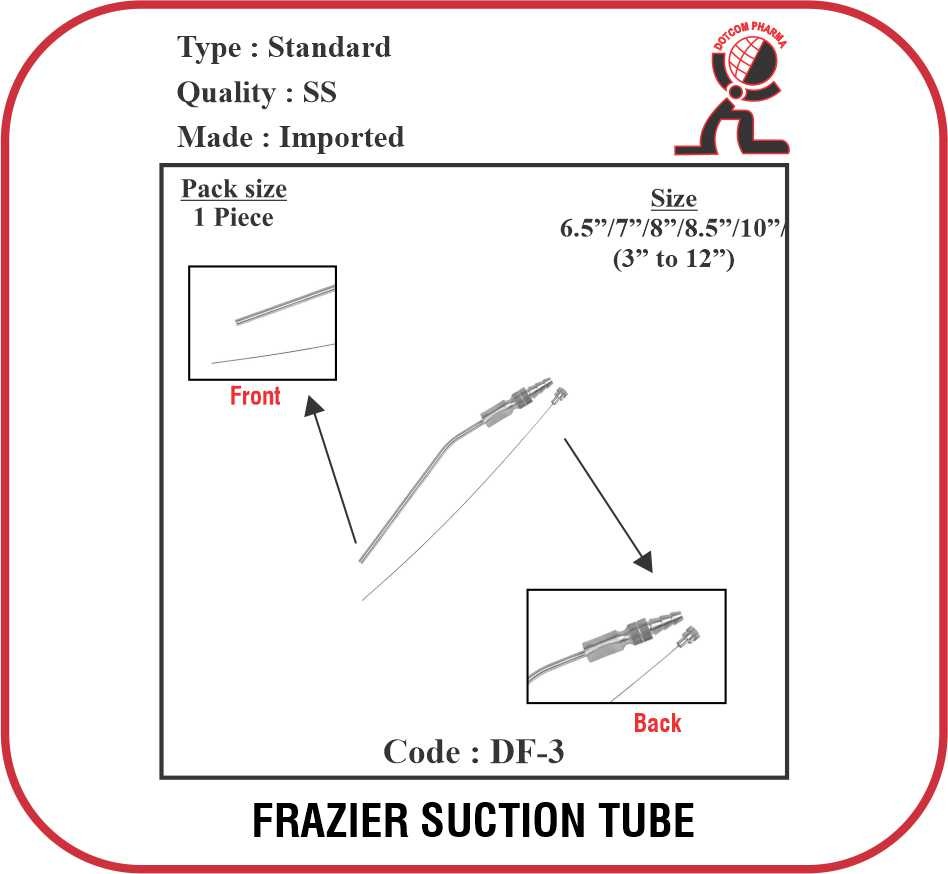
: The Frazier Suction Tube is a precision suction instrument used during surgeries to evacuate blood, fluids, and debris from small or confined surgical areas

Schedule:
NA
Prescription Required:
No
Brand / Mfg:
DOTCOM PHARMA
/ Piece
MRP: Inclusive of all taxes
Discount Applied:
MRP
-
Price
-
-
Discount
-
-
+ Tax
-
-
Total You Save
-
You Save:
Size (in Inch)
Type
Quality
Made
Quantity
(10 available)
Total Amount Product Wise:

Ceritifcations:

Certificate
Certificate
Certificate
Certificate
Certificate
Certificate
Certificate
Certificate
Certificate
Certificate

Please login / register to buy or to get detailed information of the product

SKU:

Stock Available:

Batch / Lot. No:

Shelf life:

Manufacturing Date:

-

Expiry Date:

-

Minimum Pack Size:

Minimum Order Qty:

1

Pharma Categories:

• Surgical Suction Instruments • Neurosurgical and ENT Tools • Veterinary and Human Surgical Accessories

Product Form:

• Single-unit instrument with or without removable stylet (cleaning rod)

Category:

Veterinary

Group:

N/A

Type:

NA

Material:

Stainless Steel

HSN Code:

90189099

HS Code:

9018.90

Country of Origin:

Imported

TAX:

5%

Qty per Piece:

Weight Of Each Piece:

Piece Dimensions (L×W×H):

Qty per Buffer Box / Shrink Pack:

Weight of Buffer Box / Shrink Pack:

Buffer Dimensions (L×W×H):

Total Qty per Case:

Total Weight per Case:

Case Dimensions (L×W×H):

Weight / Volume:

Dimensions:

Estimate Shipping Time: 10 Days

Inhouse product

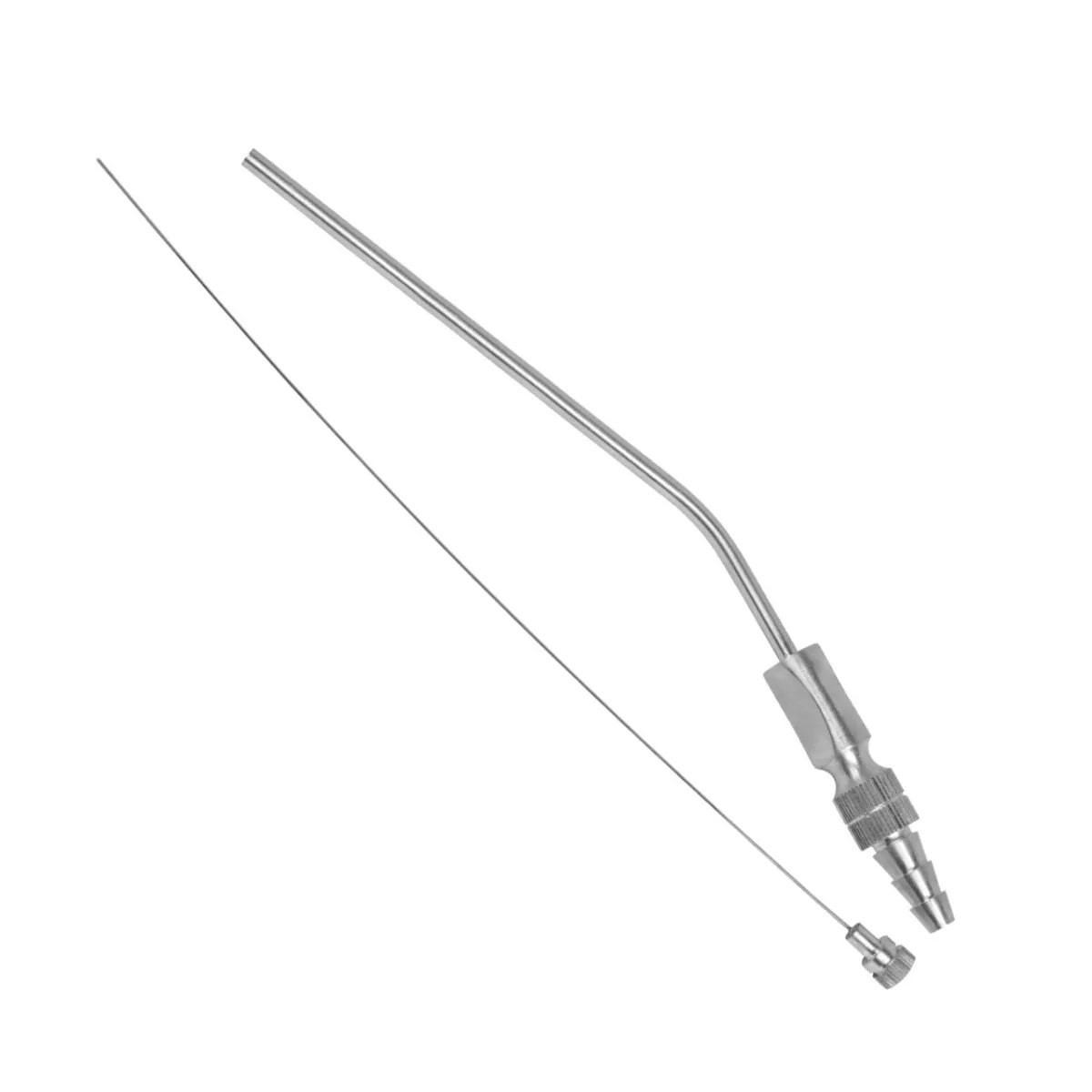
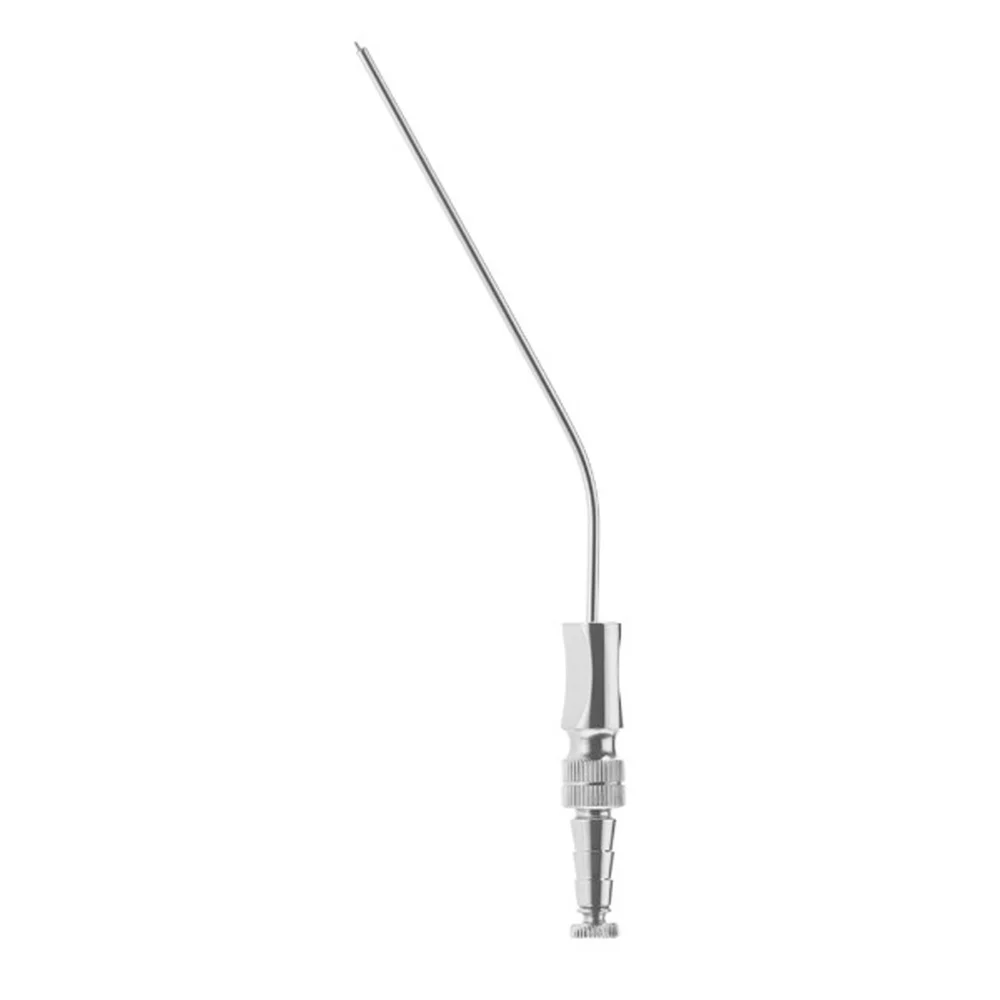
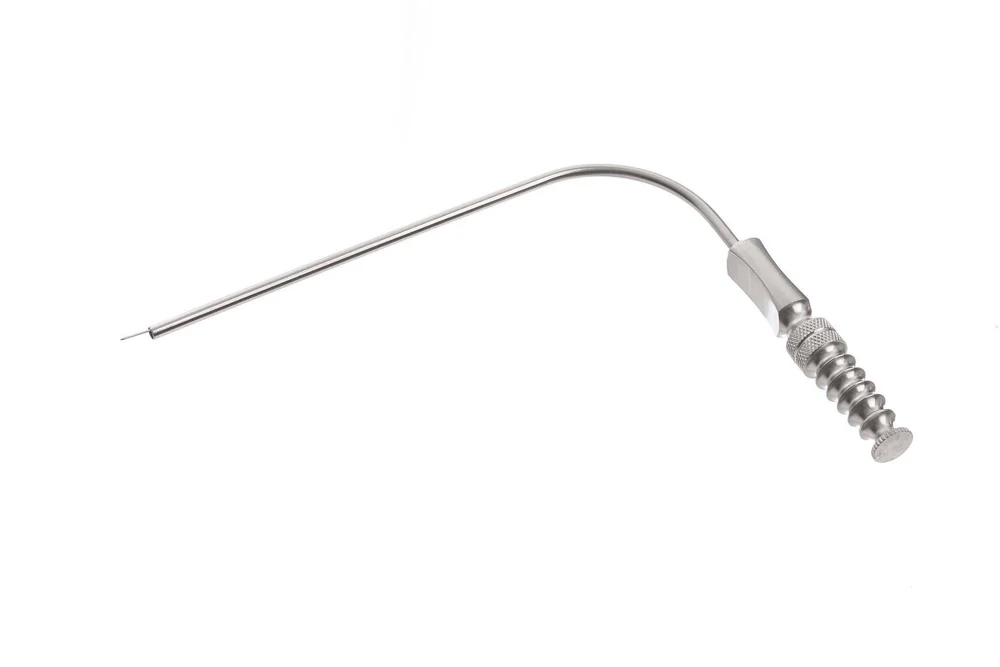
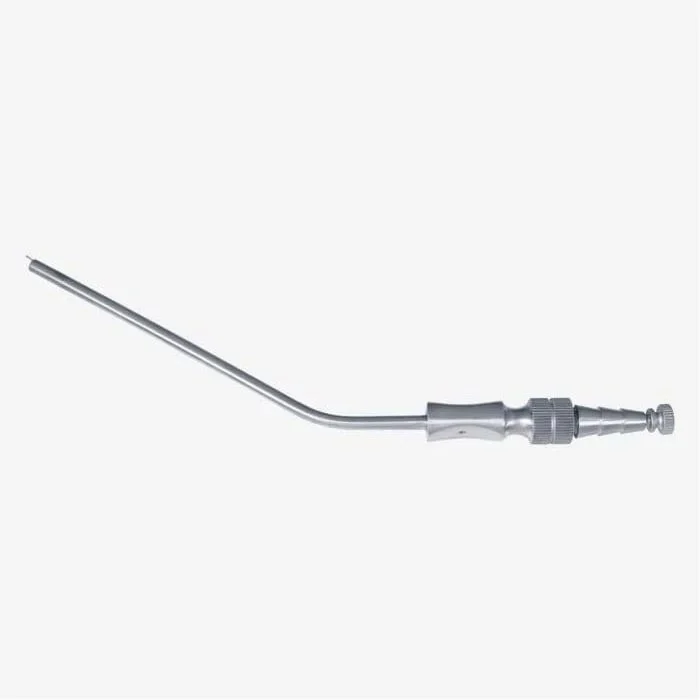
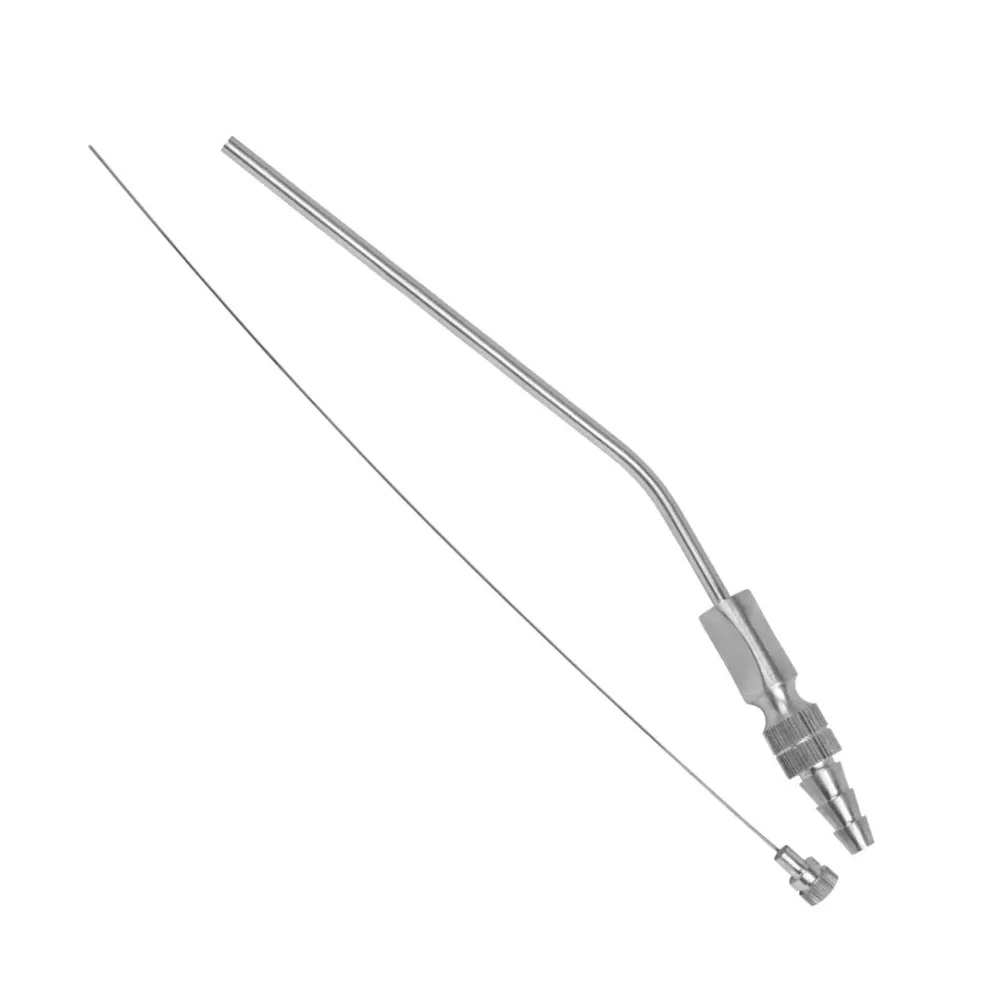
The Frazier Suction Tube is a precision suction instrument used during surgeries to evacuate blood, fluids, and debris from small or confined surgical areas. It features a thin, hollow tube with a side thumb hole for intermittent suction control, making it ideal for neurosurgery, ENT, orthopaedic, and delicate veterinary procedures.

•   Material: Medical-grade stainless steel (SS 304 or SS 316)

•   Length: 8 cm to 30 cm (depending on use)

•   Tube Diameter: 1.0 mm to 5.0 mm

•   Tip: Angled, smooth bore

•   Control: Thumb hole (vents suction manually)

•   Connection End: Standard slip or lure-lock fitting for suction tubing

•   Sterilization: Fully autoclavable

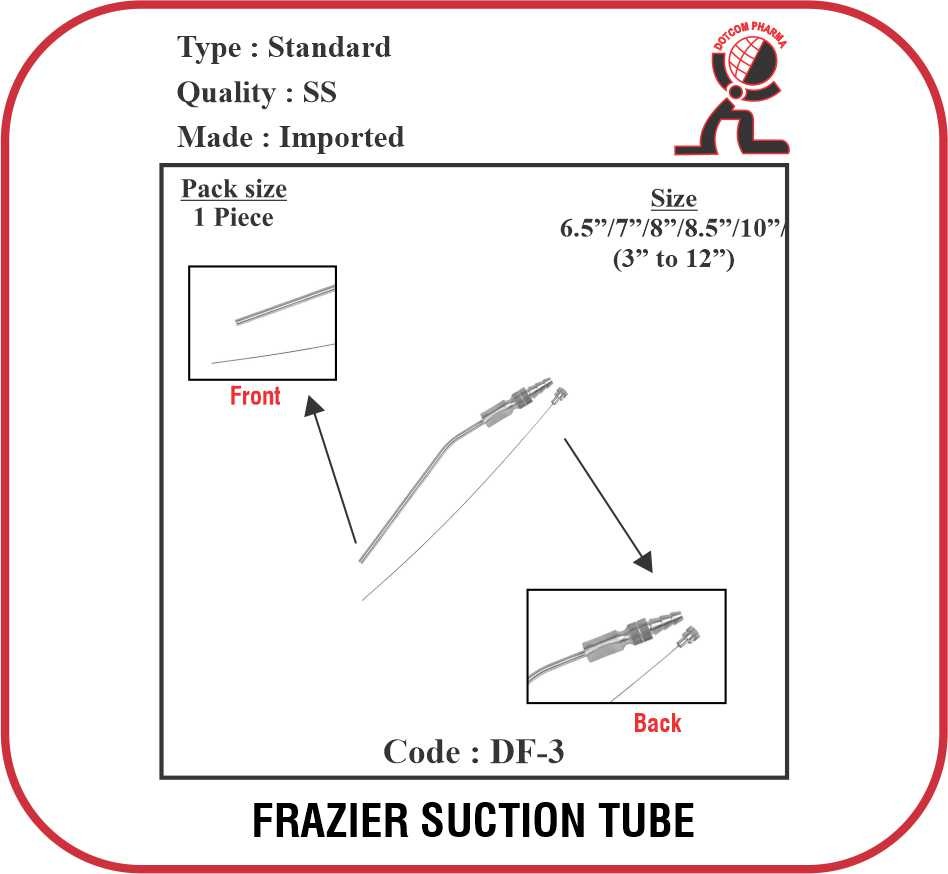
•   Common Sizes: Frazier #3, #5, #7, #9 (Number denotes the internal diameter – e.g., #3 = 1.3 mm)

•   Lengths vary between 8–30 cm

•    Long, narrow cylindrical tube

•   Angled tip (usually 45°–90°) for directional access

•   Ergonomic hand grip with thumb vent

•   Standard Frazier Suction Tube

•   Insulated Frazier (for use with electrosurgical devices)

•   Paediatric Frazier (smaller bore)

•   Disposable and reusable versions available

•   Entire body: Stainless steel

•   Optional: Insulated models with non-conductive polymer coating

•    Disposable: Medical-grade plastic versions available

•    Surgical Suction Instruments

•    Neurosurgical and ENT Tools

•    Veterinary and Human Surgical Accessories

•   Single-unit instrument with or without removable stylet (cleaning rod)

•   Available sterile (EO gas/autoclave) or non-sterile bulk

•   Supplied in plastic tray or protective case

Used for precise removal of fluids and blood from surgical sites, especially:

•   During microsurgical and delicate operations

•   ENT (ear, nose, throat), neurosurgery, and orthopaedic procedures

•   Ideal for narrow or deep anatomical spaces

•   Controlled suction via thumb vent

•   Precise and delicate tissue management

•   Reusable and autoclavable/ Minimizes trauma to surrounding tissues

•   Wide variety of tip sizes for different procedures

•   Can clog if not cleaned regularly/ Fine tips may bend if mishandled

•   Requires manual dexterity for thumb control

•   Not suited for high-volume suction needs

•   Clean lumen immediately after use to prevent blockage

•   Use appropriate suction pressure to avoid tissue trauma

•   Avoid using near sharp bony edges to prevent tip damage

•    Ensure proper sterilization before reuse

•   HS Code: 9018.90

•   HSN Code: 90189099 (Covers surgical instruments, including suction tubes)

•   Always flush and brush-clean immediately post-surgery

•   Inspect tip for bends or cracks before use

•   Connect securely to suction tubing

•   Operate thumb control gently for optimal results

•   Store with stylet inserted to maintain patency

•   Autoclave at 121°C for 15–20 minutes

•   Chemical sterilization possible with glutaraldehyde or peracetic acid

•   Avoid high-speed drying cycles which may warp thin-bore tubes

•   Use stylet during cleaning for thorough lumen hygiene

•   Widely used in small animal and exotic surgeries for delicate suction

•   Effective in oral, ENT, neurosurgical, and orthopaedic animal procedures

•   Allows for precision during confined space surgeries (e.g., cranial or oral cavity)

•   Ideal for feline and avian microsurgery, where space is limited

•   Common in specialty and referral veterinary practices

•   Standard tool in ENT, neurosurgery, orthopaedic, and maxillofacial surgeries

•   Frequently used in brain surgery for precise fluid evacuation

•   Valuable in ear surgeries (e.g., mastoidectomy) and sinus procedures

•   Ensures visibility in narrow operative fields by minimizing pooling

Q1. What is a Frazier Suction Tube used for?

  Answer: It is used for precise suctioning of blood or fluids during surgeries, especially in small or deep operative fields.

Q2. What sizes are available?

  Answer: Common sizes include #3, #5, #7, and #9, with different lengths and bore diameters.

Q3. Can it be reused?

  Answer: Yes, stainless steel Frazier tubes are reusable and autoclavable.

Q4. Is it used in veterinary procedures?

  Answer: Absolutely — it’s especially valuable in small animal and exotic surgeries.

Q5. How is it cleaned and sterilized?

  Answer: Use a cleaning stylet, flush thoroughly, then autoclave or chemically disinfect.

Secure Transaction

100% secure payment

Top Brand

Trusted quality

Non Return

Due to hygiene
Refund
Not Applicable
Share
Top Selling Products
0 out of 5.0
(0 reviews)
There have been no reviews for this product yet.
The Frazier Suction Tube is a precision suction instrument used during surgeries to evacuate blood, fluids, and debris from small or confined surgical areas. It features a thin, hollow tube with a side thumb hole for intermittent suction control, making it ideal for neurosurgery, ENT, orthopaedic, and delicate veterinary procedures.

•   Material: Medical-grade stainless steel (SS 304 or SS 316)

•   Length: 8 cm to 30 cm (depending on use)

•   Tube Diameter: 1.0 mm to 5.0 mm

•   Tip: Angled, smooth bore

•   Control: Thumb hole (vents suction manually)

•   Connection End: Standard slip or lure-lock fitting for suction tubing

•   Sterilization: Fully autoclavable

•   Common Sizes: Frazier #3, #5, #7, #9 (Number denotes the internal diameter – e.g., #3 = 1.3 mm)

•   Lengths vary between 8–30 cm

•    Long, narrow cylindrical tube

•   Angled tip (usually 45°–90°) for directional access

•   Ergonomic hand grip with thumb vent

•   Standard Frazier Suction Tube

•   Insulated Frazier (for use with electrosurgical devices)

•   Paediatric Frazier (smaller bore)

•   Disposable and reusable versions available

•   Entire body: Stainless steel

•   Optional: Insulated models with non-conductive polymer coating

•    Disposable: Medical-grade plastic versions available

•    Surgical Suction Instruments

•    Neurosurgical and ENT Tools

•    Veterinary and Human Surgical Accessories

•   Single-unit instrument with or without removable stylet (cleaning rod)

•   Available sterile (EO gas/autoclave) or non-sterile bulk

•   Supplied in plastic tray or protective case

Used for precise removal of fluids and blood from surgical sites, especially:

•   During microsurgical and delicate operations

•   ENT (ear, nose, throat), neurosurgery, and orthopaedic procedures

•   Ideal for narrow or deep anatomical spaces

•   Controlled suction via thumb vent

•   Precise and delicate tissue management

•   Reusable and autoclavable/ Minimizes trauma to surrounding tissues

•   Wide variety of tip sizes for different procedures

•   Can clog if not cleaned regularly/ Fine tips may bend if mishandled

•   Requires manual dexterity for thumb control

•   Not suited for high-volume suction needs

•   Clean lumen immediately after use to prevent blockage

•   Use appropriate suction pressure to avoid tissue trauma

•   Avoid using near sharp bony edges to prevent tip damage

•    Ensure proper sterilization before reuse

•   HS Code: 9018.90

•   HSN Code: 90189099 (Covers surgical instruments, including suction tubes)

•   Always flush and brush-clean immediately post-surgery

•   Inspect tip for bends or cracks before use

•   Connect securely to suction tubing

•   Operate thumb control gently for optimal results

•   Store with stylet inserted to maintain patency

•   Autoclave at 121°C for 15–20 minutes

•   Chemical sterilization possible with glutaraldehyde or peracetic acid

•   Avoid high-speed drying cycles which may warp thin-bore tubes

•   Use stylet during cleaning for thorough lumen hygiene

•   Widely used in small animal and exotic surgeries for delicate suction

•   Effective in oral, ENT, neurosurgical, and orthopaedic animal procedures

•   Allows for precision during confined space surgeries (e.g., cranial or oral cavity)

•   Ideal for feline and avian microsurgery, where space is limited

•   Common in specialty and referral veterinary practices

•   Standard tool in ENT, neurosurgery, orthopaedic, and maxillofacial surgeries

•   Frequently used in brain surgery for precise fluid evacuation

•   Valuable in ear surgeries (e.g., mastoidectomy) and sinus procedures

•   Ensures visibility in narrow operative fields by minimizing pooling

Q1. What is a Frazier Suction Tube used for?

  Answer: It is used for precise suctioning of blood or fluids during surgeries, especially in small or deep operative fields.

Q2. What sizes are available?

  Answer: Common sizes include #3, #5, #7, and #9, with different lengths and bore diameters.

Q3. Can it be reused?

  Answer: Yes, stainless steel Frazier tubes are reusable and autoclavable.

Q4. Is it used in veterinary procedures?

  Answer: Absolutely — it’s especially valuable in small animal and exotic surgeries.

Q5. How is it cleaned and sterilized?

  Answer: Use a cleaning stylet, flush thoroughly, then autoclave or chemically disinfect.

0 out of 5.0
(0 reviews)
There have been no reviews for this product yet.

More From Instruments

Top Selling Products
Search any image
Drag an image here or upload a file
Or