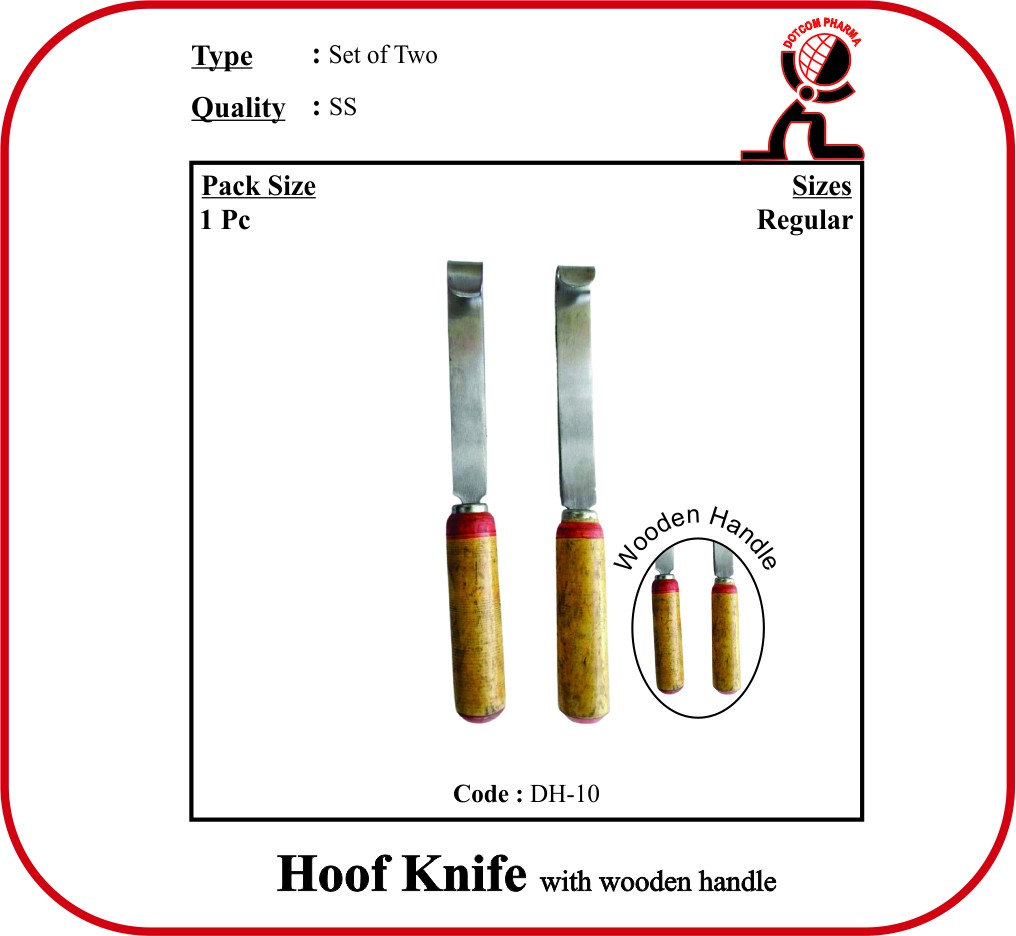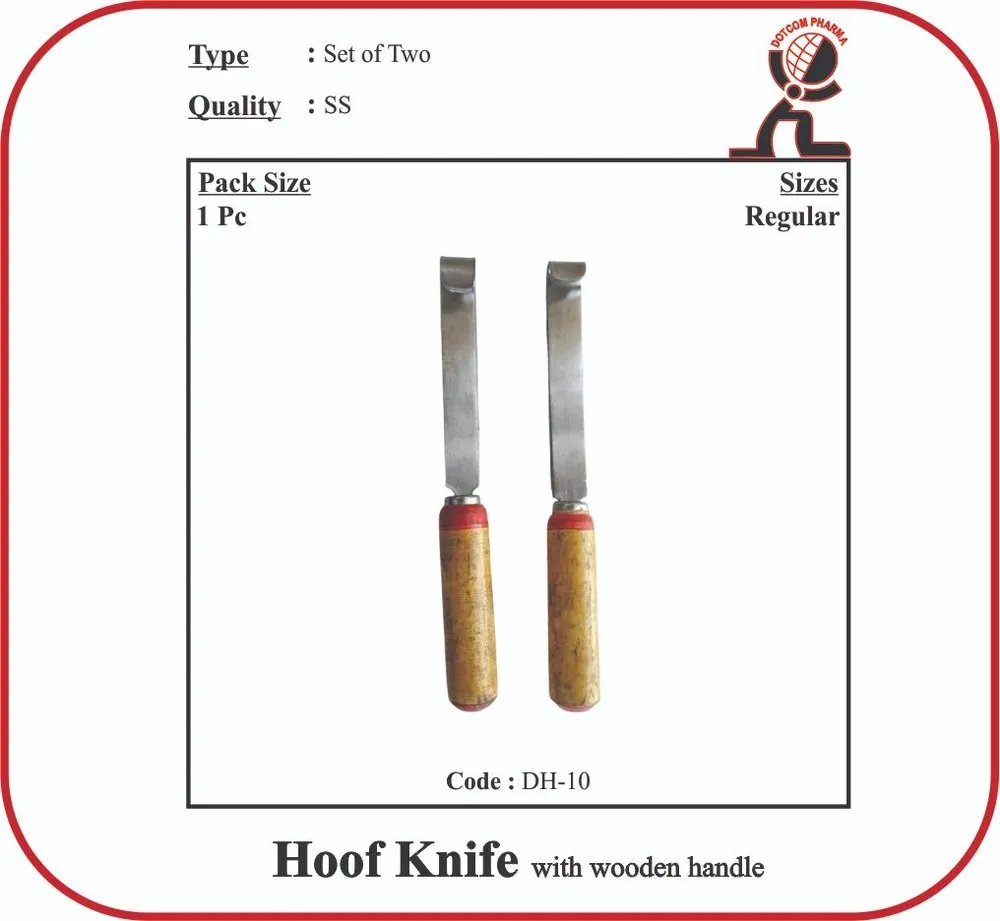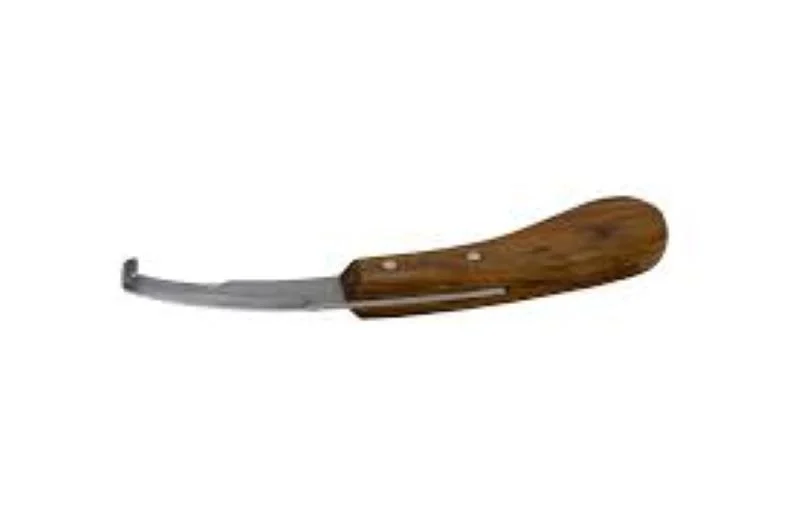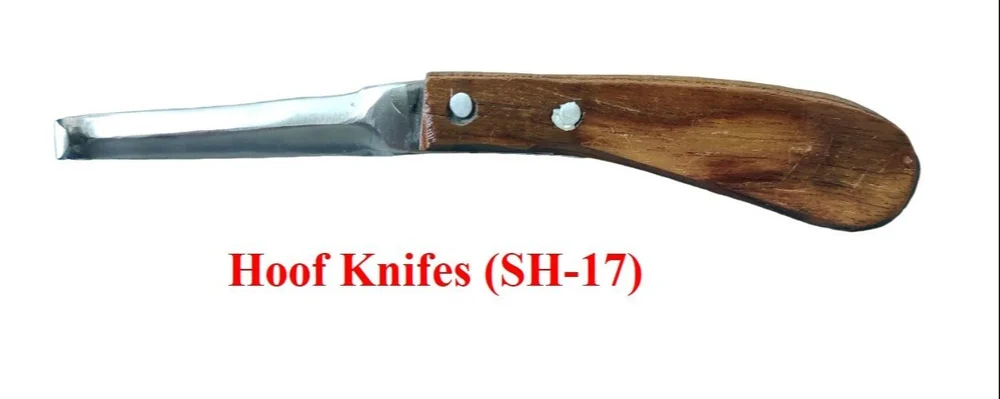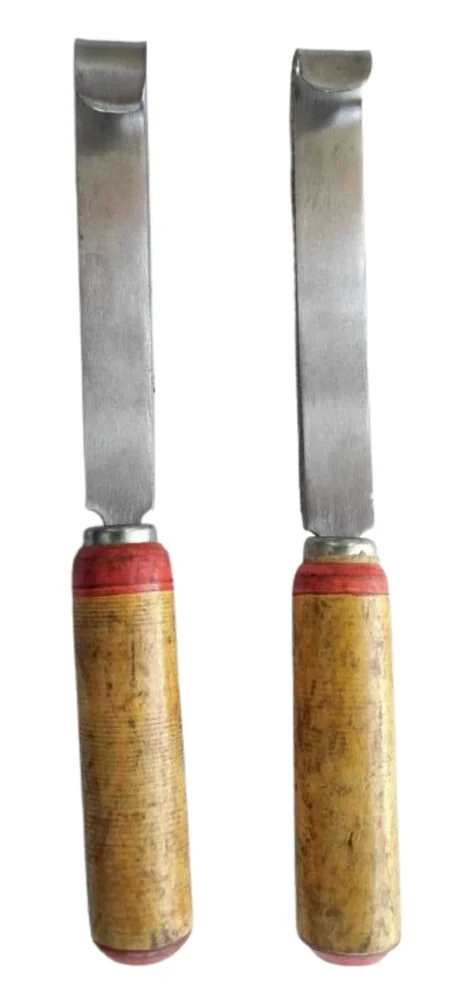
Hoof Knife With Wooden Handle

Drug Name

: NA

Drug Role

: The Hoof Knife with Wooden Handle is a specialized trimming and shaping tool designed for removing excess hoof material, cleaning cavities, and addressing hoof disorders in livestock and equines

Schedule:
NA
Prescription Required:
No
Brand / Mfg:
DOTCOM PHARMA
/ Piece
MRP: Inclusive of all taxes
Discount Applied:
MRP
-
Price
-
-
Discount
-
-
+ Tax
-
-
Total You Save
-
You Save:
Type
Size
Quality
Made
Quantity
(10 available)
Total Amount Product Wise:

Ceritifcations:

Certificate
Certificate
Certificate
Certificate
Certificate
Certificate
Certificate
Certificate
Certificate
Certificate

Please login / register to buy or to get detailed information of the product

SKU:

Stock Available:

Batch / Lot. No:

Shelf life:

Manufacturing Date:

-

Expiry Date:

-

Minimum Pack Size:

Minimum Order Qty:

1

Pharma Categories:

• Hoof care and trimming instruments

Product Form:

• Sold individually or in hoof care kits

Category:

Veterinary

Group:

N/A

Type:

• Right-Handed Curved Blade

Material:

o Stainless steel (corrosion-resistant, holds edge well)

HSN Code:

9018

HS Code:

82016000

Country of Origin:

India

TAX:

5%

Qty per Piece:

Weight Of Each Piece:

Piece Dimensions (L×W×H):

Qty per Buffer Box / Shrink Pack:

Weight of Buffer Box / Shrink Pack:

Buffer Dimensions (L×W×H):

Total Qty per Case:

Total Weight per Case:

Case Dimensions (L×W×H):

Weight / Volume:

Dimensions:

Estimate Shipping Time: 10 Days

Inhouse product

The Hoof Knife with Wooden Handle is a specialized trimming and shaping tool designed for removing excess hoof material, cleaning cavities, and addressing hoof disorders in livestock and equines. It features a sharp, curved or straight blade for precision and a traditional hardwood handle for a firm, natural grip. Widely used by veterinarians, farriers, and hoof care specialists.

•   Blade Type: Curved or straight, razor-sharp edge

•   Handle: Ergonomic wooden grip (varnished or raw finish)

•   Blade Material: Hardened stainless steel or carbon steel

•   Overall Length: 18–25 cm depending on model

•   Blade Width: 1–2.5 cm (varies by style)

•   Edge Type: Single-edge (standard), double-edge (ambidextrous use)

•   Weight: 120–250g (depending on design)

•   Small: 18–20 cm (compact, detailed trimming)

•   Standard: 21–23 cm (general hoof use)

•   Large: 24–25 cm (heavy-duty or large animal trimming)

•   Blade:

o   Curved blade (standard)

o   Straight blade (less common, specific use)

o   Drop-point and loop-style (for digging or scooping lesions)

•   Handle:

o   Straight grip

o   Slightly contoured for better hand fit

•   Right-Handed Curved Blade

•   Left-Handed Curved Blade

•   Double-Edge Blade (ambidextrous use)

•   Loop Knife (for cleaning and digging out infected hoof)

•   Farrier Grade vs. Veterinary Grade

•   Blade:

o   Stainless steel (corrosion-resistant, holds edge well)

o   High-carbon steel (razor-sharp, needs more care)

•   Handle:

o   Hardwood (rosewood, beechwood, or maple)

o   Varnished or natural grip finish

o   Some with brass rivets for blade anchoring

•   Hoof care and trimming instruments

•   Veterinary orthopaedic tools

•   Large animal handling tools

•   Farrier equipment

•   Sold individually or in hoof care kits

•   Available in right, left, and loop versions

•   Comes pre-sharpened and oiled for rust protection

•   Non-sterile packaging with blade guard

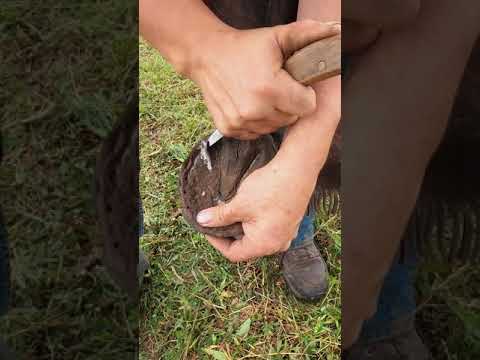
 Used to trim and shape hoof soles and remove damaged or infected horn tissue. Also used to clean out abscesses, hoof rot pockets, and prepare the hoof for shoeing or further treatment.

•   Offers precise and controlled cuts

•   Comfortable grip reduces hand fatigue

•   Curved blade matches hoof contours

•   Wooden handle gives natural grip feel and long-term durability

•   Available in multiple orientations for both left and right-handed users

•   Needs regular sharpening to maintain edge

•   Wooden handle can absorb moisture if not sealed properly

•   Improper technique can injure hoof or handler

•   Not suitable for small pets or non-hoofed animals

•   Always use with proper restraint of the animal

•   Hold firmly and cut gradually — avoid deep or forceful cuts

•   Clean and oil the blade after every use

•   Do not store wet; may cause rust or wood warping

•   Keep out of reach of children 

•   HSN 9018: Veterinary or medical surgical tools

•   HSN 82016000: Cutting tools (fixed blade knives used in agriculture/veterinary)

•   Grip handle close to blade for maximum control

•   Use in small strokes — don’t force the blade

•   Sharpen regularly using a honing rod or stone

•   After use, clean, dry, oil blade, and store in dry area 

•   Blade Cleaning: Wipe with disinfectant or veterinary-grade cleaning fluid

•   Handle: Wipe with damp cloth, avoid soaking wooden handle

•   Not Autoclavable • Apply blade oil or disinfectant spray for rust prevention

 Used by veterinarians and hoof care professionals for hoof trimming, treating abscesses, and managing conditions like hoof rot, laminitis, and sole ulcers in cattle, horses, goats, and sheep.

Not for direct human use, but essential in human-controlled environments like farms, veterinary clinics, hoof care training, and research centres focusing on livestock health. 

1.What is the hoof knife used for?

   To trim, shape, and clean hooves in livestock for health and treatment.

2.Can left-handed people use it?

   Yes — left-handed and double-edge versions are available.

3.How often should the blade be sharpened?

  After every 3–5 uses or when you notice reduced cutting efficiency.

4.Is the wooden handle durable?

  Yes, if cared for properly and not exposed to prolonged moisture.

5.Is it safe for goats and sheep?

  Absolutely — it’s used for all hoofed livestock including small ruminants.

Secure Transaction

100% secure payment

Top Brand

Trusted quality

Non Return

Due to hygiene
Refund
Not Applicable
Share
Top Selling Products
0 out of 5.0
(0 reviews)
There have been no reviews for this product yet.

The Hoof Knife with Wooden Handle is a specialized trimming and shaping tool designed for removing excess hoof material, cleaning cavities, and addressing hoof disorders in livestock and equines. It features a sharp, curved or straight blade for precision and a traditional hardwood handle for a firm, natural grip. Widely used by veterinarians, farriers, and hoof care specialists.

•   Blade Type: Curved or straight, razor-sharp edge

•   Handle: Ergonomic wooden grip (varnished or raw finish)

•   Blade Material: Hardened stainless steel or carbon steel

•   Overall Length: 18–25 cm depending on model

•   Blade Width: 1–2.5 cm (varies by style)

•   Edge Type: Single-edge (standard), double-edge (ambidextrous use)

•   Weight: 120–250g (depending on design)

•   Small: 18–20 cm (compact, detailed trimming)

•   Standard: 21–23 cm (general hoof use)

•   Large: 24–25 cm (heavy-duty or large animal trimming)

•   Blade:

o   Curved blade (standard)

o   Straight blade (less common, specific use)

o   Drop-point and loop-style (for digging or scooping lesions)

•   Handle:

o   Straight grip

o   Slightly contoured for better hand fit

•   Right-Handed Curved Blade

•   Left-Handed Curved Blade

•   Double-Edge Blade (ambidextrous use)

•   Loop Knife (for cleaning and digging out infected hoof)

•   Farrier Grade vs. Veterinary Grade

•   Blade:

o   Stainless steel (corrosion-resistant, holds edge well)

o   High-carbon steel (razor-sharp, needs more care)

•   Handle:

o   Hardwood (rosewood, beechwood, or maple)

o   Varnished or natural grip finish

o   Some with brass rivets for blade anchoring

•   Hoof care and trimming instruments

•   Veterinary orthopaedic tools

•   Large animal handling tools

•   Farrier equipment

•   Sold individually or in hoof care kits

•   Available in right, left, and loop versions

•   Comes pre-sharpened and oiled for rust protection

•   Non-sterile packaging with blade guard

 Used to trim and shape hoof soles and remove damaged or infected horn tissue. Also used to clean out abscesses, hoof rot pockets, and prepare the hoof for shoeing or further treatment.

•   Offers precise and controlled cuts

•   Comfortable grip reduces hand fatigue

•   Curved blade matches hoof contours

•   Wooden handle gives natural grip feel and long-term durability

•   Available in multiple orientations for both left and right-handed users

•   Needs regular sharpening to maintain edge

•   Wooden handle can absorb moisture if not sealed properly

•   Improper technique can injure hoof or handler

•   Not suitable for small pets or non-hoofed animals

•   Always use with proper restraint of the animal

•   Hold firmly and cut gradually — avoid deep or forceful cuts

•   Clean and oil the blade after every use

•   Do not store wet; may cause rust or wood warping

•   Keep out of reach of children 

•   HSN 9018: Veterinary or medical surgical tools

•   HSN 82016000: Cutting tools (fixed blade knives used in agriculture/veterinary)

•   Grip handle close to blade for maximum control

•   Use in small strokes — don’t force the blade

•   Sharpen regularly using a honing rod or stone

•   After use, clean, dry, oil blade, and store in dry area 

•   Blade Cleaning: Wipe with disinfectant or veterinary-grade cleaning fluid

•   Handle: Wipe with damp cloth, avoid soaking wooden handle

•   Not Autoclavable • Apply blade oil or disinfectant spray for rust prevention

 Used by veterinarians and hoof care professionals for hoof trimming, treating abscesses, and managing conditions like hoof rot, laminitis, and sole ulcers in cattle, horses, goats, and sheep.

Not for direct human use, but essential in human-controlled environments like farms, veterinary clinics, hoof care training, and research centres focusing on livestock health. 

1.What is the hoof knife used for?

   To trim, shape, and clean hooves in livestock for health and treatment.

2.Can left-handed people use it?

   Yes — left-handed and double-edge versions are available.

3.How often should the blade be sharpened?

  After every 3–5 uses or when you notice reduced cutting efficiency.

4.Is the wooden handle durable?

  Yes, if cared for properly and not exposed to prolonged moisture.

5.Is it safe for goats and sheep?

  Absolutely — it’s used for all hoofed livestock including small ruminants.

0 out of 5.0
(0 reviews)
There have been no reviews for this product yet.

More From Instruments

Top Selling Products
Search any image
Drag an image here or upload a file
Or