 +91 88281
11034
+91 88281
11034
 Need Help?



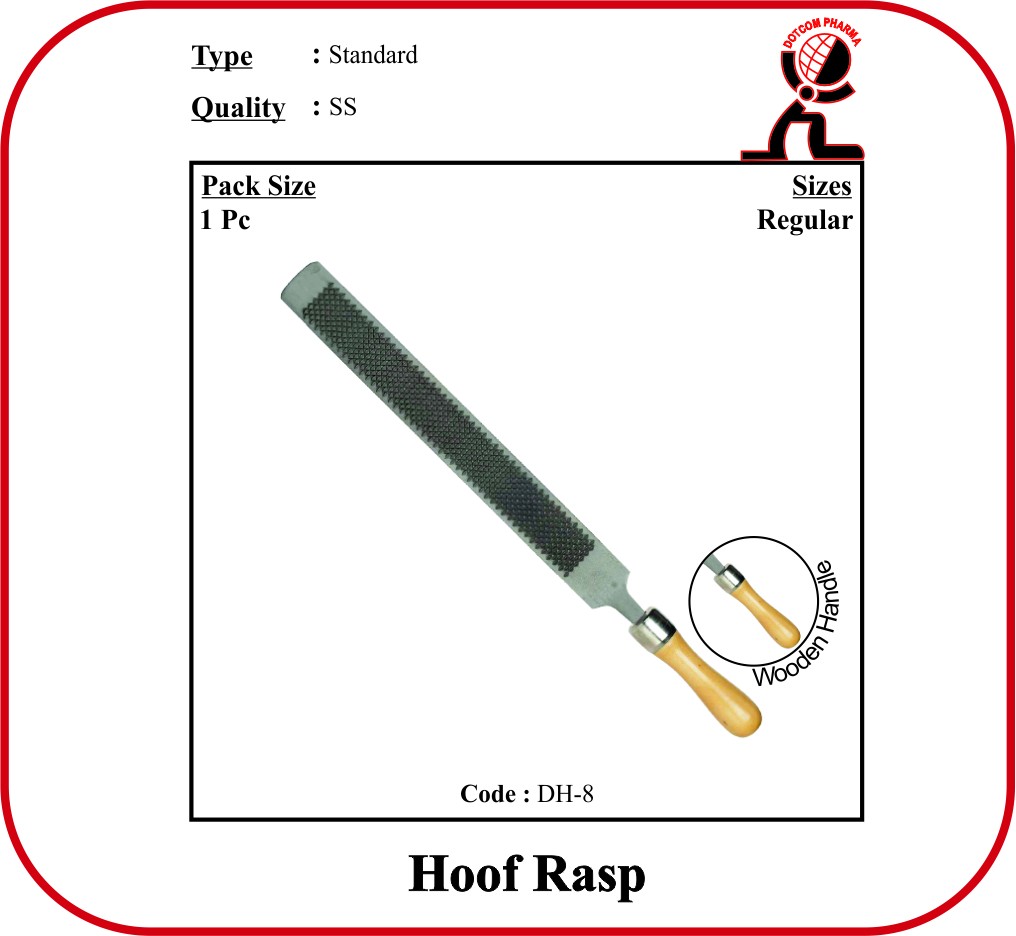
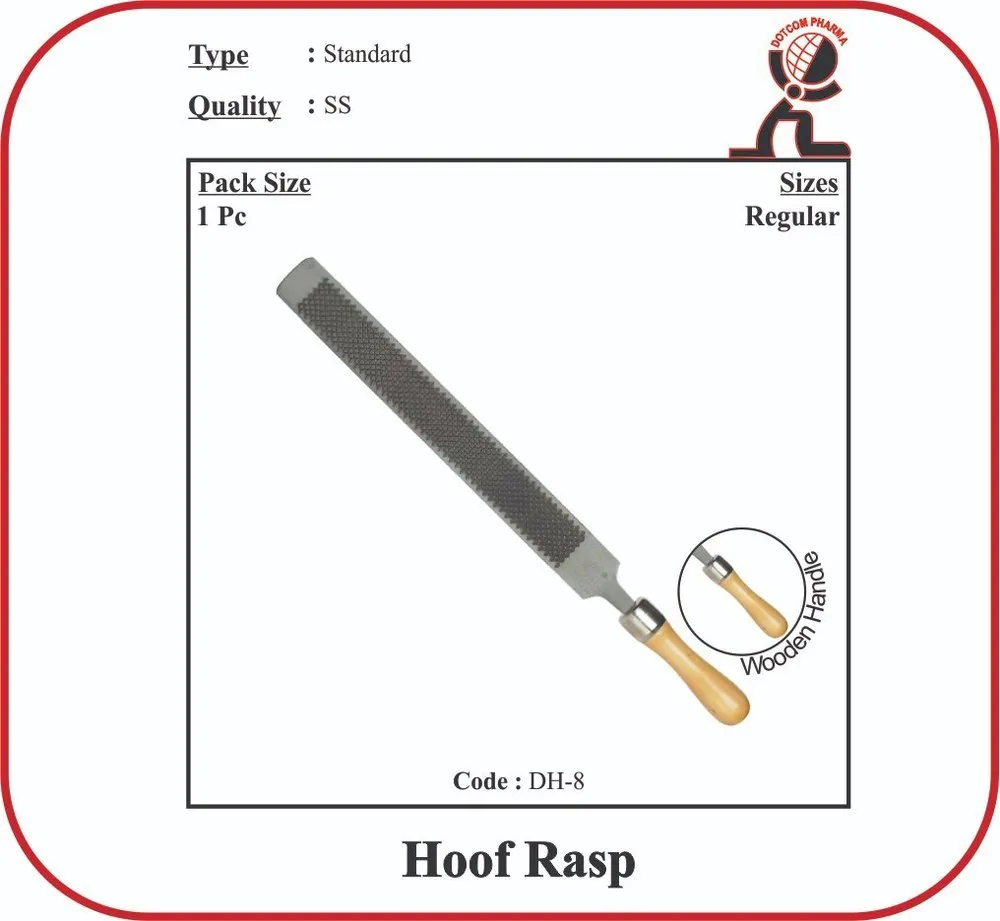
Hoof Rasp
Drug Name
: NA
Drug Role
: Used to file, smooth, and level the hoof surface after trimming,
NA
No
Ceritifcations:










Please login / register to buy or to get detailed information of the product
SKU:
Stock Available:
Batch / Lot. No:
Shelf life:
Manufacturing Date:
-
Expiry Date:
-
Minimum Pack Size:
Minimum Order Qty:
1
Pharma Categories:
Hoof Finishing Tools
Product Form:
Rasp
Category:
Instruments
Group:
N/A
Type:
Standard Flat Hoof Rasp
Material:
Stainless Steel
Tags
HSN Code:
9018
HS Code:
82053000
Country of Origin:
India
TAX:
5%
Qty per Piece:
Weight Of Each Piece(gm):
Piece Dimensions (L×W×H):
Qty per Buffer Box / Shrink Pack:
Weight of Buffer Box / Shrink Pack:
Buffer Dimensions (L×W×H):
Total Qty per Case:
Total Weight per Case:
Case Dimensions (L×W×H):
Weight / Volume:
Dimensions:
Inhouse product
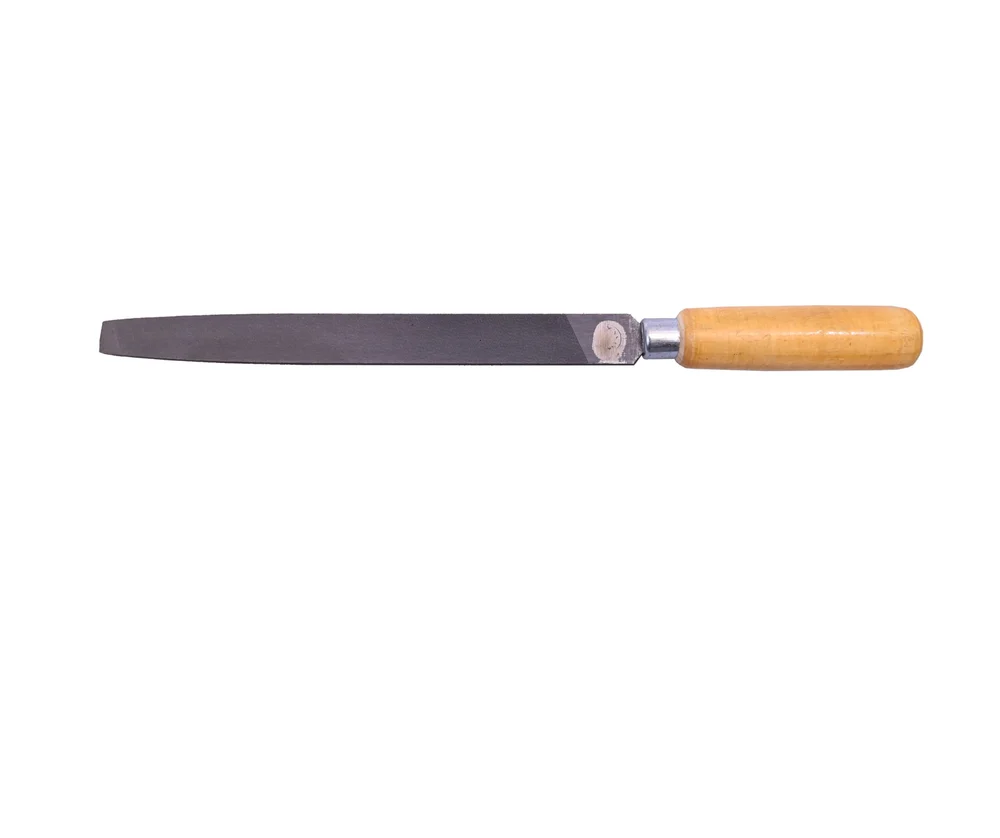
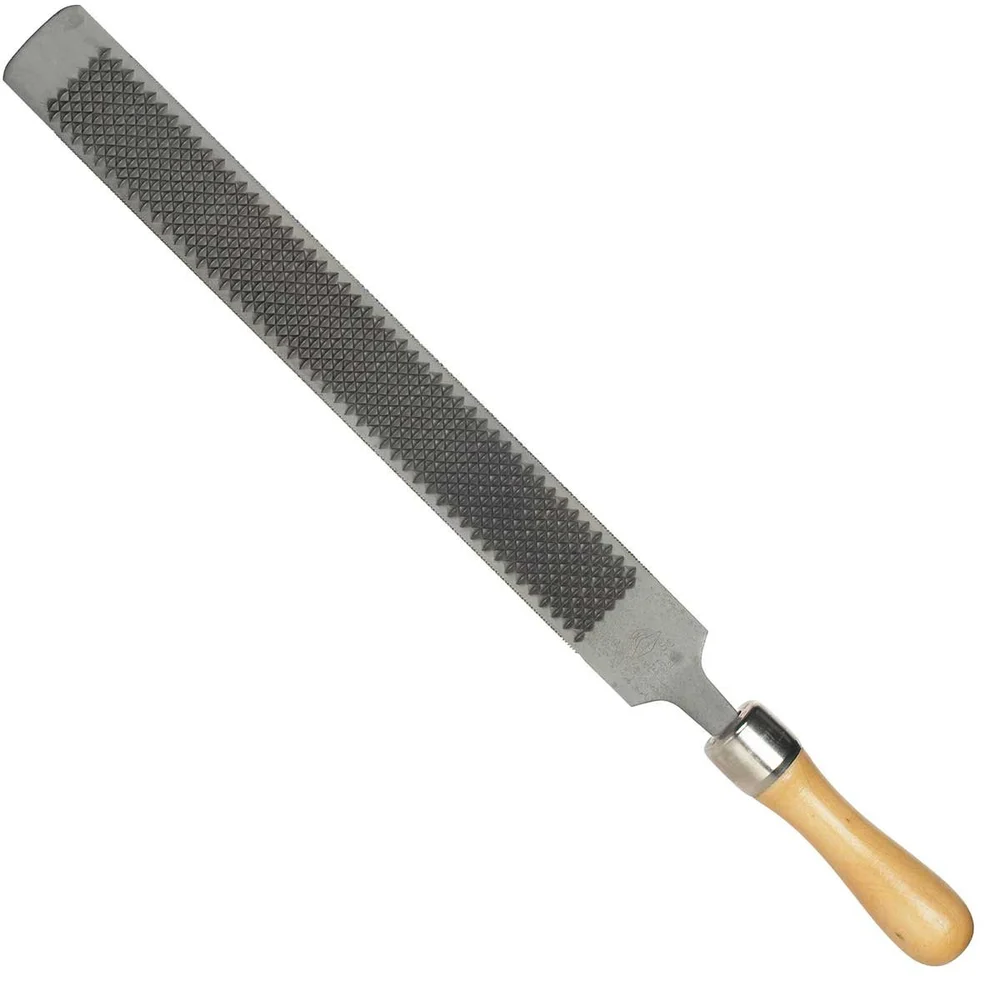
The Hoof Rasp is a coarse-surfaced, dual-sided filing tool used in hoof care for levelling, smoothing, and shaping the hoof wall after trimming. Designed for use on tough keratinized hoof surfaces, it's a standard instrument in the toolkit of farriers and veterinarians. With a sturdy handle and aggressive teeth, it allows for precise finishing and contouring of the hoof.
• Length: 35 cm to 45 cm
• Rasp Type: Double-sided (rasp side & file side)
• Cut Pattern: Cross-cut / Straight / Curved teeth
• Handle Attachment: Wooden, plastic, or moulded rubber grip
• Blade Thickness: 5–8 mm
• Weight: 400g – 700g depending on size and material
• 14 inch (35 cm) – Compact, for smaller hooves or detailed shaping
• 17 inch (43 cm) – Standard farrier rasp size
• 18 inch (45 cm) – Heavy-duty rasp for larger animals or rough hoof conditions
• Blade Shape:
o Flat body with slightly tapered edges (most common)
o Slight belly curve in advanced designs
• Handle Shape:
o Straight cylindrical wooden or polymer handle
o Ergonomic moulded grip (optional)
• Standard Flat Hoof Rasp
• Curved/Belly Rasp (less common, used for contouring)
• One-sided Hoof Rasp/
• Mini Rasp/File Combo
• Rasp with replaceable blades (modern variant)
• Blade: Hardened carbon steel / Chromium-coated steel
• Handle:
o Traditional hardwood
o Polymer anti-slip
o Rubberized composite (in newer models)
• Hoof Finishing Tools
• Veterinary Trimming Instruments
• Farrier Supplies
• Livestock Care Accessories
• Sold individually or in sets with handle included or separate
• May be pre-assembled or flat-packed
• Non-sterile packaging
• Blade may come pre-oiled for rust prevention
• Sold individually or in sets with handle included or separate
• May be pre-assembled or flat-packed
• Non-sterile packaging
• Blade may come pre-oiled for rust prevention
• Dual-surface functionality (rasp and file)
• Easy to use with minimal training
• Durable and long-lasting when cleaned properly
• Available in various sizes for targeted use
• Helps achieve even weight distribution in hooves
• Can cause uneven hoof shape if misused
• Requires physical effort and technique
• Can wear out quickly with poor cleaning or storage
• Blade can rust if not maintained
• May be heavy for small-hand users
• Use both hands for control and even pressure
• Always rasp in a single direction
• Avoid over-rasping, which can weaken hoof walls
• Clean thoroughly after use
• Store away from moisture to prevent rust
• HSN Code: 82053000 – Files, rasps, and similar tools
• Alternate: 9018 – For veterinary use when sold as part of a surgical/hoof care kit
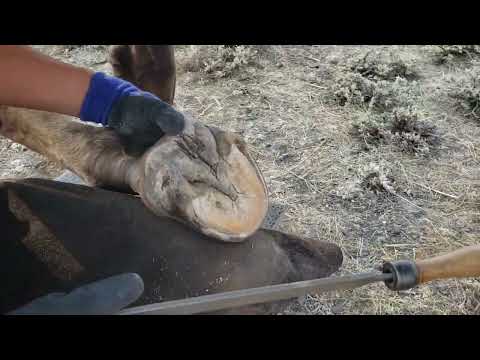
• Hold the rasp with one hand near the tip and the other on the handle
• Use long, even strokes in one direction
• Do not use like a saw — back-and-forth motion damages the hoof
• Clean the blade with a wire brush after each use
• Store dry and oiled to extend life
• Blade: Wipe with disinfectant or dry cloth — no soaking
• Handle: Clean with damp cloth
• Not autoclavable
• Apply blade oil or anti-rust spray before long-term storage
Essential in hoof care for cattle, horses, goats, and sheep. Used to balance hooves post-trim, prevent overgrowth-related lameness, and prepare hooves for treatment or shoeing. Also helps smooth sharp edges that could harm the animal.
Not used on humans directly, but operated by farriers, veterinary professionals, and caretakers in livestock and equine management. Common in farm, clinic, and training environments.
1.What is a hoof rasp used for?
To file and smooth the hoof wall after trimming.
2.Is it sharp like a blade?
No, it has coarse teeth for abrasion, not cutting.
3.Can I use it on goats or small animals?
Yes — smaller rasps are available for compact hooves.
4.How do I clean a hoof rasp?
Use a wire brush or stiff bristle brush to remove hoof dust and debris.
5.Does the handle come attached?
Some models include a handle; others require separate attachment.
Secure Transaction
100% secure payment
Top Brand
Trusted quality
Non Return
Due to hygiene