 +91 88281
11034
+91 88281
11034
 Need Help?




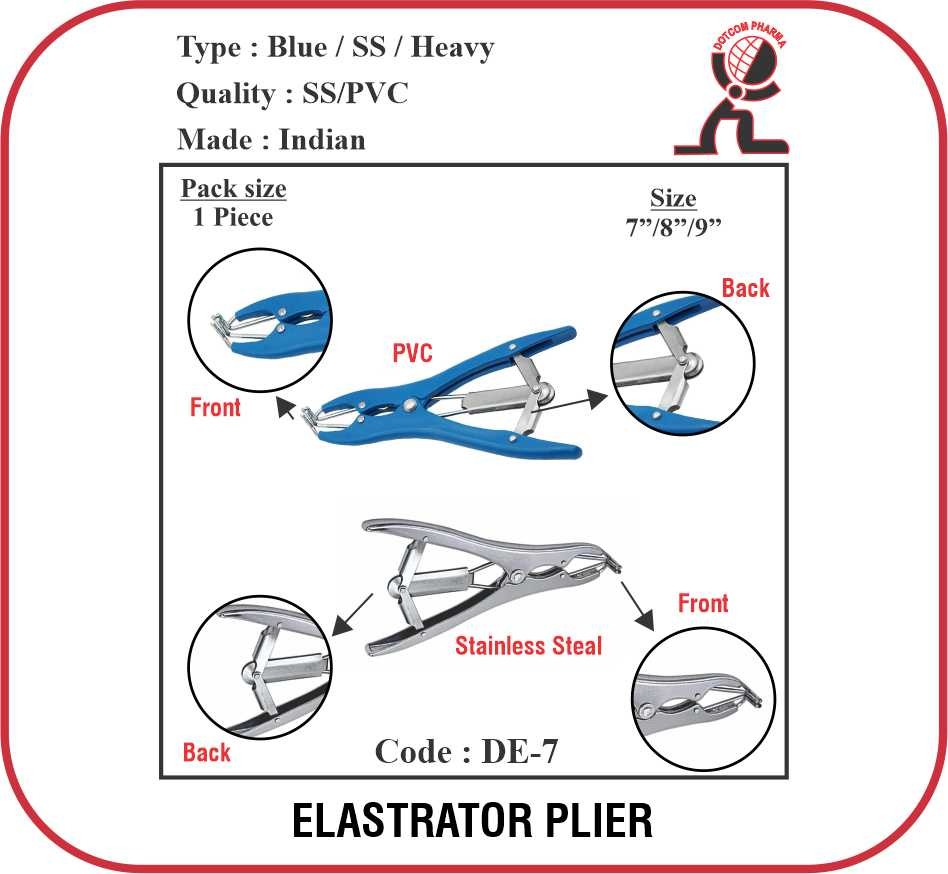
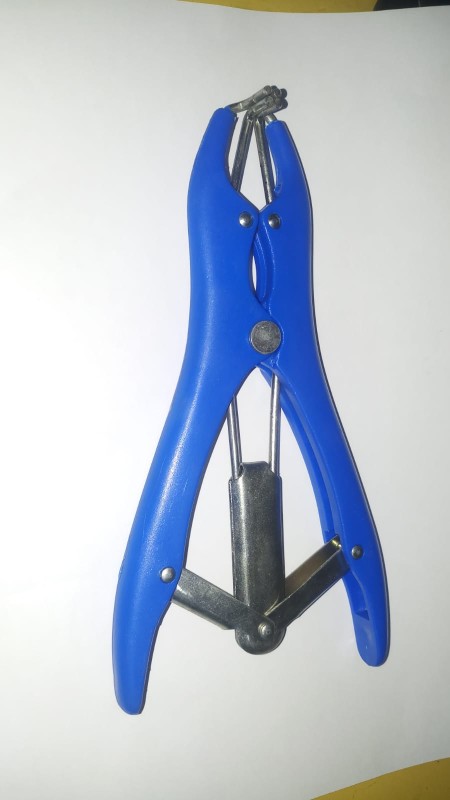
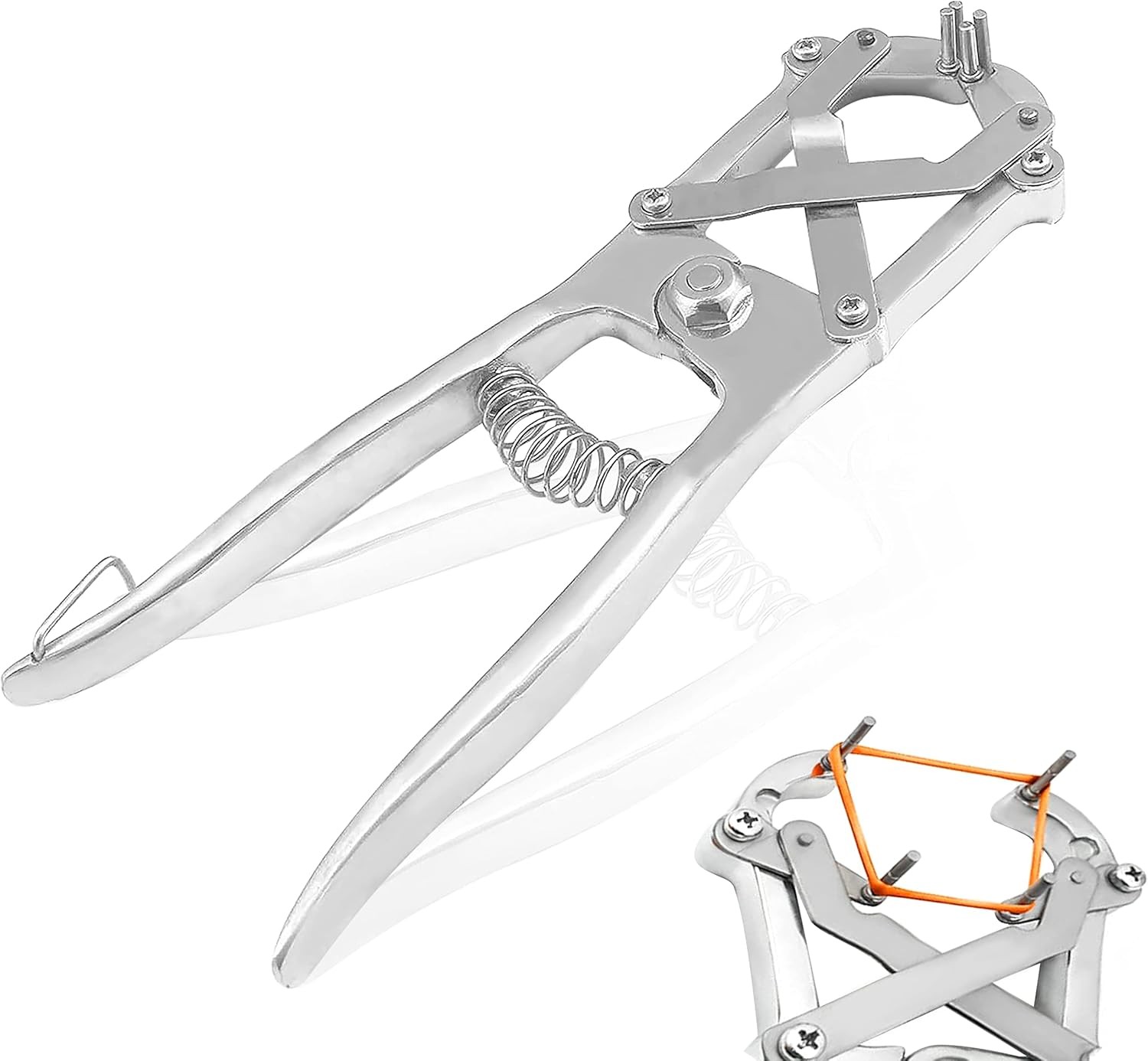
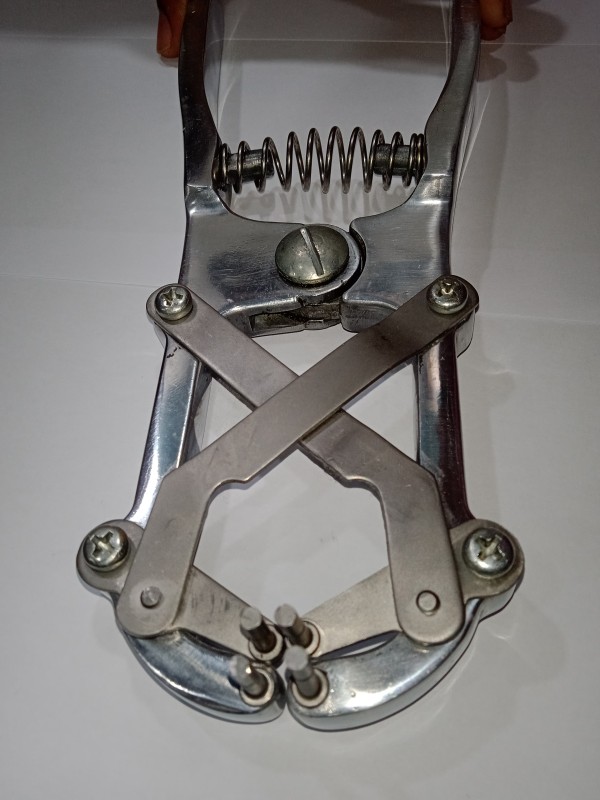
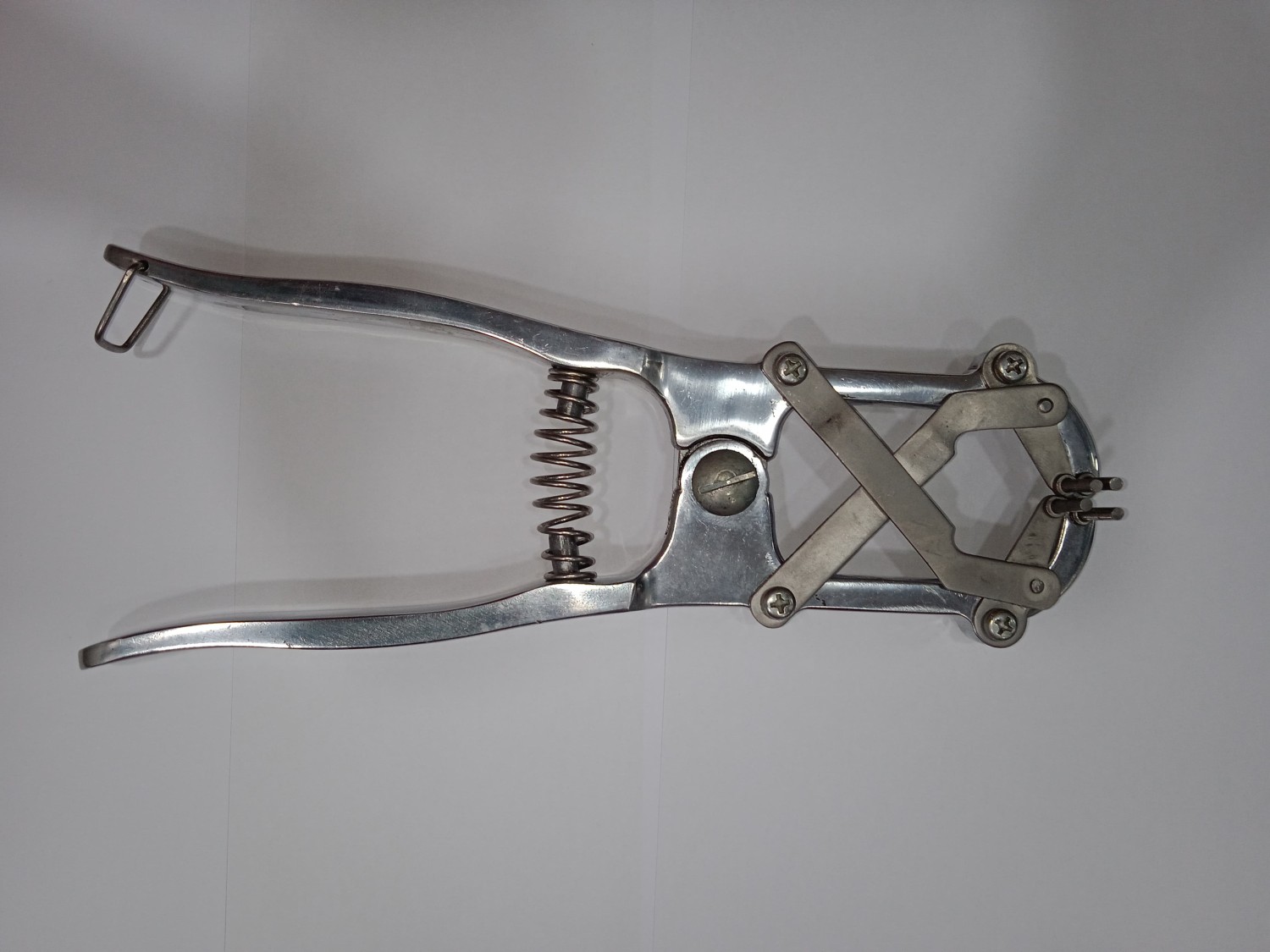
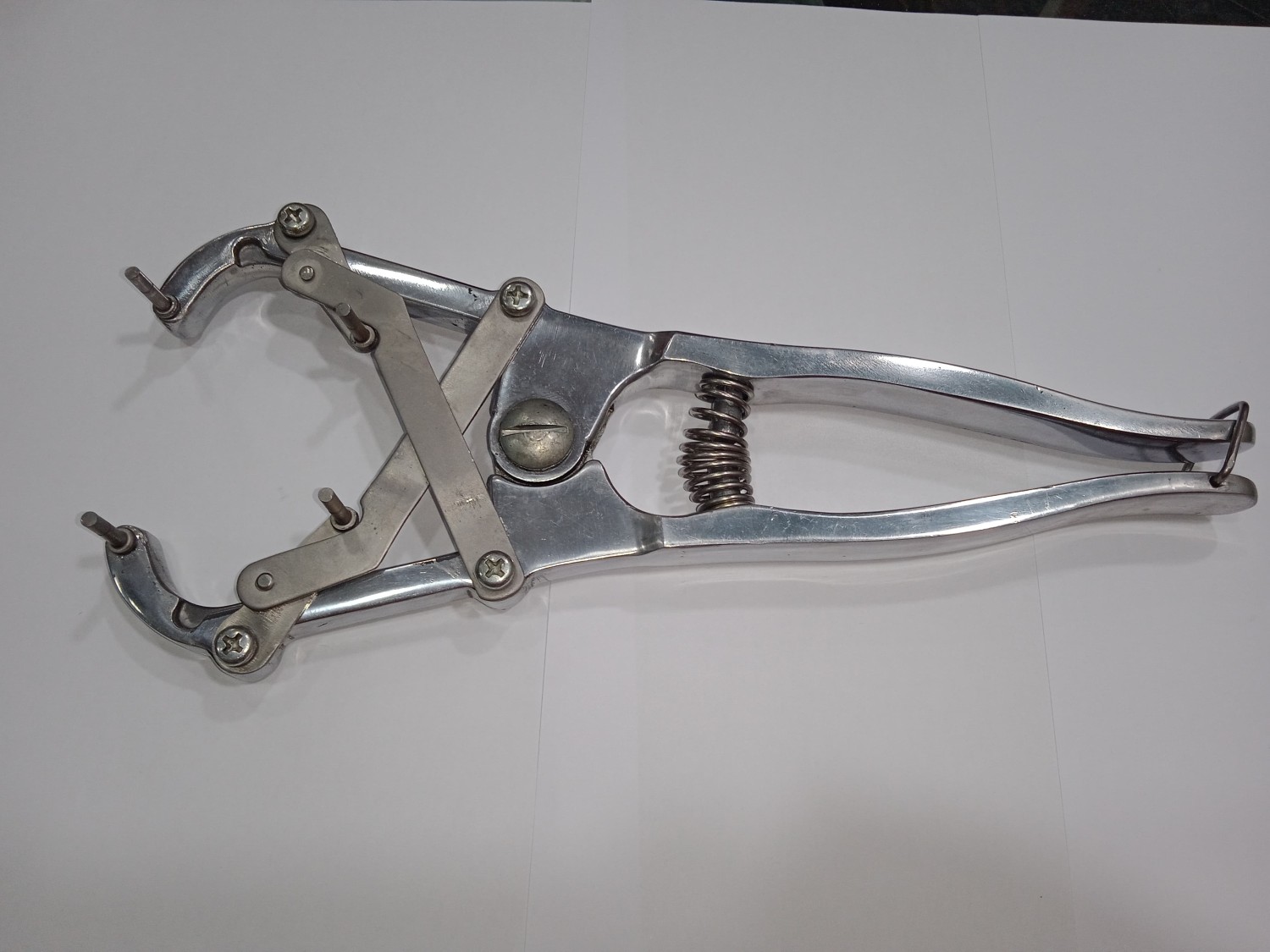

Elastrator Plier
Drug Name
: NA
Drug Role
: Livestock Management
NA
No
Ceritifcations:










Please login / register to buy or to get detailed information of the product
SKU:
Stock Available:
Batch / Lot. No:
Shelf life:
Manufacturing Date:
-
Expiry Date:
-
Minimum Pack Size:
Minimum Order Qty:
1
Pharma Categories:
Veterinary Surgical Instruments
Product Form:
Elastrator Plier
Category:
Veterinary
Group:
N/A
Type:
Veterinary
Material:
Plastic , SS
Tags
HSN Code:
Elastrator piller : 90183990 , Rubber ring Elastrator Piller : 40169990
HS Code:
Elastrator Piller : 9018.39 , Rubber Ring For Elastrator Piller : 4016.99
Country of Origin:
Imported
TAX:
5%
Qty per Piece:
Weight Of Each Piece(gm):
Piece Dimensions (L×W×H):
Qty per Buffer Box / Shrink Pack:
Weight of Buffer Box / Shrink Pack:
Buffer Dimensions (L×W×H):
Total Qty per Case:
Total Weight per Case:
Case Dimensions (L×W×H):
Weight / Volume:
Dimensions:
Inhouse product
Elastrator Piller :
The Elastrator Plier is a specialized surgical instrument primarily used in veterinary medicine for bloodless castration of livestock by applying tight rubber rings to the base of the scrotum. This device allows for a minimally invasive, chemical-free procedure that causes tissue necrosis and eventual sloughing of the testicles.
Rubber Ring For Elastrator Piller :
The Rubber Ring for Elastrator Plier is a specialized elastic ring designed to be applied using an elastrator plier for bloodless castration of livestock. These rings constrict blood flow to the testicles or tail, leading to tissue necrosis and eventual detachment without the need for surgery.
Elastrator Piller :
• Material: Natural latex or synthetic rubber
• Diameter: Typically 10 mm to 25 mm (varies by livestock size)
• Thickness: Approximately 2-4 mm
• Colour: Usually black or dark brown for UV resistance
• Packaging: Sterile or non-sterile bulk packaging depending on manufacturer
Rubber Ring For Elastrator Piller :
• Material: Natural latex or synthetic rubber
• Diameter: Typically 10 mm to 25 mm (varies by livestock size)
• Thickness: Approximately 2-4 mm
• Colour: Usually black or dark brown for UV resistance
• Packaging: Sterile or non-sterile bulk packaging depending on manufacturer
Rubber ring for elastrator piller :
Available in a range of diameters to accommodate different animal species and ages, typically from 10
mm to 25 mm.
Elastrator piller :
Commonly available in lengths ranging from 18 cm to 22 cm to suit different livestock sizes and operator preferences.
Rubber Ring For Elastrator Piller :
• Circular elastic bands with uniform thickness
• Designed to stretch and contract evenly when applied
Elastrator Piller :
• Curved jaw design for securely holding rubber rings
• Spring-loaded handles for controlled tension application
Rubber Ring For Elastrator Piller :
• Natural latex rubber rings
• Synthetic rubber (latex-free) rings for animals with latex sensitivity
• Coloured-coded sizes for easy identification
Elastrator Piller :
• Standard Elastrator Plier (manual operation)
• Heavy-duty versions for larger animals
• Disposable rubber ring kits compatible with the plier
Rubber Ring For Elastrator Piller :
• High-quality natural latex (elastic and biodegradable)
• Synthetic rubber alternatives (non-allergenic)
Elastrator Piller :
• Surgical-grade stainless steel (Grade 304 or 316)
• Rubber rings are usually made of high-quality latex or synthetic rubber
Rubber Ring For Elastrator Piller :
• Veterinary Surgical Consumables
• Livestock Management Accessories
• Castration Supplies
Elastator Piller :
• Veterinary Surgical Instruments
• Livestock Management Tools
• Castration Devices
Rubber Ring For Elastrator Piller :
• Bulk packs (boxes of 50, 100, or 200 rings)
• Individually packed sterile rings (upon request)
Elastator Piller :
• Individual instrument (plier) with compatible rubber ring kits
• Sterile packaging available upon request
Rubber ring for Elastrator Piler :
Used primarily in veterinary settings for:
• Bloodless castration via application of elastic rings to the scrotum or tail
• Controlling reproduction in livestock such as calves, lambs, and goats
• Minimizing infection and bleeding risks compared to surgical methods
Elastrator Piller :
Used mainly in veterinary practice for:
• Bloodless castration of calves, lambs, and goats
• Reducing risk of haemorrhage and infection compared to surgical castration
• Livestock management in farms and veterinary clinics
Rubber Ring For Elastrator Piller :
• Simple and effective method for bloodless castration
• Cost-efficient for large scale livestock management
• Biodegradable (natural latex) options available
• Reduces need for surgical intervention and anaesthesia
Elastrator Piller :
• Simple and quick procedure
• Minimal bleeding and reduced infection risk
• Cost-effective method for large-scale livestock management
• Does not require anaesthesia or surgical facilities
Rubber Ring For Elastrator Piller :
• Potential for allergic reactions in animals sensitive to latex
• Risk of incorrect placement causing complications
• Not suitable for use in older or large animals
• Rings must be disposed of properly after use
Elastrator Piller :
• Painful for animals if no analgesia is used
• Limited to young animals with small scrotal size
• Risk of improper ring placement causing complications
• Not suitable for older or larger animals
Rubber Ring For Elastrator piller :
• Ensure use only by trained veterinary personnel
• Confirm animal suitability and ring size before application
• Monitor animals post-procedure for complications
• Use synthetic latex-free rings if animal latex allergy is suspected
Elastrator Piller :
• Use only by trained veterinary professionals
• Ensure correct sizing and placement of rubber rings
• Monitor animals post-procedure for signs of infection or complications
• Use analgesics as per veterinary guidelines
Rubber Ring For Elastrator Piller :
• HS Code: 4016.99
• HSN Code: 40169990 (Covers other articles of vulcanized rubber, not elsewhere specified)
Elastrator Piller :
• HS Code: 9018.39
• HSN Code: 90183990 (Covers veterinary surgical instruments including castration devices)
Rubber Ring For Elastrator Piller :
• Store in a cool, dry place away from direct sunlight
• Avoid stretching rings unnecessarily before use
• Use sterile or clean hands/gloves during application
• Dispose of used rings according to biomedical waste protocols
Elastrator Piller :
• Handle with clean, disinfected hands or gloves
• Inspect instrument for any damage before use
• Store in a clean, dry place after sterilization
• Dispose of rubber rings after use; pliers are reusable
Rubber Ring For Elastrator Piller :
• Generally supplied sterile or non-sterile depending on packaging
• Disposable single-use product — no sterilization recommended post-manufacture
• Maintain storage conditions to preserve elasticity and integrity
Elastrator Piller :
• Clean thoroughly with warm water and detergent
• Autoclave at 121°C for 15–20 minutes for reusable pliers
• Disposable rubber rings are pre-sterilized and single-use only
Rubber Ring For Elastrator Piller :
• Primarily used for bloodless castration in young livestock such as calves, lambs, and goats
• Applied with elastrator pliers to restrict blood flow and facilitate painless tissue necrosis
• Widely adopted in animal husbandry for efficient and humane livestock management
• Supports large-scale farm operations by reducing the need for surgical castration
Elastrator Piller :
• Primarily used in bloodless castration of young livestock such as calves, lambs, and goats
• Effective tool in animal husbandry to control breeding and improve meat quality
• Widely used in farms and veterinary clinics for non-surgical castration
• Enhances animal welfare by reducing bleeding and infection risk compared to surgical method
Ruber Ring Elastrator Piller :
• No typical human medical use due to nature of the product
• Exclusively designed for veterinary use in livestock management
Elastrator Piller :
• Rarely used in human medicine
• In exceptional cases, adapted devices might be used in minor surgical procedures but generally not recommended
• Primarily designed for veterinary use and livestock management
Rubber Ring For Elastrator Piller :
Q1. What is the purpose of the rubber ring for elastrator plier?
Answer: It is used to constrict blood flow during bloodless castration of livestock.
Q2. Are these rings reusable?
Answer: No, they are single-use and must be disposed of after application.
Q3. What materials are these rings made from?
Answer: Natural latex or synthetic rubber (latex-free options available).
Q4. How do I choose the correct size?
Answer: Size depends on the animal’s age and species; consult veterinary guidelines.
Q5. Can humans use these rubber rings?
Answer: No, they are designed exclusively for veterinary applications.
Elastrator Piller :
Q1. What is an Elastrator Plier used for?
Answer: It is used for bloodless castration of livestock by applying rubber rings to the scrotum.
Q2. Is it safe for animals?
Answer: When used correctly by trained personnel, it is a safe and effective method with minimal complications.
Q3. Can the plier be reused?
Answer: Yes, the plier is reusable after proper sterilization; rubber rings are single-use only.
Q4. What sizes are available?
Answer: Common sizes range from 18 cm to 22 cm in length.
Q5. Is it used in human medicine?
Answer: It is primarily a veterinary tool and rarely used in human medicine.
Secure Transaction
100% secure payment
Top Brand
Trusted quality
Non Return
Due to hygiene