 +91 88281
11034
+91 88281
11034
 Need Help?




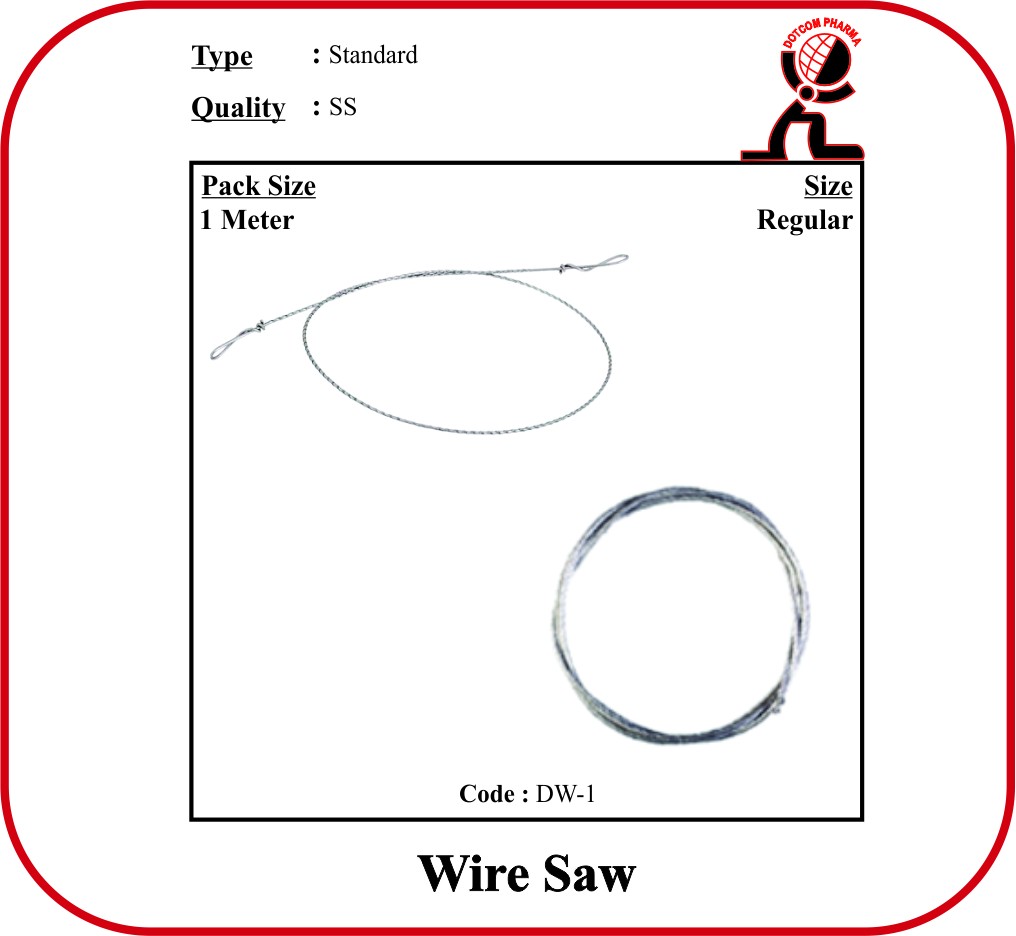
Wire Saw
Drug Name
: NA
Drug Role
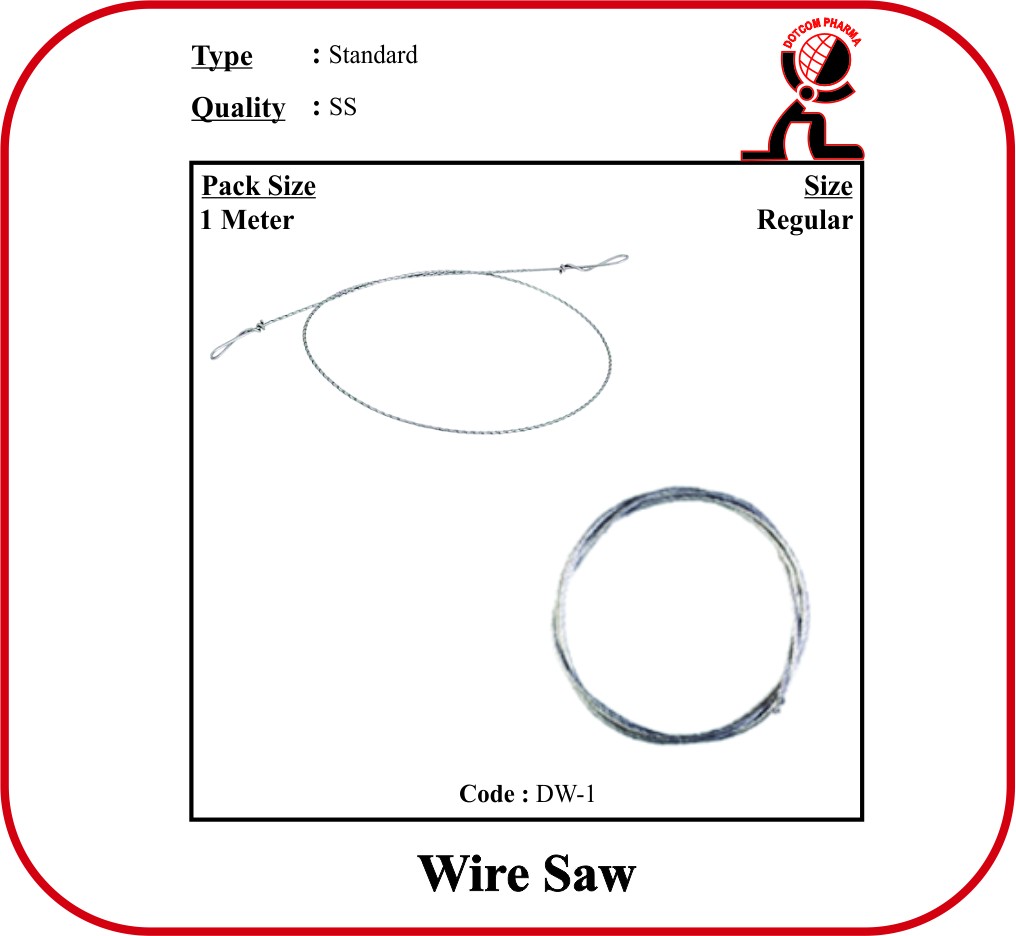
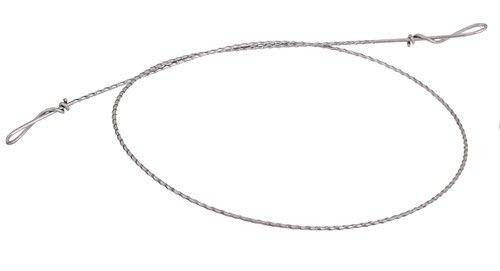
: A Wire Saw is a specialized surgical instrument made from a flexible, durable wire, often with abrasive coatings, used for cutting bone or other hard tissues where traditional saws can’t easily reach.
NA
No
Ceritifcations:










Please login / register to buy or to get detailed information of the product
SKU:
Stock Available:
Batch / Lot. No:
Shelf life:
Manufacturing Date:
-
Expiry Date:
-
Minimum Pack Size:
Minimum Order Qty:
1
Pharma Categories:
• Orthopaedic Instruments • Surgical Bone Cutting Tools • Veterinary Surgical Instruments
Product Form:
• Flexible wire loop or strand • Used by pulling in a back-and-forth sawing motion • Sterile packaging for single use or reusable after sterilization
Category:
Veterinary
Group:
N/A
Type:
• Manual Wire Saw – Basic wire without handles, requires manual pulling • Handle-attached Wire Saw – Comes with ergonomic handles for better grip • Carbide-coated Wire Saw – Enhanced cutting power for harder bones • Disposable Sterile Wire Saw – Single-us
Material:
• High tensile stainless steel wire • Abrasive coating (carbide grit or diamond dust) on the wire surface • Handles made of plastic or stainless steel for grip
HSN Code:
9018.90
HS Code:
9018.90.30
Country of Origin:
India
TAX:
5%
Qty per Piece:
Weight Of Each Piece(gm):
Piece Dimensions (L×W×H):
Qty per Buffer Box / Shrink Pack:
Weight of Buffer Box / Shrink Pack:
Buffer Dimensions (L×W×H):
Total Qty per Case:
Total Weight per Case:
Case Dimensions (L×W×H):
Weight / Volume:
Dimensions:
Inhouse product
A Wire Saw is a specialized surgical instrument made from a flexible, durable wire, often with abrasive coatings, used for cutting bone or other hard tissues where traditional saws can’t easily reach. It’s commonly used in orthopaedic surgeries, veterinary amputations, and emergency field operations to provide precise bone cuts with minimal trauma.
Feature
Detail Material Stainless steel wire with abrasive grit or carbide coating
Length
Typically 50 cm – 70 cm Wire Diameter 0.8 mm – 1.2 mm
Handle
May have plastic or metal handles or be used manually with two fingers Flexibility High, can be bent to cut at various angles
Packaging
Sterile, single-use or reusable versions
• Standard straight wire saw length: 50 cm, 60 cm, 70 cm
• Wire diameter varies with intended use: thinner for delicate bone, thicker for larger cuts
• May come with handle attachments or as bare wire
• Manual Wire Saw – Basic wire without handles, requires manual pulling
• Handle-attached Wire Saw – Comes with ergonomic handles for better grip
• Carbide-coated Wire Saw – Enhanced cutting power for harder bones
• Disposable Sterile Wire Saw – Single-use, sterile-packed for infection control
• High tensile stainless steel wire
• Abrasive coating (carbide grit or diamond dust) on the wire surface
• Handles made of plastic or stainless steel for grip
• Orthopaedic Instruments
• Surgical Bone Cutting Tools
• Veterinary Surgical Instruments
• Flexible wire loop or strand
• Used by pulling in a back-and-forth sawing motion
• Sterile packaging for single use or reusable after sterilization
• Cutting bone during orthopaedic surgery
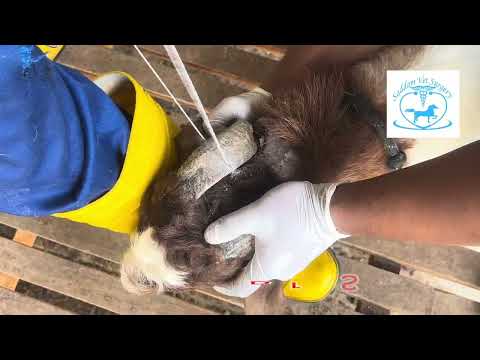
• Veterinary amputations and complex bone procedures
• Emergency field surgeries where electric saws are unavailable
• Removal of casts or implants by specialized techniques
• Flexible and can cut in hard-to-reach areas
• Portable, lightweight, and easy to carry in surgical kits
• Can be sterilized and reused (depending on model)
• Allows controlled, precise bone cutting with minimal heat generation
• Manual operation requires skill and time
• Not suitable for very large or thick bones without assistance
• Risk of wire breakage if improperly used
• Single-use versions generate medical waste
• Use appropriate tension to avoid wire snapping
• Ensure sterile environment to prevent infection
• Do not reuse disposable wire saws
• Handle with care to avoid injury from sharp wire edges
• Keep wire taut and steady during cutting
• HS Code: 9018.90 (Instruments & appliances used in medical, surgical, dental or veterinary sciences)
• HSN Code (India): 9018.90.30
• Clean after use with enzymatic detergents
• Sterilize using autoclaving (if reusable) as per manufacturer guidelines
• Store in dry, sterile packaging
• Dispose of single-use wire saws following biomedical waste protocols
• Used in animal orthopaedic surgeries (fracture repair, amputations)
• Ideal for field veterinary surgeons due to portability
• Used for cutting bone during limb salvage or removal procedures
• Suitable for large and small animal surgeries
• Used in human orthopaedic and trauma surgeries
• Useful in surgeries involving complex bone cutting, especially in confined spaces
• Used in field hospitals or emergency surgeries where electric saws are unavailable
• Applied in maxillofacial and neurosurgical bone cutting as well
Q1: Can wire saws be reused?
A1: Some models are reusable after proper sterilization; however, many are single-use for infection control.
Q2: What materials are wire saws made of?
A2: Typically stainless steel wire coated with abrasive carbide or diamond grit for cutting efficiency.
Q3: Are wire saws painful to use on animals?
A3: Wire saws are used under anaesthesia during surgery, so the animal feels no pain.
Q4: How do I prevent the wire from breaking during use?
A4: Maintain steady tension and avoid excessive bending or twisting.
Q5: Can wire saws be used on thick bones?
A5: Yes, but it may require more time and effort; thicker bones might need specialized or powered saws.
Secure Transaction
100% secure payment
Top Brand
Trusted quality
Non Return
Due to hygiene