 +91 88281
11034
+91 88281
11034
 Need Help?



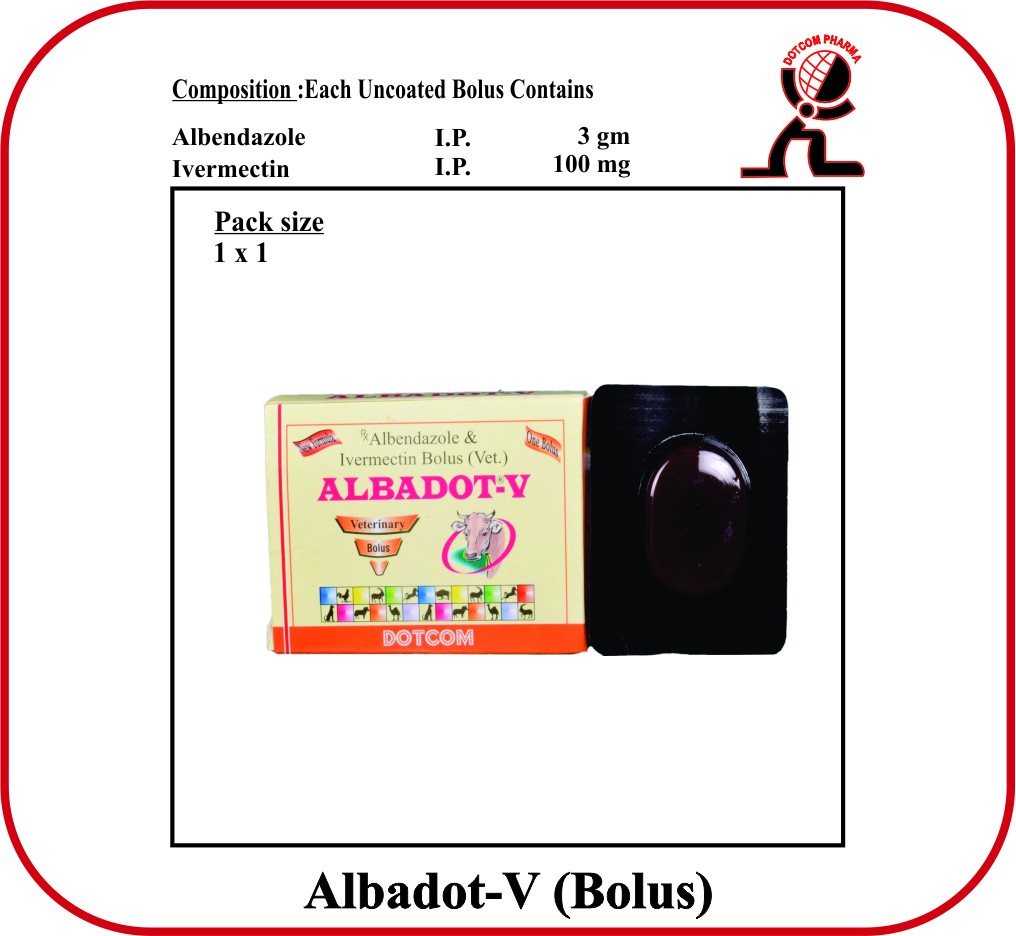
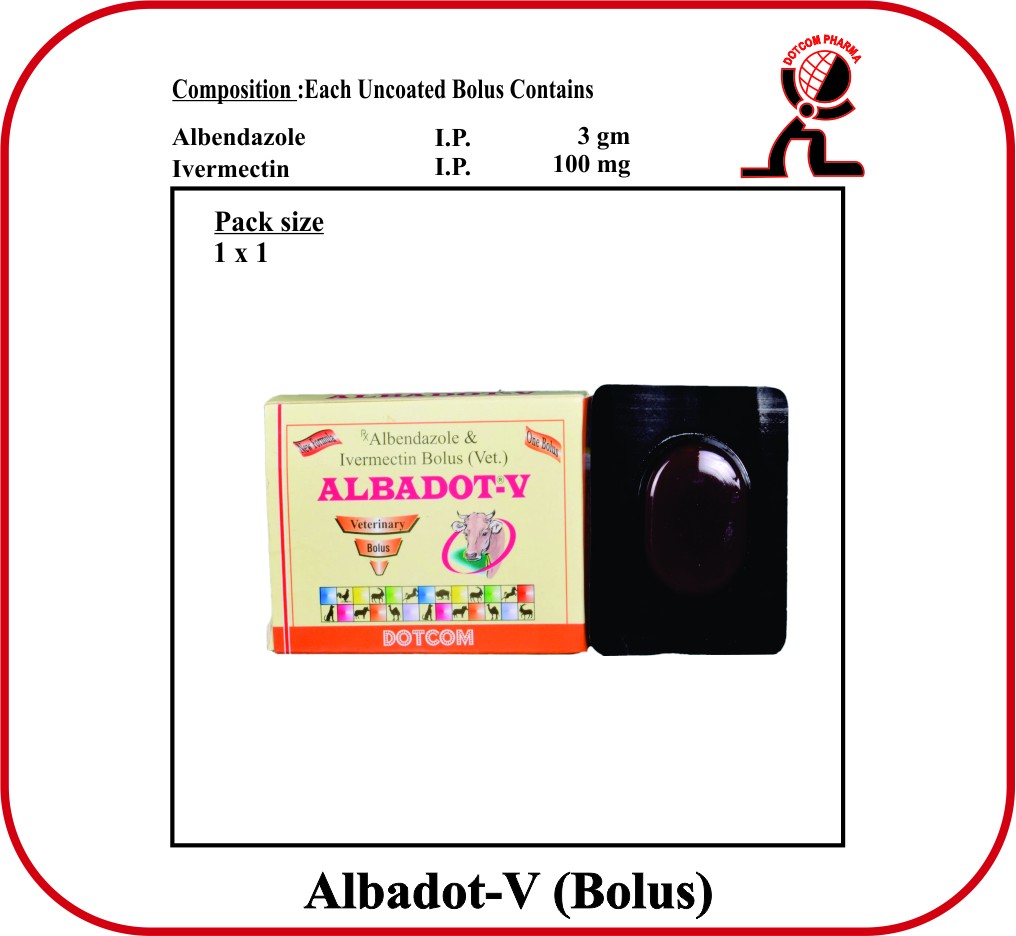
ALBADOT-V
Drug Name
: ALBENDAZOLE I.P. 1.5 GM VETERINARY BOLUS
Drug Role
: Anthelmintic
H
Yes
Ceritifcations:






Please login / register to buy or to get detailed information of the product
SKU:
Stock Available:
Batch / Lot. No:
Shelf life:
Manufacturing Date:
-
Expiry Date:
-
Minimum Pack Size:
Minimum Order Qty:
1
Pharma Categories:
Veterinary Pharmaceuticals
Product Form:
Bolus
Category:
Bolus
Group:
N/A
Type:
Bolus
Material:
Veterinary Pharmaceuticals
Tags
HSN Code:
30049099
HS Code:
3004.90
Country of Origin:
India
TAX:
5%
Qty per Piece:
Weight Of Each Piece(gm):
Piece Dimensions (L×W×H):
Qty per Buffer Box / Shrink Pack:
Weight of Buffer Box / Shrink Pack:
Buffer Dimensions (L×W×H):
Total Qty per Case:
Total Weight per Case:
Case Dimensions (L×W×H):
Weight / Volume:
Dimensions:
Inhouse product
Albendazole I.P. 1.5 g Bolus is a broad-spectrum anthelmintic formulation intended for oral administration in large animals such as cattle, buffalo, sheep, and goats. Albendazole, a benzimidazole derivative, acts by disrupting the energy metabolism of helminths, leading to immobilization and death of susceptible parasites. Effective against a wide range of gastrointestinal and pulmonary nematodes, tapeworms, and adult liver flukes.
Composition per bolus:
• Albendazole I.P. – 1500 mg (1.5 g)
• Excipients – q.s.
Excipients may include: Lactose, maize starch, microcrystalline cellulose, magnesium stearate, disintegrants, and other pharmaceutically acceptable binders, conforming to Indian Pharmacopoeia (I.P.) or equivalent veterinary standards.
Dosage Form: Solid oral veterinary bolus
Appearance: Large, oval or round bolus; white to pale yellow in colour; embossed or plain depending on branding.
Pharmacological Class:
• Anthelmintic (Benzimidazole class)
Therapeutic Use: Oral treatment and control of helminthic infestations in livestock
Used for the treatment and control of internal parasitic infections, including:
• Roundworms (Nematodes) – Haemonchus, Trichostrongylus, Cooperia, Ostertagia, Bunostomum, Nematodirus
• Lungworms – Dictyocaulus spp.
• Tapeworms (Cestodes) – Moniezia spp.
• Adult Liver Flukes (Trematodes) – Fasciola hepatica (adult stage only)
Suitable for routine deworming in cattle, buffalo, sheep, goats, and other large ruminants.
Route: Oral (via whole bolus ingestion)
Recommended Dosage:
• Cattle/Buffalo (Large Ruminants): 1 bolus per 400–500 kg body weight
• Sheep/Goat (Smaller Ruminants): Dose adjusted accordingly, typically 7.5 mg/kg body weight
Always consult a registered veterinarian for exact dosing. Adjust dose according to species, age, and weight.
• Broad-spectrum action: covers nematodes, cestodes, and trematodes
• Single-dose convenience for routine deworming
• Highly effective in improving growth, milk yield, and general health
• Well-tolerated in most livestock species
• Low resistance risk when used as per rotation protocol
Generally safe when used as directed. Rare effects may include:
• Temporary reduction in feed intake
• Diarrhoea or mild GI upset
•Teratogenicity in early pregnancy (see Precautions)
Discontinue use and consult a veterinarian if unusual signs occur.
• Do not administer to pregnant animals during the first 45 days (first trimester), due to risk of embryo-fetal toxicity
• Avoid underdosing to reduce risk of resistance
• Do not use in animals with known hypersensitivity to Albendazole or related compounds
• Maintain appropriate dosing intervals to ensure efficacy and resistance control
• Use as part of a strategic deworming program
• Meat: Minimum 28 days
• Milk: Minimum 7 days
Follow national veterinary drug regulatory authority guidance strictly. Maintain withdrawal record logs for food safety compliance.
• Store in a cool and dry place, below 30°C
• Protect from moisture, heat, and direct sunlight
• Do not freeze
• Keep in original packaging until time of use
• Use gloves while administering
• Wash hands thoroughly after handling
• Do not crush or split the bolus
• Keep out of reach of children and non-target species
• Dispose of expired or unused bolus as per regulatory guidelines
• Schedule H equivalent (Veterinary prescription-only)
• Not for retail sale without a prescription from a registered veterinarian
• Regulated under Drugs and Cosmetics Act (India) or equivalent veterinary drug law in respective country
• HS Code (International): 3004.90 – Medicaments (veterinary use)
• HSN Code (India): 30049099 – Other veterinary medicaments (not elsewhere classified)
Veterinary Use Only
• Formulated specifically for large animal dosing
• Bolus size, excipients, and concentration are not suitable for humans
• Human use is strictly prohibited
• Administer as part of regular herd health protocol
• Rotate with other anthelmintics (e.g., ivermectin, levamisole) to prevent resistance
• Do not mix with feed unless instructed
• Ensure accurate body weight measurement for correct dosage
• Observe for post-deworming reactions (passing of worms, stool changes)
Q: What is Albendazole used for in veterinary medicine?
A: Albendazole is a broad-spectrum dewormer used to treat roundworms, tapeworms, lungworms, and adult liver flukes in livestock.
Q: How often should this bolus be given?
A: Usually every 3 to 6 months, depending on the farm's deworming schedule, local parasite prevalence, and veterinary advice.
Q: Can it be given during pregnancy?
A: Do not use in the first trimester. Safe use later in pregnancy should be confirmed with a veterinarian.
Q: Is it effective against liver flukes?
A: Yes, but only against the adult stage of Fasciola hepatica. For immature fluke stages, a different product may be required.
Q: Can it be used in lactating animals?
A: Yes, but observe milk withdrawal period of at least 7 days.
Secure Transaction
100% secure payment
Top Brand
Trusted quality
Non Return
Due to hygiene