 +91 88281
11034
+91 88281
11034
 Need Help?



SULPHADOT
Drug Name
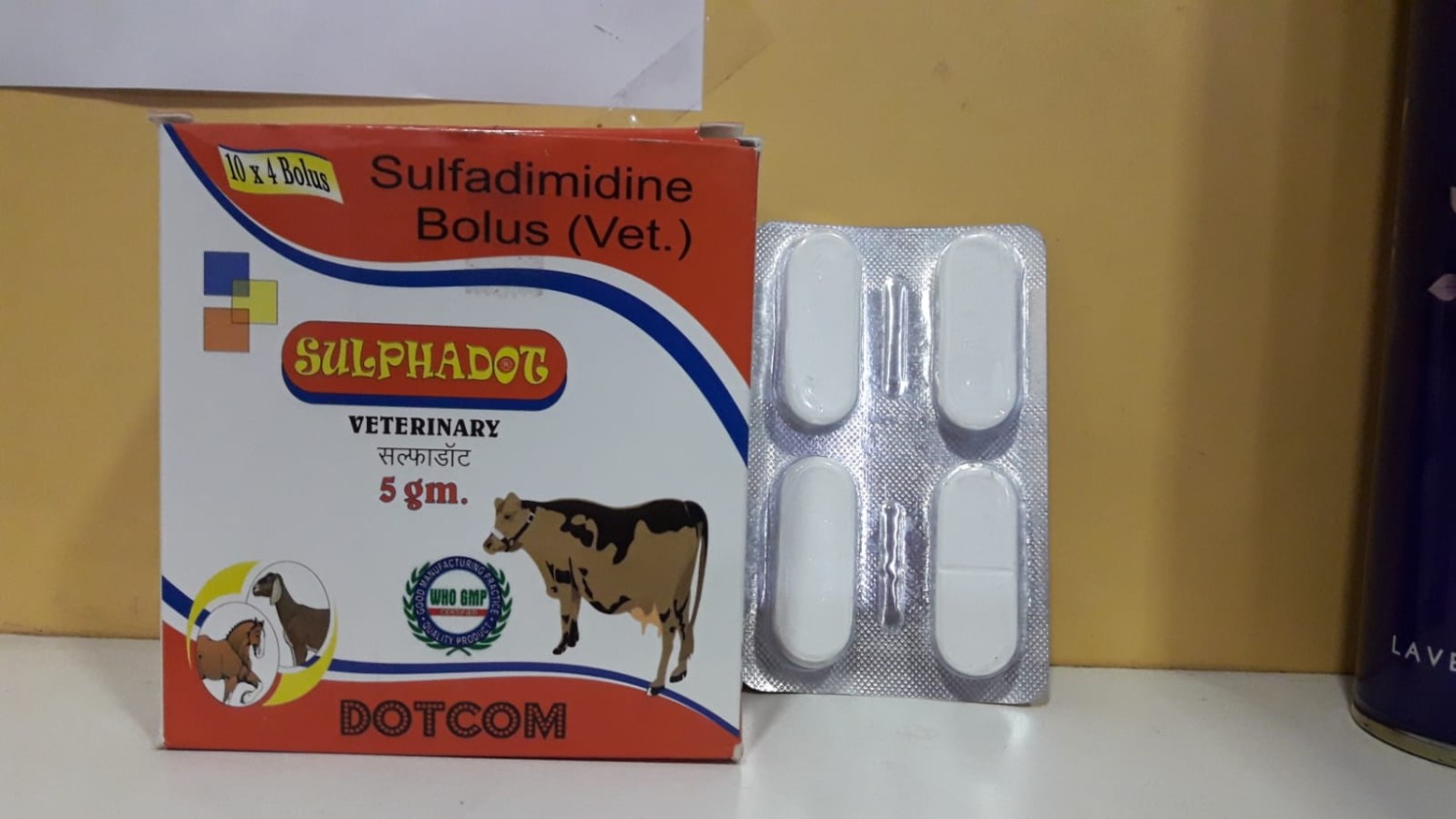
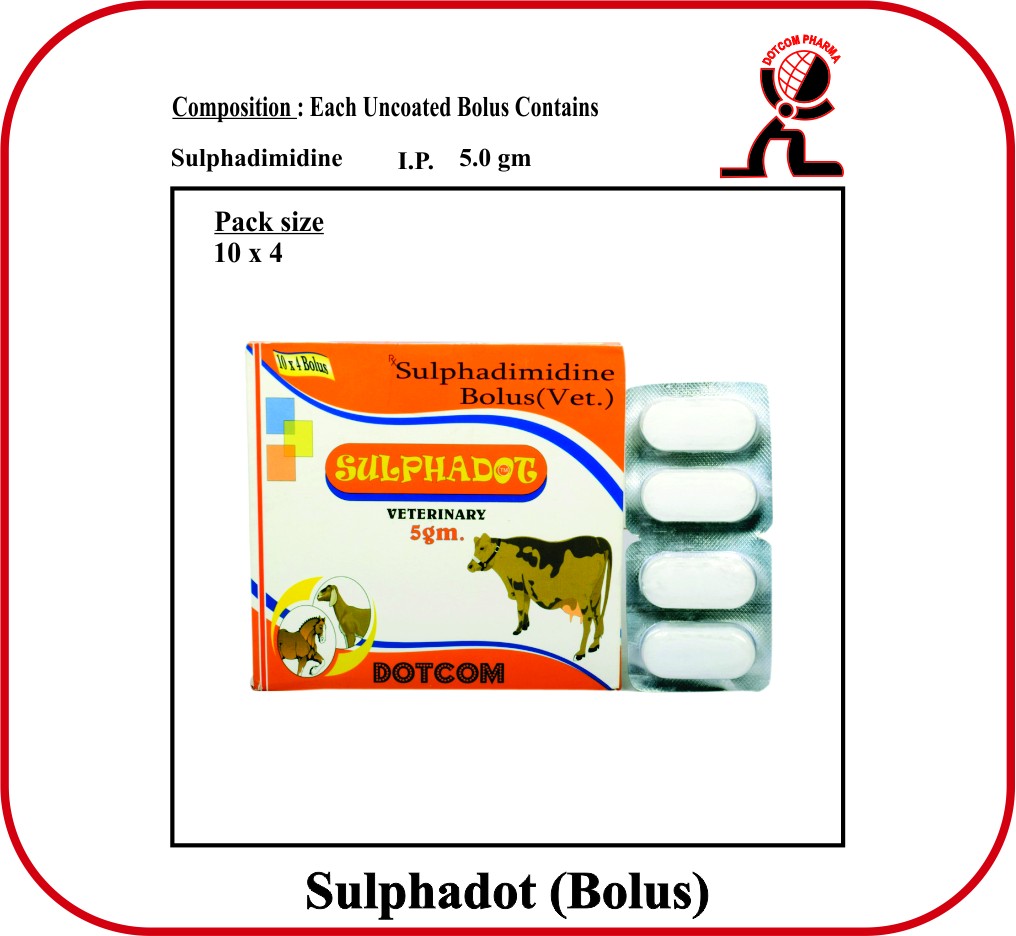
: SULPHADIMIDINE I.P. 5.0 GM VETERINARY BOLUS
Drug Role
: Antimicrobial
H
Yes
Ceritifcations:








Please login / register to buy or to get detailed information of the product
SKU:
Stock Available:
Batch / Lot. No:
Shelf life:
Manufacturing Date:
-
Expiry Date:
-
Minimum Pack Size:
Minimum Order Qty:
10
Pharma Categories:
Veterinary Pharmaceuticals
Product Form:
Bolus
Category:
Bolus
Group:
N/A
Type:
Bolus
Material:
Veterinary Pharmaceuticals
Tags
HSN Code:
30049099
HS Code:
3004.90
Country of Origin:
India
TAX:
5%
Qty per Piece:
Weight Of Each Piece(gm):
Piece Dimensions (L×W×H):
Qty per Buffer Box / Shrink Pack:
Weight of Buffer Box / Shrink Pack:
Buffer Dimensions (L×W×H):
Total Qty per Case:
Total Weight per Case:
Case Dimensions (L×W×H):
Weight / Volume:
Dimensions:
Inhouse product
Sulphadimidine I.P. 5.0 g Bolus is a high-strength sulphonamide antimicrobial formulation for use in cattle, buffalo, sheep, and goats. It acts as a bacteriostatic agent, interfering with folic acid synthesis in bacteria, thereby inhibiting their growth and replication. Primarily used in systemic bacterial infections, gastrointestinal and respiratory tract infections, and certain protozoal diseases in livestock.
Composition per bolus:
• Sulphadimidine I.P. – 5000 mg (5.0 g)
• Excipients – q.s.
Excipients may include: Lactose, maize starch, disintegrants, PVP K30, magnesium stearate, and pharmaceutical binders compliant with veterinary standards.
Dosage Form: Oral solid veterinary bolus
Appearance: Large oblong bolus; white to off-white; may be coated or uncoated depending on manufacturer branding.
Pharmacological Class:
• Sulphonamide Antimicrobial
Therapeutic Class:
• Broad-spectrum antibacterial
• Antiprotozoal (secondary action)
Indicated for the treatment and control of:
• Bacterial enteritis, colitis, and dysentery
• Respiratory tract infections (pneumonia, bronchitis)
• Septicaemia and other systemic bacterial infections
• E. coli, Salmonella, Pasteurella, and Streptococcus spp. infections
• Supportive therapy in coccidiosis (as part of combination protocols)
• Urinary tract infections and post-surgical prophylaxis
• Dosage Form: Veterinary Oral Bolus
• Pack Size: 10 × 4 (40 boluses per box; 4 boluses per strip)
• Outer Packaging: Printed laminated cartons with product details
• Target Species: Cattle, Buffalo, Sheep, Goats
Route: Oral (via bolus gun or manual administration)
Recommended Dosage:
• Initial dose: 200 mg/kg body weight on Day 1
• Maintenance dose: 100 mg/kg body weight daily for 2–3 days
• In large animals, typically 1 bolus per 100–120 kg body weight, once or twice daily depending on severity and vet’s advice
Dosage adjustments may be required based on species, infection severity, and veterinary direction.
• Broad-spectrum antimicrobial action against gram-positive and gram-negative organisms
• Economical and effective for herd-level infections
• Can be used alone or in combination with trimethoprim for enhanced synergy
• Particularly useful in enteric and respiratory infections
• Easy administration with bolus form for field use
Generally well tolerated, but possible side effects include:
• GI disturbances (diarrhoea, anorexia)
• Crystalluria (ensure adequate hydration)
• Hypersensitivity reactions (rare)
• Potential bone marrow suppression with long-term use
• Ensure adequate water intake to prevent sulphonamide crystalluria
• Use with caution in renal or hepatic impairment
• Avoid concurrent use with other sulphonamides or nephrotoxic drugs
• Not recommended for animals with known sulphonamide hypersensitivity
• Do not exceed treatment beyond 5–7 days without veterinary oversight
• Meat: Minimum 28 days after last dose
• Milk: Minimum 7 days
Strict adherence to withdrawal periods is essential to avoid drug residues in food products.
• Store below 30°C, in a dry, ventilated area
• Protect from direct sunlight, heat, and humidity
• Keep in original packaging until use
• Keep out of reach of children and unauthorized personnel
• Use gloves or clean hands during administration
• Administer whole — do not crush or split the bolus
• Wash hands after handling
• Dispose of unused or expired product responsibly
• Schedule H veterinary drug (Prescription-only)
• Regulated under Drugs and Cosmetics Act, India or applicable veterinary laws
• Not for sale without a valid veterinary prescription
• HS Code (International): 3004.90 – Veterinary Medicaments
• HSN Code (India): 30049099 – Other medicaments for veterinary use
Veterinary Use Only
• Formulation, strength, and pharmacokinetics suited for large animal physiology
• Not for human use — risks include improper dosing, hypersensitivity, or toxicity
• Always handle and administer under veterinary supervision
• Administer at the first sign of infection for better results
• Maintain hydration of animals during treatment
• If no improvement is observed within 48 hours, reassess diagnosis and therapy
• May be combined with vitamins, antipyretics, or fluid therapy as supportive care
Q: What is Sulphadimidine used for in livestock?
A: It is an antimicrobial used to treat bacterial infections of the gut, respiratory tract, urinary tract, and blood.
Q: How quickly does it work?
A: Typically within 24–48 hours, animals show improvement. Full course is recommended for complete recovery.
Q: Can it be given to lactating animals?
A: Yes, but observe milk withdrawal of 7 days post-treatment.
Q: Can I use it in combination with other drugs?
A: Yes — it is often combined with trimethoprim, antipyretics, or supportive therapy, but only under veterinary supervision.
Secure Transaction
100% secure payment
Top Brand
Trusted quality
Non Return
Due to hygiene