 +91 88281
11034
+91 88281
11034
 Need Help?



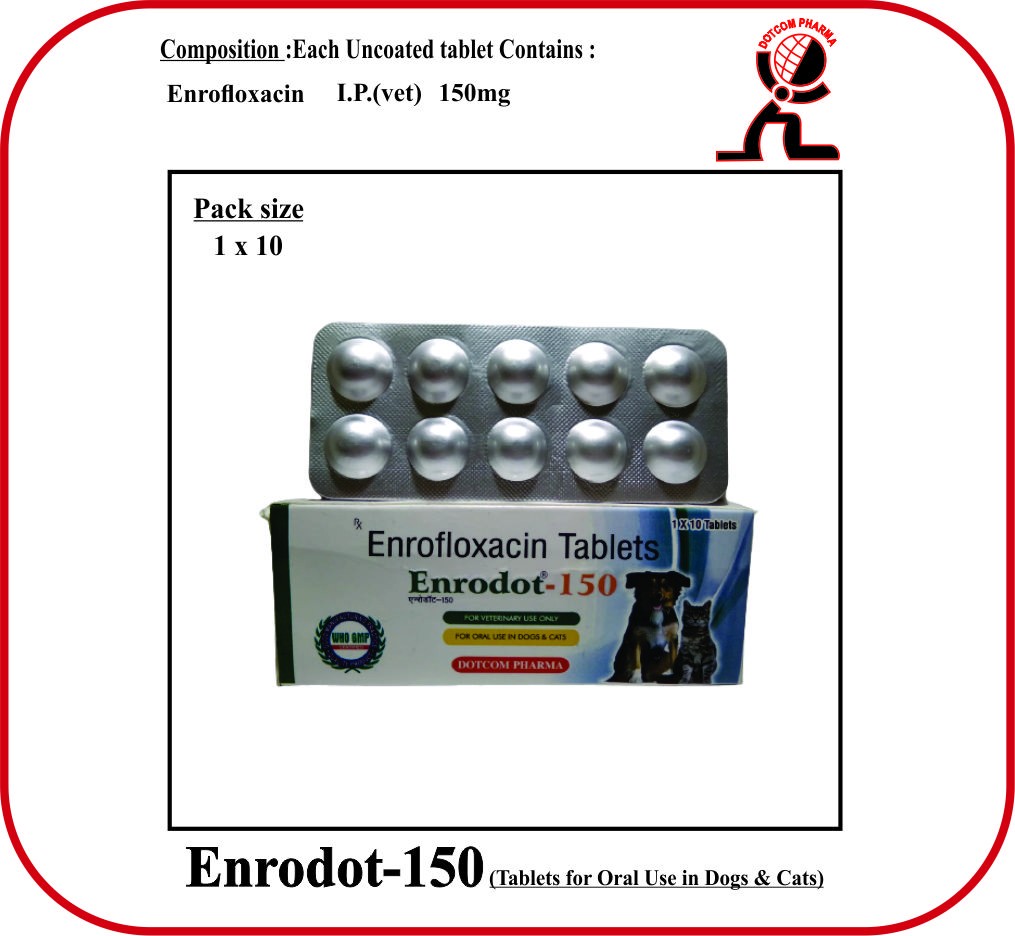
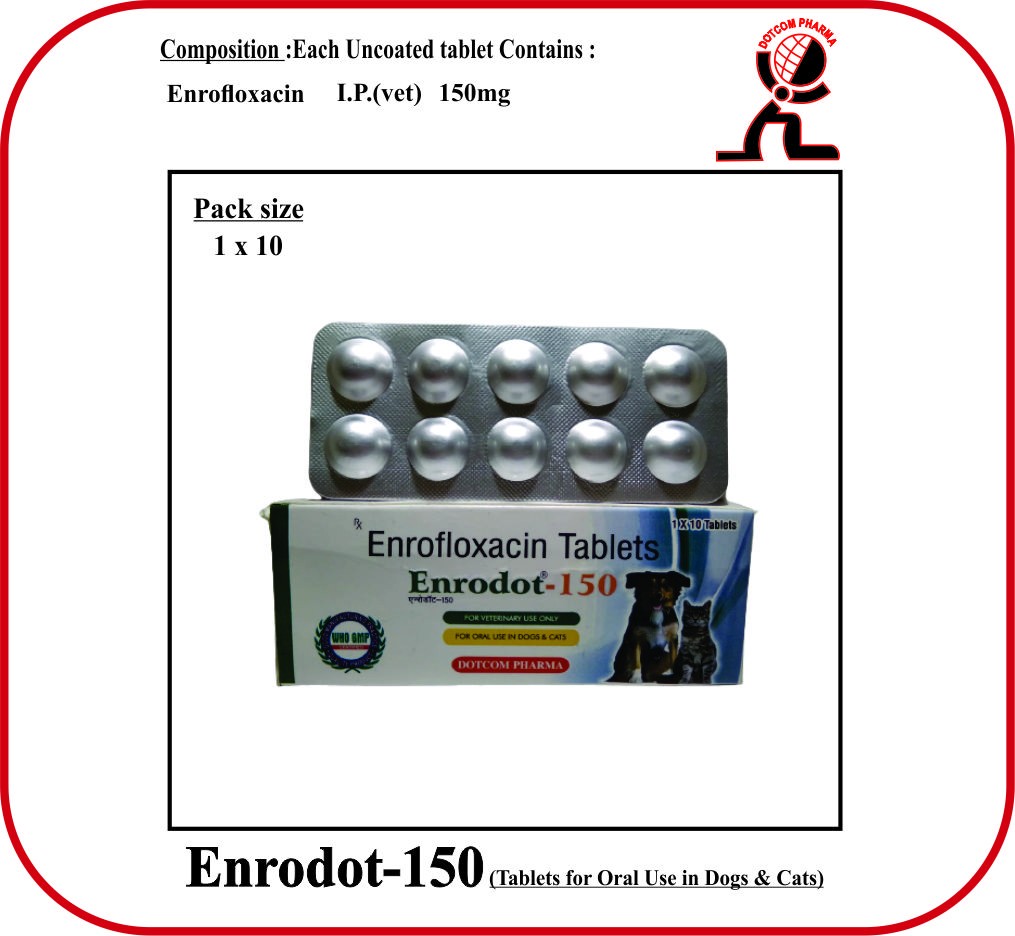
ENRODOT-150
Drug Name
: Enrofloxacin I.P. 150 mg Veterinary Tablets
Drug Role
: Antibiotic • Antibacterial
H
Yes
Ceritifcations:








Please login / register to buy or to get detailed information of the product
SKU:
Stock Available:
Batch / Lot. No:
Shelf life:
Manufacturing Date:
-
Expiry Date:
-
Minimum Pack Size:
Minimum Order Qty:
1
Pharma Categories:
• Pharmacological Class: Fluoroquinolone Antibiotic • Therapeutic Class: Broad-spectrum Antibacterial (Veterinary Use)
Product Form:
Bolus
Category:
Bolus
Group:
N/A
Type:
Bolus Tablet
Material:
Bolus
HSN Code:
30049099
HS Code:
3004.90
Country of Origin:
India
TAX:
5%
Qty per Piece:
Weight Of Each Piece(gm):
Piece Dimensions (L×W×H):
Qty per Buffer Box / Shrink Pack:
Weight of Buffer Box / Shrink Pack:
Buffer Dimensions (L×W×H):
Total Qty per Case:
Total Weight per Case:
Case Dimensions (L×W×H):
Weight / Volume:
Dimensions:
Inhouse product
Enrofloxacin is a synthetic broad-spectrum fluoroquinolone antibiotic used extensively in veterinary medicine. It acts by inhibiting bacterial DNA gyrase and topoisomerase IV, which are critical enzymes in bacterial DNA replication and repair, leading to rapid bacterial death. This formulation is designed for oral administration in large and small ruminants, and is particularly effective against respiratory, gastrointestinal, urinary tract, and systemic bacterial infections.
Composition per Tablets:
• Enrofloxacin I.P. — 150 mg
• Excipients — q.s. (pharmacologically inactive ingredients formulated for veterinary Tablets)
• Pharmacological Class: Fluoroquinolone Antibiotic
• Therapeutic Class: Broad-spectrum Antibacterial (Veterinary Use)
Recommended for the treatment of infections caused by Enrofloxacin-sensitive organisms, including:
• Respiratory tract infections (pneumonia, bronchitis)
• Gastrointestinal infections (enteritis, salmonellosis)
• Urinary tract infections
• Septicaemia and systemic bacterial infections
• Post-operative infections
• Mastitis and metritis (under vet supervision)
• Dosage Form: Oral Tablets
• Pack Size: 1 × 10 (10 Tablets per strip/carton)
• Packaging: Strip or blister pack sealed in labelled cartons
• Target Species: Cattle, Buffalo, Sheep, Goats
• Route: Oral
• Recommended Dosage:
o Large animals: 1 Tablets per 150–200 kg body weight
o Small ruminants: Adjust dosage based on weight
• Frequency: Once daily for 3–5 days, or as directed by a veterinarian
• Broad-spectrum antibacterial activity
• Rapid onset of action
• Well-tolerated and safe at recommended doses
• Ideal for treatment of both localized and systemic infections
• High tissue penetration, including lungs, kidneys, and reproductive tract
• Rare side effects include:
o Temporary gastrointestinal upset (loss of appetite, diarrhoea)
o Neuromuscular reactions in sensitive animals
o Photosensitivity (rare)
• Avoid overdose to reduce risk of joint cartilage damage in young animal
• Use only under veterinary supervision
• Not to be used in animals with known hypersensitivity to quinolones
• Avoid use in growing animals unless prescribed (risk to cartilage development)
• Do not use in animals intended for breeding unless cleared by vet
• Meat: Minimum 28 days
• Milk: Minimum 7 days
• Store below 30°C in a dry place
• Protect from light and moisture
• Keep sealed in original packaging until use
• Use gloves if required
• Do not crush or break the Tablets
• Wash hands thoroughly after administration
• Keep out of reach of children and non-target species
• Schedule “H” Veterinary Medicinal Product (Prescription Required)
• Controlled under national veterinary pharmaceutical regulations
• HS Code (International): 3004.90
• HSN Code (India): 30049099
• Strictly for veterinary use only
• Not intended for human use
• Formulated for dosing and safety in ruminant species
• Do not use concurrently with other antibiotics without veterinary advice
• Ensure adequate hydration of the animal during treatment
• Monitor clinical response; discontinue if no improvement in 72 hours
• Store away from feed or drinking water to avoid accidental ingestion
Q: What types of infections does this Tablets treat?
A: It treats bacterial infections of the respiratory tract, digestive tract, urinary system, and reproductive organs.
Q: Is this Tablets safe for pregnant or lactating animals?
A: Use only if prescribed; caution is advised during pregnancy and lactation.
Q: Can this be used in young animals?
A: Not recommended for very young or growing animals due to risk of joint cartilage issues.
Q: How long should treatment continue?
A: Typically, 3–5 days, but follow your vet’s specific instructions.
Q: Can this be used alongside other antibiotics?
A: Only under veterinary supervision; avoid combinations without prescription.
Secure Transaction
100% secure payment
Top Brand
Trusted quality
Non Return
Due to hygiene