 +91 88281
11034
 Need Help?



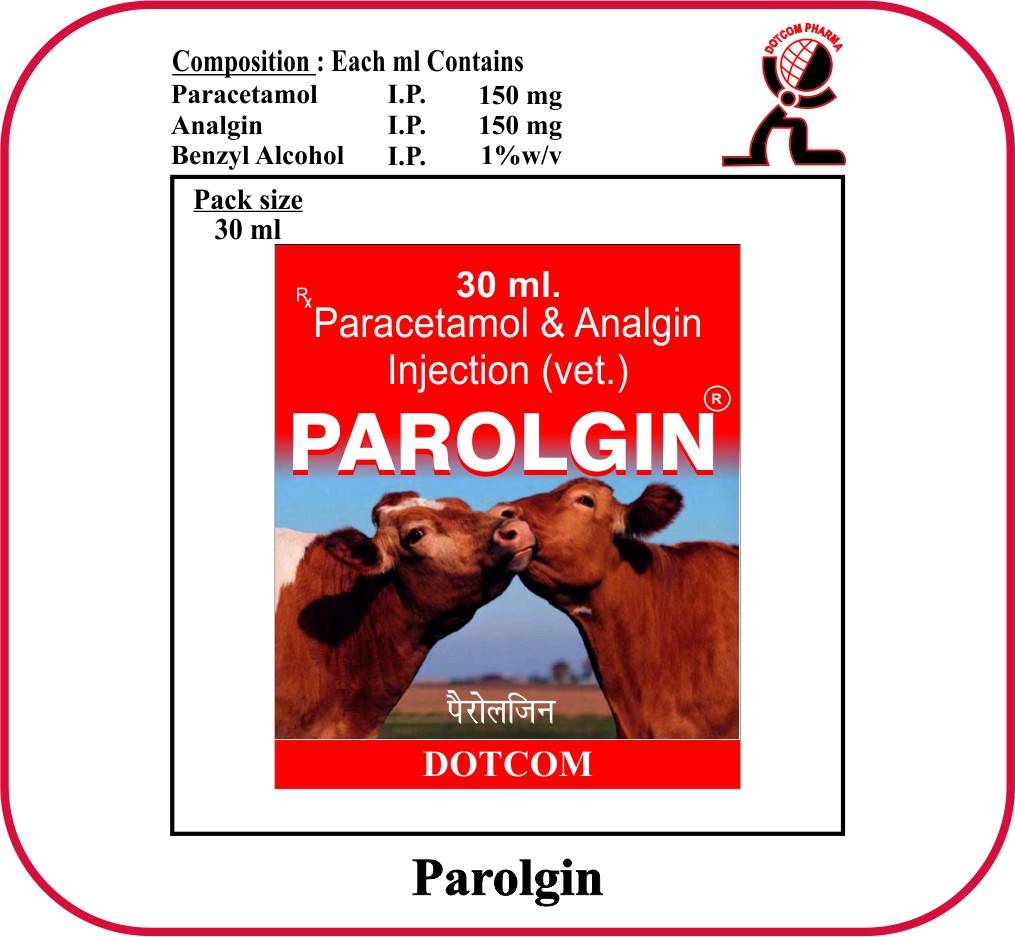
PAROLGIN
Drug Name : Paracetamol + Analgin Injection
Drug Role : Analgesic • Anti-inflammatory
H
Yes
Price on request Send us an enquiry and our team will share the price.
Certifications:









Please login / register to buy or to get detailed information of the product
SKU:
Stock Available:
Batch / Lot. No:
Shelf life:
Manufacturing Date:
-
Expiry Date:
-
Minimum Pack Size:
Minimum Order Qty:
1
Pharma Categories:
Antipyretic • Anti-inflammatory
Product Form:
• Clear sterile injectable solution • Amber glass vials: 30 mL
Category:
Liquid Injection
Group:
N/A
Type:
Veterinary Liquid Injection
Material:
Liquid Injection
Tags
HSN Code:
3004
HS Code:
30049099
Country of Origin:
India
TAX:
5%
Qty per Piece:
Weight Of Each Piece(gm):
Piece Dimensions (L×W×H):
Qty per Buffer Box / Shrink Pack:
Weight of Buffer Box / Shrink Pack:
Buffer Dimensions (L×W×H):
Total Qty per Case:
Total Weight per Case:
Case Dimensions (L×W×H):
Weight / Volume:
Dimensions:
Inhouse product
This is a dual-component, non-opioid injectable formulation combining Paracetamol and Analgin (Metamizole Sodium) to deliver potent antipyretic, analgesic, and anti-inflammatory effects for veterinary use.
• Paracetamol: A central-acting antipyretic and mild analgesic, safe on the gastrointestinal tract.
• Analgin (Metamizole): A pyrazolone derivative with strong analgesic and antipyretic action, also offering mild spasmolytic benefits.
This combination is especially useful in high fevers, systemic infections, inflammation, and painful conditions in large and small animals.
Not for use in cats due to Paracetamol toxicity. To be administered strictly under veterinary supervision.
• Formulation: Sterile aqueous solution
• Appearance: Clear, colourless to pale yellow liquid
• pH Range: 5.5 – 7.0
• Shelf Life: 24 months under recommended storage
• Packaging: Amber glass vials –30 mL
• Paracetamol I.P.: 150 mg
• Analgin (Metamizole Sodium) I.P.: 150 mg
• Benzyl Alcohol I.P.: 1% w/v (as preservative)
• Water for Injection: q.s
• Benzyl Alcohol/ pH adjusters (as required)
• Water for Injection
• Antipyretic
• Analgesic
• Anti-inflammatory
• Non-steroidal adjunct therapy
• High-grade fevers (pyrexia)
• Bacterial and viral infections with systemic fever
• Muscle and joint pain, trauma-related pain
• Post-surgical recovery
• General malaise and inflammation
• Adjunct to antibiotic therapy during infection-induced fever
Always follow veterinarian’s directions.
Typical Dosage Guidelines:
• Cattle, Buffaloes, Horses: 1 mL per 20–30 kg body weight IM/IV
• Sheep, Goats: 1 mL per 10–15 kg
• Dogs: 0.5 – 2 mL depending on body weight
• Cats: Contraindicated
Frequency: Once or twice daily for up to 3 days or as advised
IV administration should be slow and under monitoring to avoid hypotension or allergic reactions.
• Intramuscular (IM)
• Slow Intravenous (IV)
• Clear sterile injectable solution
• Amber glass vials: 30 mL
Indicated for livestock (cattle, buffaloes, goats, sheep, horses) and canines for effective fever and pain management. Not recommended for felines due to high toxicity of paracetamol.
• Synergistic action of Paracetamol & Analgin for faster and longer relief
• Effective in mixed infections, musculoskeletal inflammation, and febrile illness
• Reduced gastrointestinal impact compared to NSAIDs
• Enhances animal comfort during disease recovery
• Easy IM/IV administration
• Local irritation at injection site
• Allergic reactions (rash, swelling, rare anaphylaxis)
• Rare hypotension (if IV too rapid)
• Overdose may lead to hepatic or renal complications
• Bone marrow suppression (rare, linked to Analgin)
• Schedule H veterinary drug
• Administer only with a valid veterinary prescription
• Contraindicated in cats/ Avoid concurrent use with other hepatotoxic or nephrotoxic agents
• Monitor hydration status before IV administration
• Avoid overdose — follow dosage based on weight
• Use cautiously in animals with liver or kidney disorders
• Meat: 4 days
• Milk: 48 hours (Verify with national/local regulatory authorities as per region)
• Store below 25°C
• Protect from light and freezing
• Keep tightly closed after opening
• Use sterile syringe and needle
• Shake gently before use
• Do not use if solution is turbid or discoloured
• Follow local veterinary pharmaceutical waste disposal protocols
• HS Code: 30049099
• HSN Code: 3004 – Medicaments for therapeutic/prophylactic use
• Always administer IV slowly under monitoring
• Do not use in combination with other paracetamol or pyrazolone-based drugs unless approved by the veterinarian
• Provide hydration support if animal is febrile or debilitated
• Sfor veterinary use only
• Not formulated or approved for human use
• Human exposure to Analgin is restricted in many countries
Q1: What is this injection used for?
It is used for reducing fever and relieving pain or inflammation in veterinary animals.
Q2: Can it be used in cats?
No. Paracetamol is toxic to cats and should never be used in feline species.
Q3: Is this better than Paracetamol alone?
Yes. Analgin and Paracetamol have a synergistic effect, providing quicker and stronger relief.
Q4: Can it be used with antibiotics?
Yes, it is commonly used alongside antibiotics during infections to control fever and improve animal comfort.
Q5: Are there any serious side effects?
Very rare. Overdose or rapid IV injection may cause liver strain, allergic reaction, or hypotension.
Q6: What is the withdrawal period?
4 days for meat, 48 hours for milk — but always confirm with local guidelines.
Q7: Can this injection be given daily?
Yes, but typically not more than 2–3 days unless prescribed specifically by a veterinarian.
Secure Transaction
100% secure payment
Top Brand
Trusted quality
Non Return
Due to hygiene