 +91 88281
11034
+91 88281
11034
 Need Help?


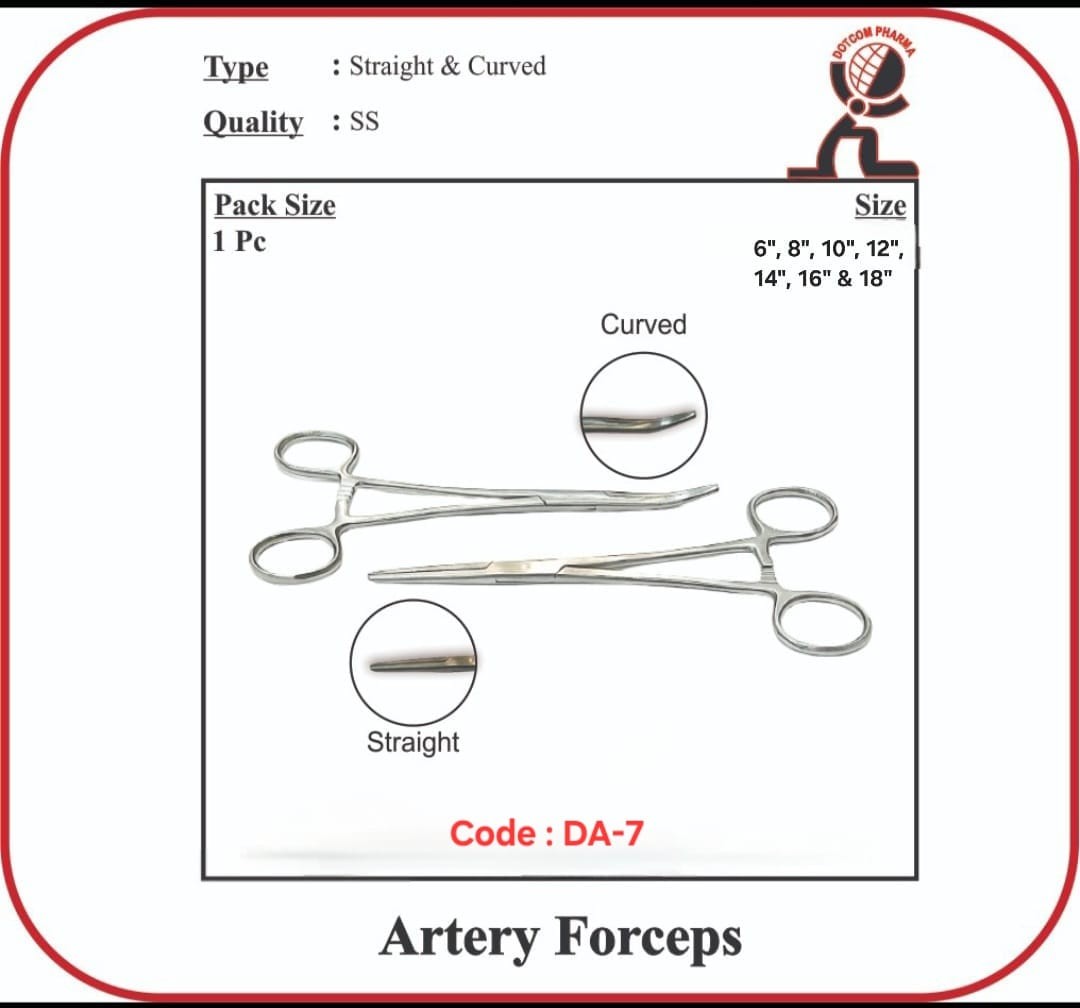
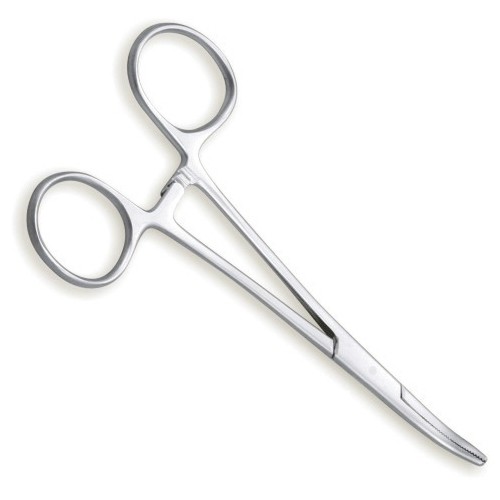
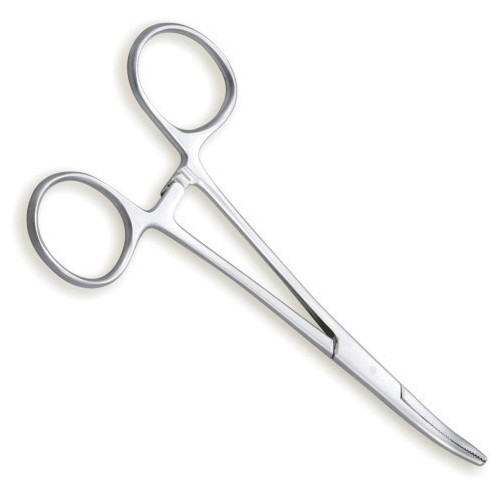
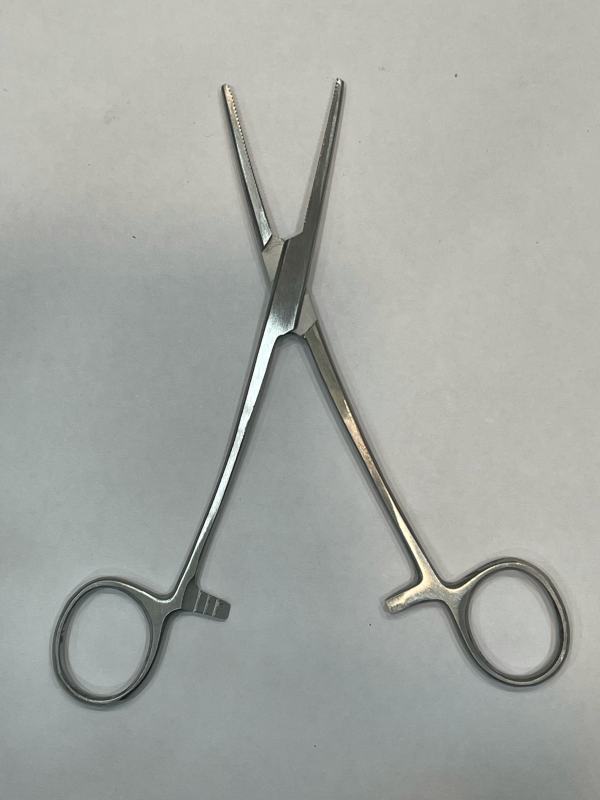
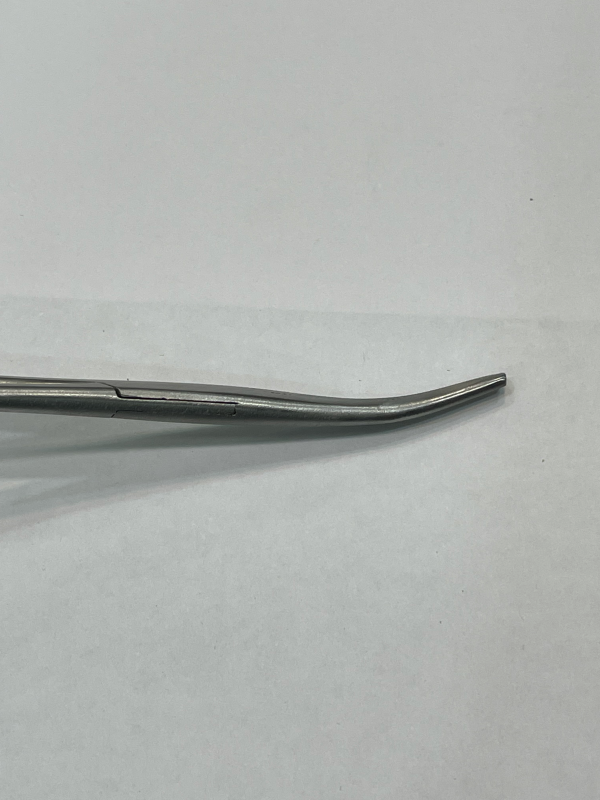
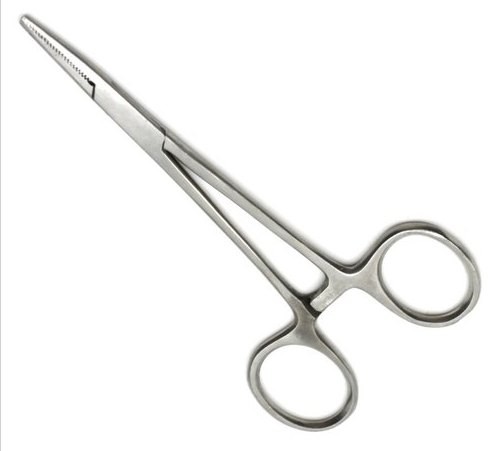
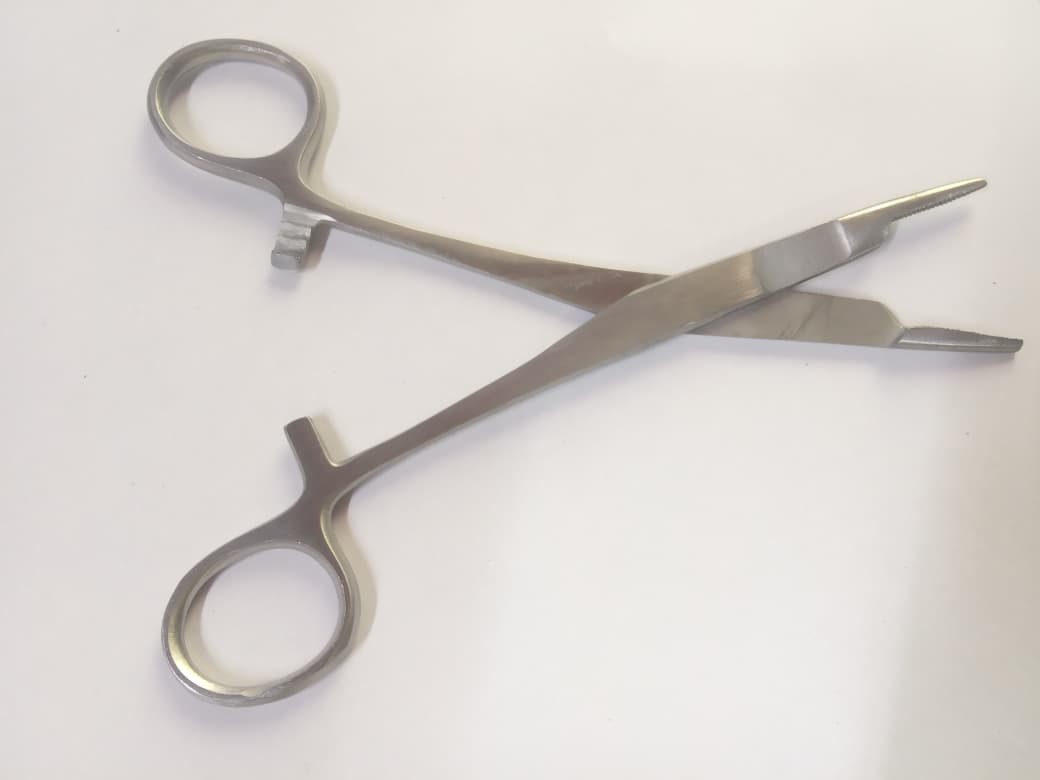
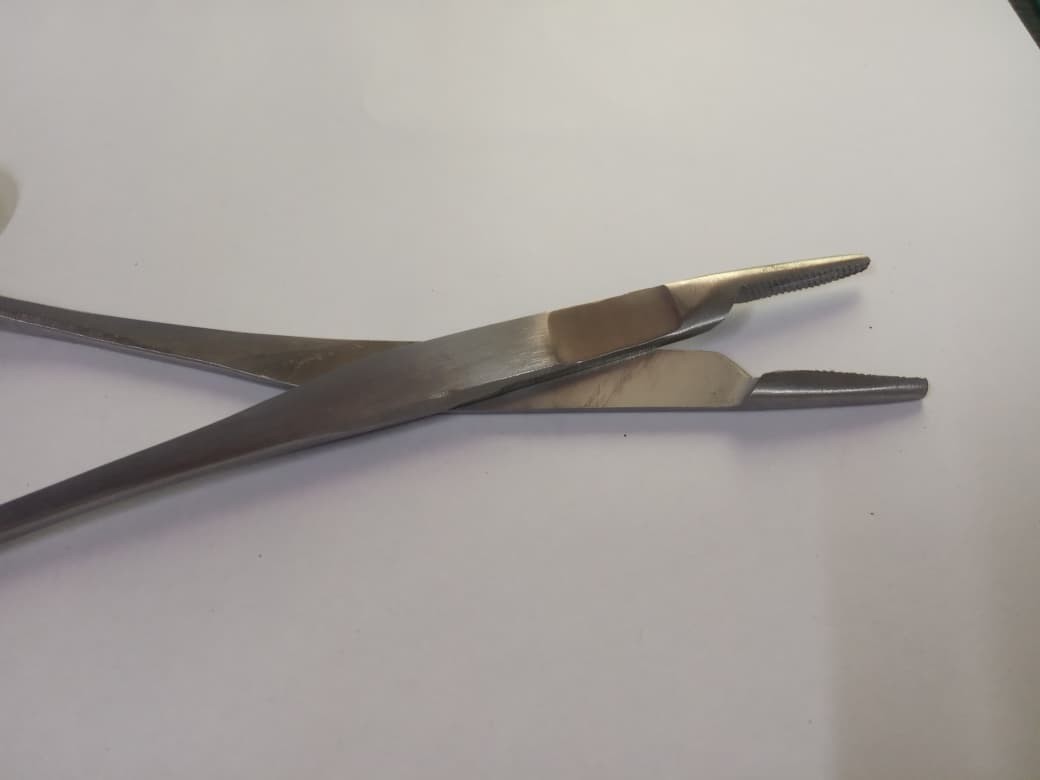
Artery / Rochester Carmalt Forceps - With Lock
Drug Name
: NA
Drug Role
: Rochester Carmalt Forceps are surgical instruments used to clamp large blood vessels or tissue bundles during surgeries.
NA
No
DOTCOM PHARMA
Ceritifcations:










Please login / register to buy or to get detailed information of the product
SKU:
Stock Available:
Batch / Lot. No:
Shelf life:
Manufacturing Date:
-
Expiry Date:
-
Minimum Pack Size:
Minimum Order Qty:
1
Pharma Categories:
• Haemostatic Surgical Instruments • Clamping & Occlusion Instruments
Product Form:
• Reusable • Sterilizable • Supplied non-sterile (unless otherwise requested)
Category:
Veterinary
Group:
N/A
Type:
Veterinary Instrument
Material:
• Surgical-grade stainless steel (AISI 410/420)
Tags
HSN Code:
9018.90.99
HS Code:
9018.90.99
Country of Origin:
Imported
TAX:
5%
Qty per Piece:
Weight Of Each Piece:
Piece Dimensions (L×W×H):
Qty per Buffer Box / Shrink Pack:
Weight of Buffer Box / Shrink Pack:
Buffer Dimensions (L×W×H):
Total Qty per Case:
Total Weight per Case:
Case Dimensions (L×W×H):
Weight / Volume:
Dimensions:
Inhouse product
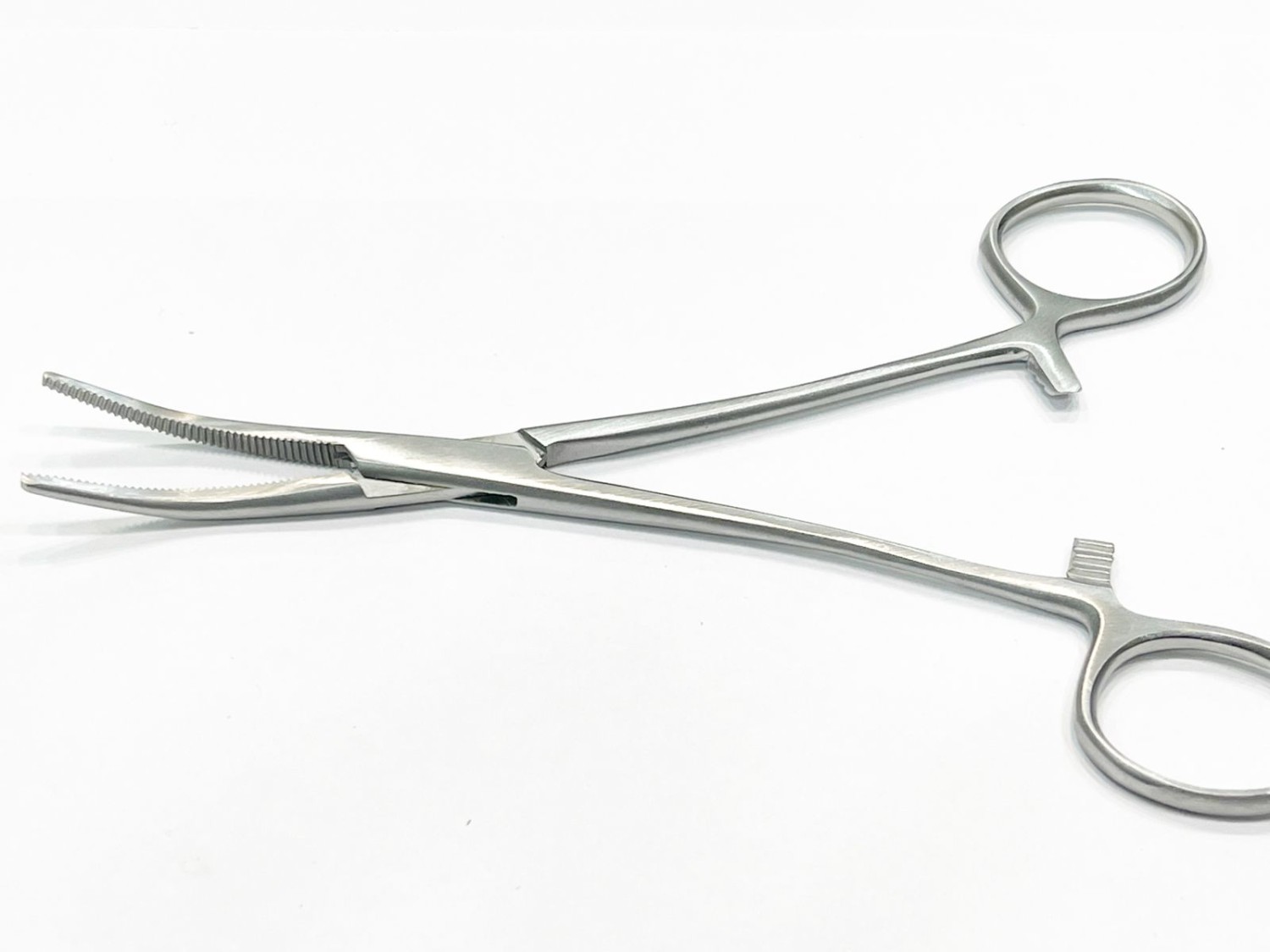
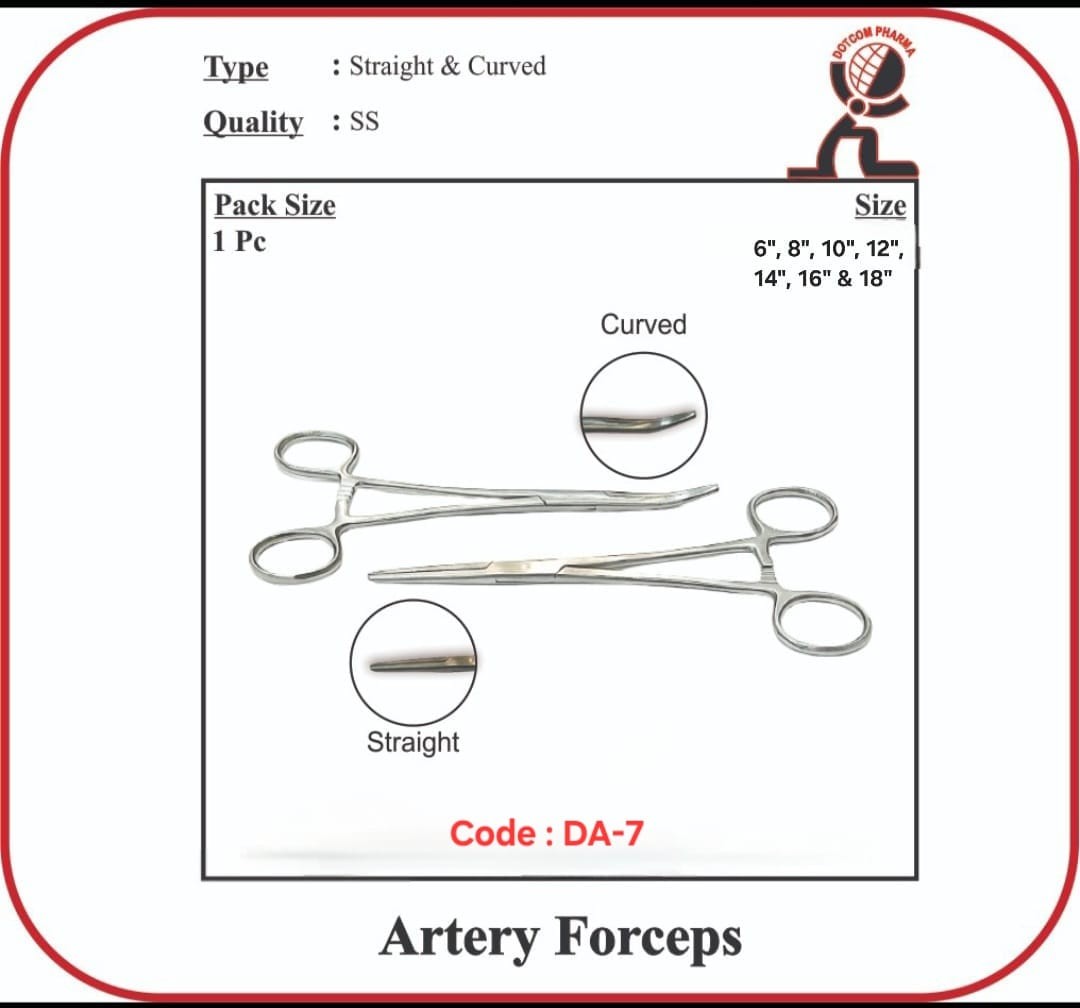
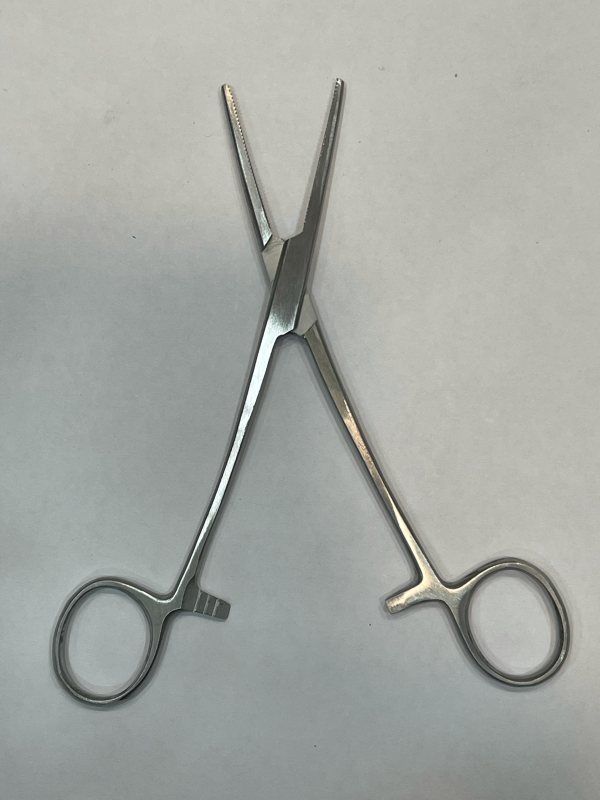
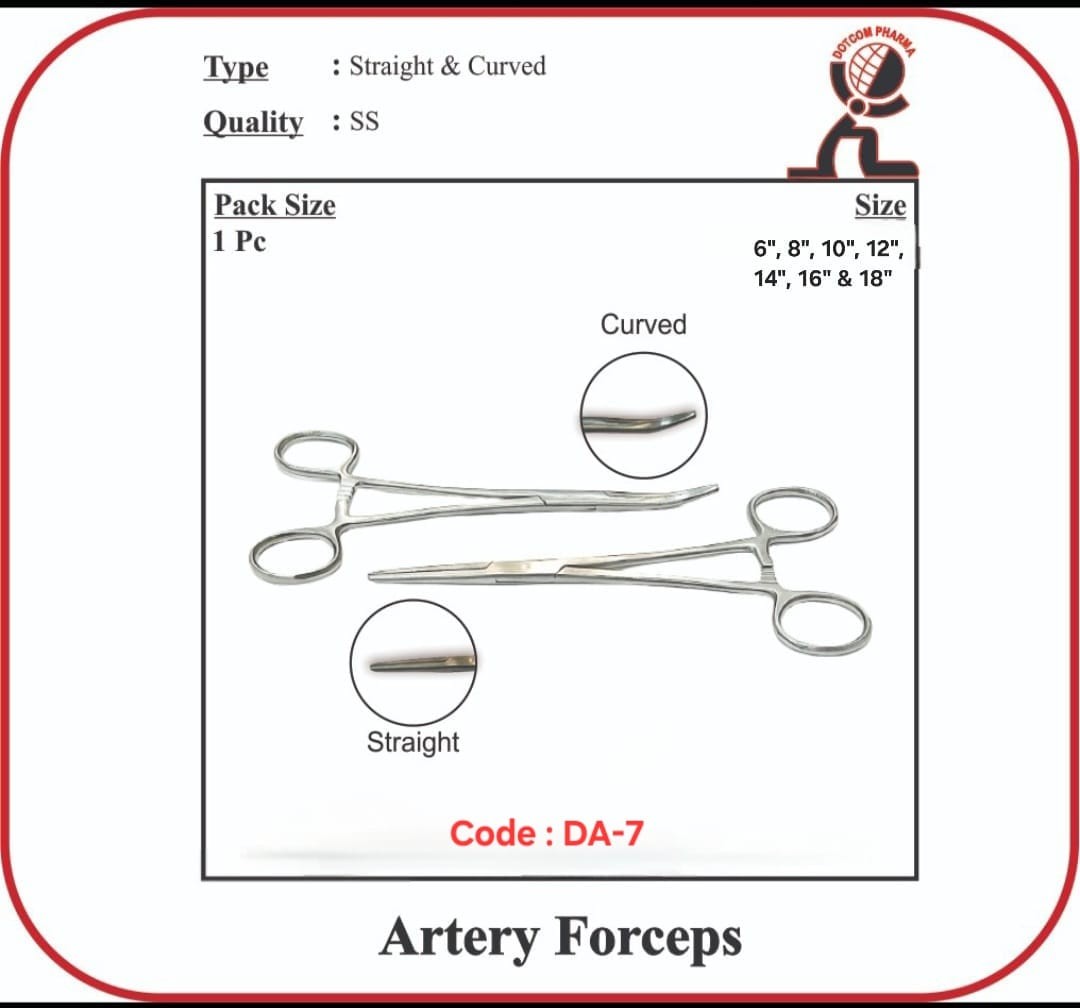
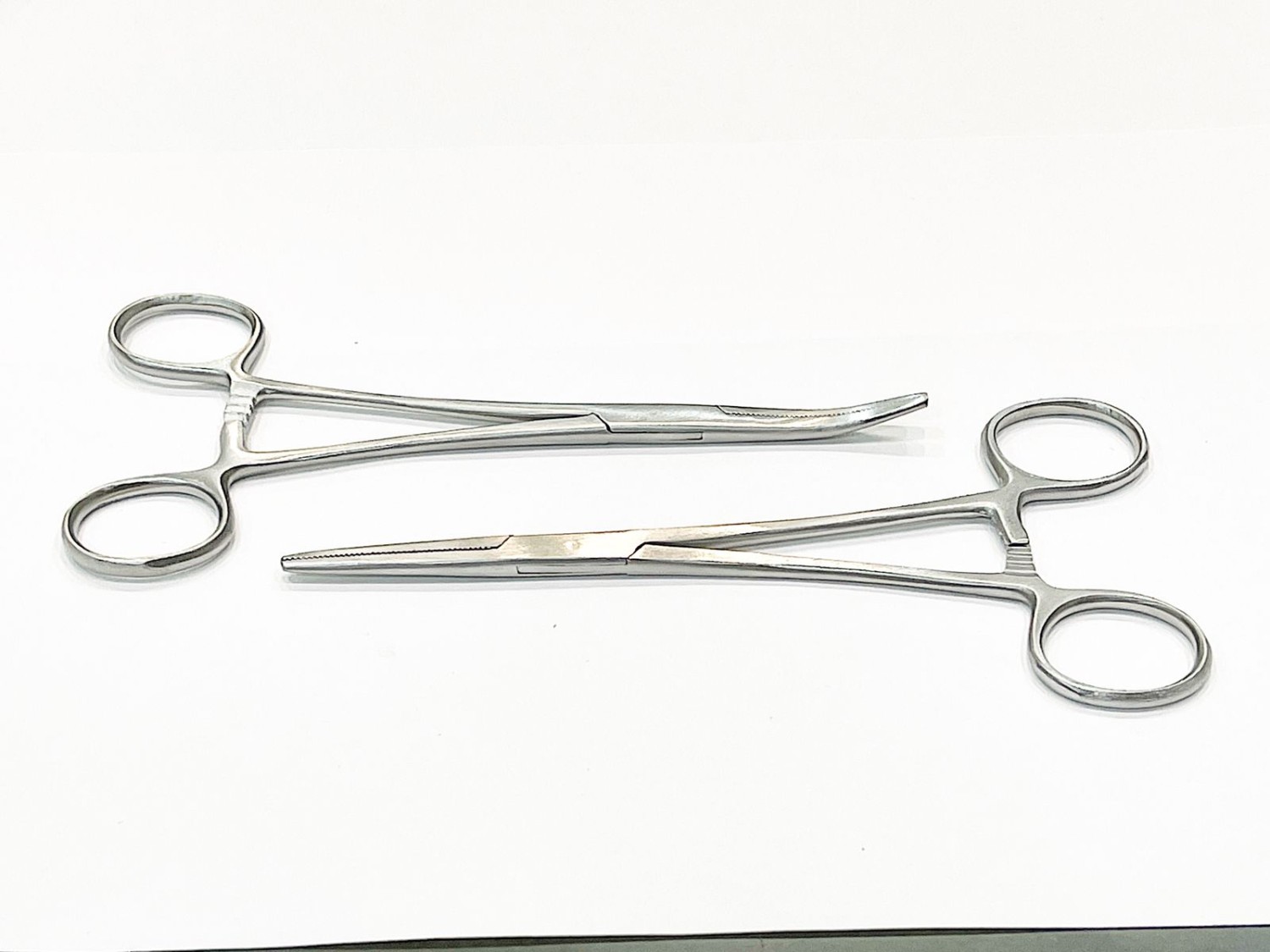
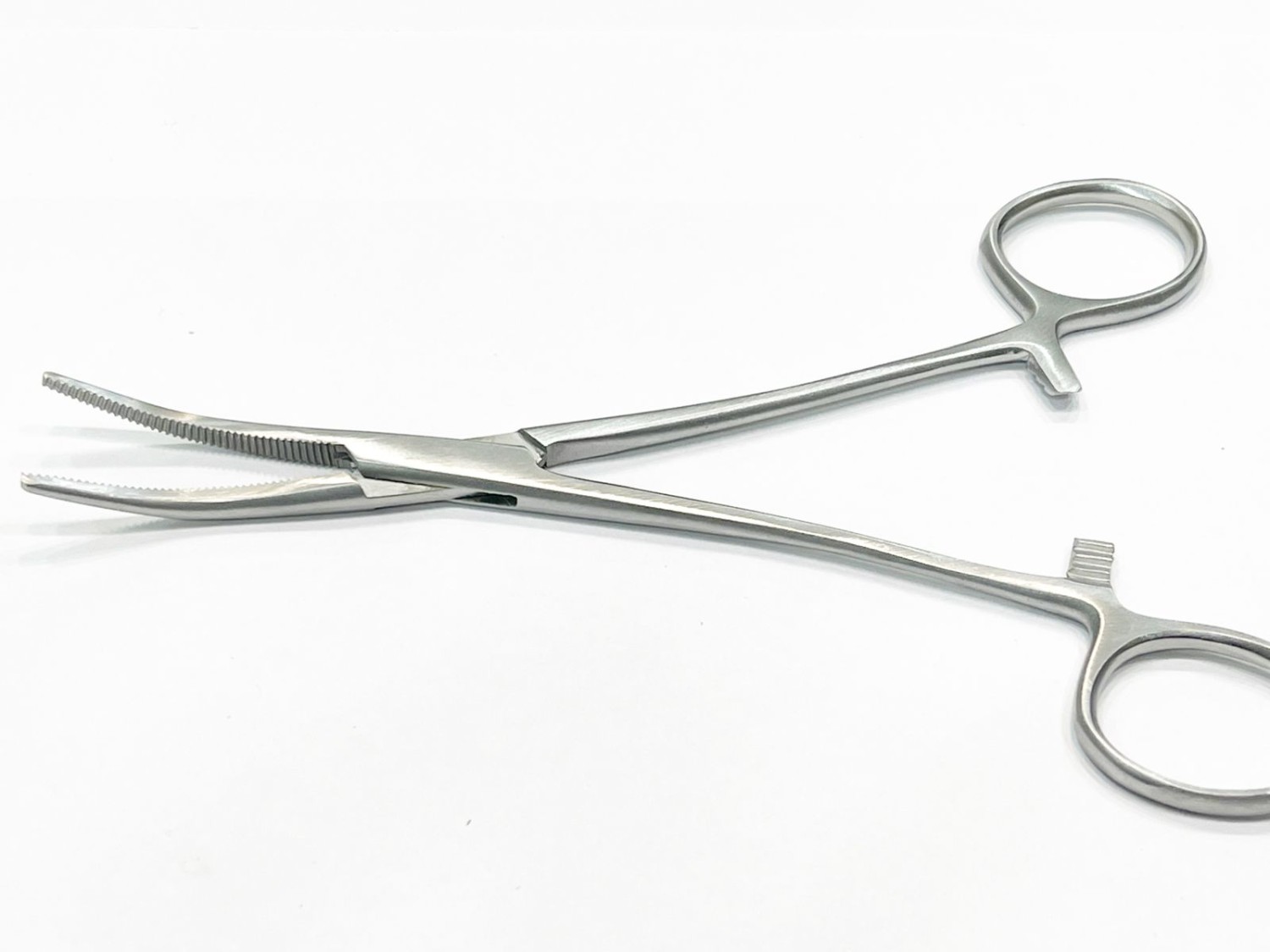
Rochester Carmalt Artery Forceps are heavy-duty, ratcheted haemostatic forceps used to clamp large blood vessels and control bleeding during surgical procedures. These forceps feature long, robust jaws with longitudinal serrations and a cross-serrated tip for a secure grip. Available in curved or straight variants, and with a locking mechanism (ratchet), they are essential in general, abdominal, and veterinary surgeries, particularly in ligating pedicles or vessels.
• Design: Serrated jaws with cross-serrated tip
• Locking Mechanism: 3-step ratchet lock for secure clamping
• Variants:
o Straight
o Curved
• Sizes Available:
o 6" (150 mm)
o 8" (200 mm)
o 10" (250 mm)
o 12" (300 mm)
• Tip Type: Longitudinal serrations with transverse grooves at tip
• 6 inches – for finer, more delicate procedures
• 8 inches – standard size for general use
• 10 inches – suitable for deeper cavities
• 12 inches – ideal for large animals or deep abdominal surgeries
• Straight: Better for surface or shallow clamping
• Curved: Preferred for deep or angled tissue planes
• Jaws with longitudinal serrations to reduce tissue slippage
• Cross-serrated jaw tips for added grip during clamping
• Surgical-grade stainless steel (AISI 410/420)
• Rust and corrosion-resistant
• Reusable and autoclavable
• Satin / matte or polished finish available
• Haemostatic Surgical Instruments
• Clamping & Occlusion Instruments
• General and Veterinary Surgery Instruments
• Reusable
• Sterilizable
• Supplied non-sterile (unless otherwise requested)
• Sold individually or in surgical instrument kits
• Clamping blood vessels or tissue bundles during surgery
• Securing vascular pedicles before ligation
• Controlling bleeding during open surgeries
• Holding tissue or gauze during procedures
• Frequently used in general, gynaecological, abdominal, and veterinary surgeries
• Strong locking grip with ratchet
• Textured jaws prevent slippage
• Available in multiple lengths for versatile use
• Durable and autoclavable
• Effective in both human and veterinary surgical environments
• Improper locking can cause tissue trauma
• Not suitable for microsurgical or delicate procedures
• Longer sizes may be heavy for fine surgeries
• Curved version may obstruct view in surface-level work
• Ensure proper locking to avoid accidental opening
• Do not force lock beyond the last ratchet notch
• Use appropriate size for procedure depth
• Clean thoroughly before sterilization
• Store in instrument trays to avoid jaw misalignment
• HS / HSN Code: 9018.90.99 (Surgical instruments and appliances – others)
• GST Slab (India): 12% (subject to regional classification)
• Handle by the shank, not by tips
• Do not drop to avoid misalignment
• Open fully during cleaning and sterilization
• Lubricate joint mechanism periodically if needed
• Inspect locking mechanism regularly
• Fully autoclavable (121°C / 15–20 mins)
• Suitable for ETO or plasma sterilization
• Avoid harsh chemicals that may pit the surface
• Dry completely after sterilization to avoid spotting or rust
Used in:
• Large and small animal surgeries
• Spaying/neutering (especially clamping ovarian pedicles)
• Control of haemorrhage during abdominal or thoracic surgery
• Deep tissue clamping in large breeds or livestock (Short form: spay/neuter, vessel clamping, large animal surgery)
Used in:
• General, abdominal, and gynaecological surgeries
• Hysterectomy, bowel resections, vessel ligation
• Clamping tissue bundles for safe ligation (Short form: abdominal surgery, gynaecology, vessel control)
Q1. What is the purpose of the cross-serrated tip on Rochester Carmalt Forceps?
It enhances grip at the tip to prevent slippage while clamping tissue or vessels.
Q2. What’s the difference between straight and curved variants?
Straight is used for surface-level or linear approaches, while curved versions offer better access in deep or angled surgical sites.
Q3. Are these forceps autoclavable?
Yes, they are made from surgical-grade stainless steel and fully autoclavable.
Q4. Can they be used for both human and animal surgeries?
Yes. They are commonly used in both human surgical fields and veterinary practice.
Q5. How does the locking mechanism work?
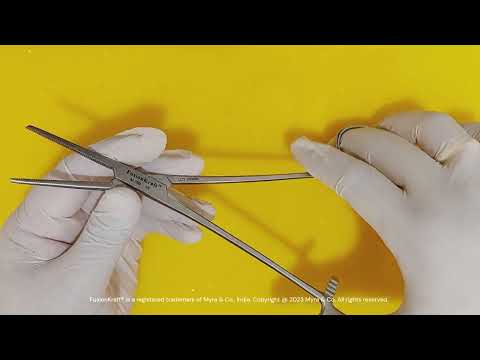
They feature a ratchet system that locks the forceps in a closed position, allowing the surgeon to maintain clamping without continuous pressure.
Secure Transaction
100% secure payment
Top Brand
Trusted quality
Non Return
Due to hygiene