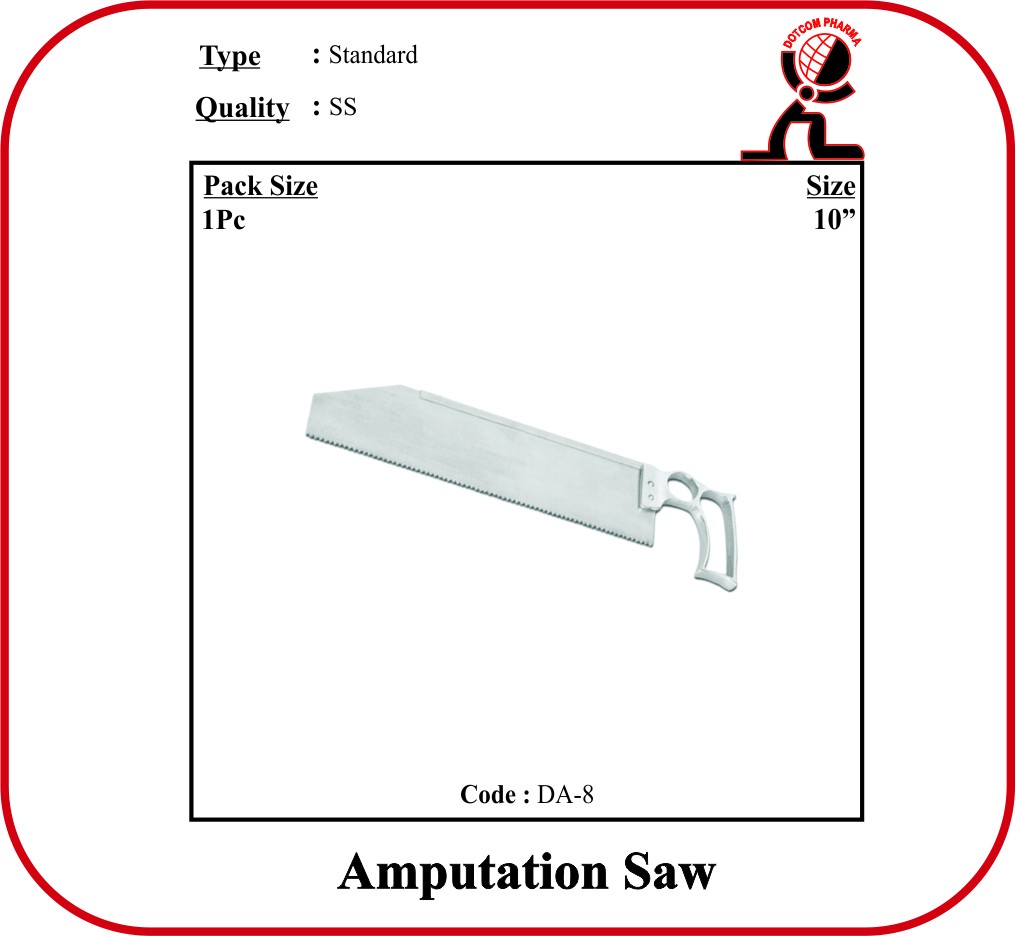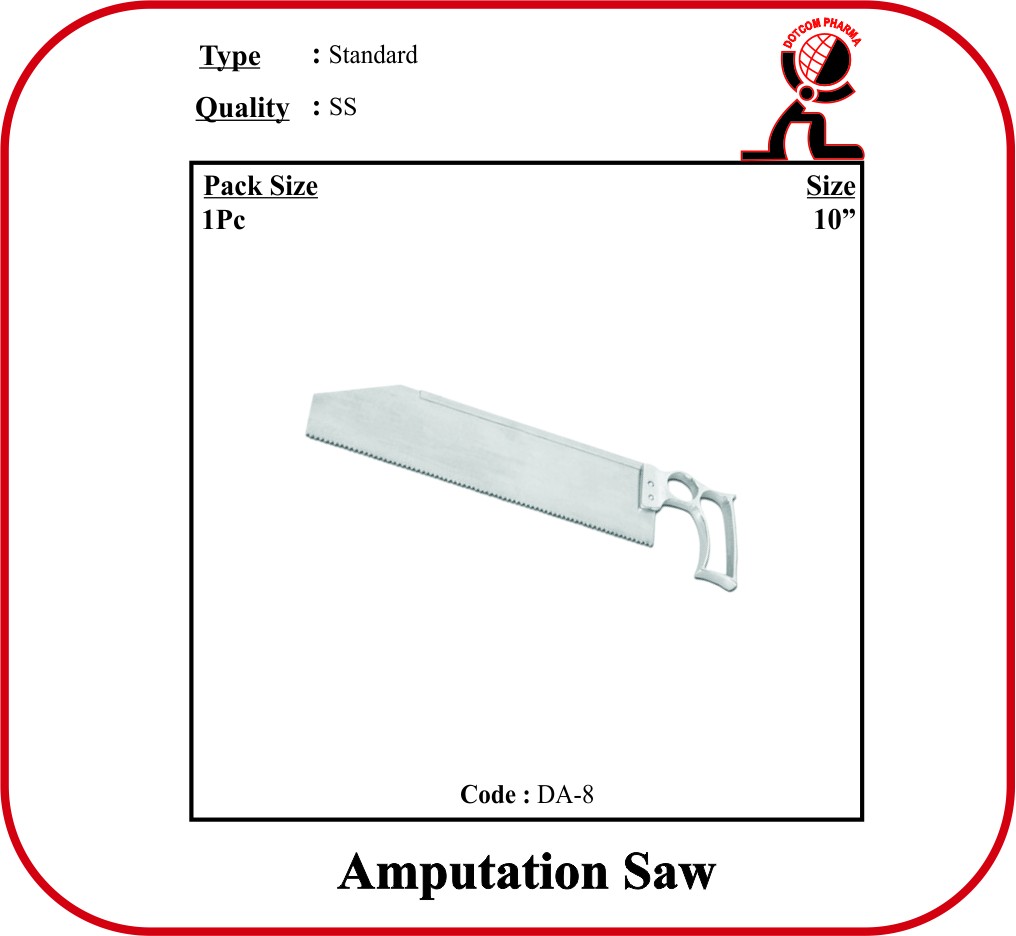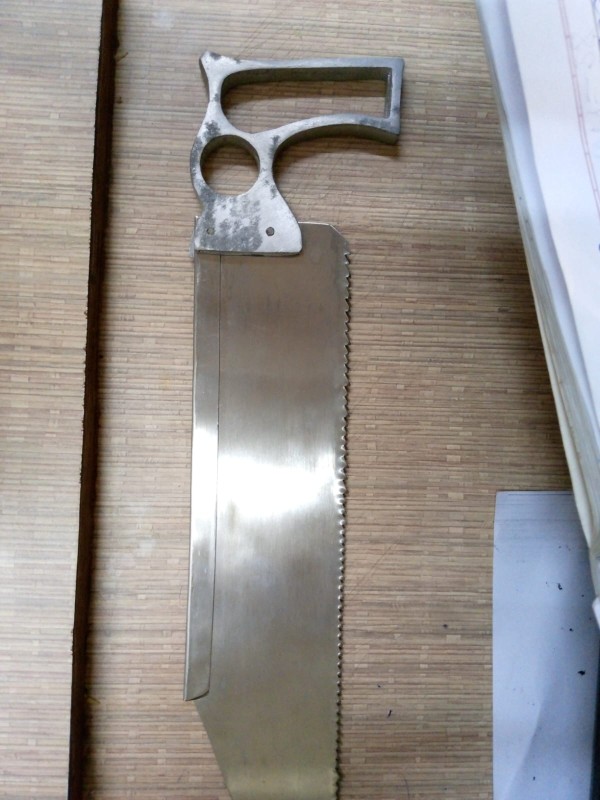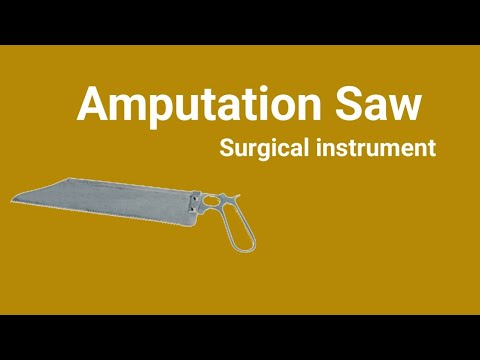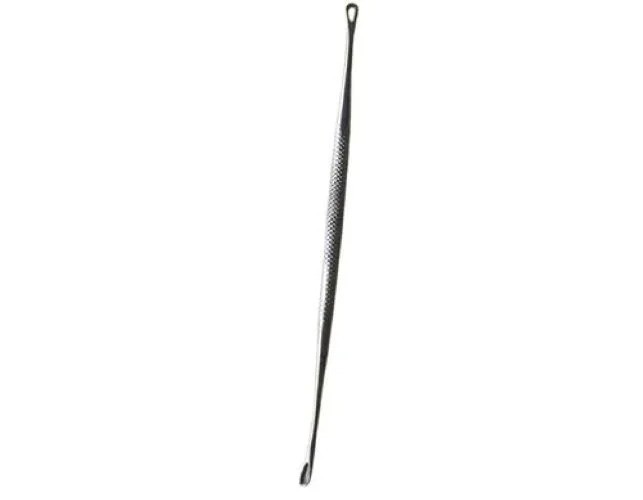
Amputation Saw

Drug Name

: NA

Drug Role

: An Amputation Saw Is A Surgical Instrument Used For Cutting Bone During Amputations Or Orthopaedic Procedures In Both Human And Veterinary Medicine. It Ensures Precision And Control When Removing Limbs Or Damaged Tissue In Trauma Or Clinical Surgery

Schedule:
NA
Prescription Required:
No
Brand / Mfg:
DOTCOM PHARMA
/ Piece
MRP: Inclusive of all taxes
Discount Applied:
MRP
-
Price
-
-
Discount
-
-
+ Tax
-
-
Total You Save
-
You Save:
Type
Size
Quality
Made
Quantity
(10 available)
Total Amount Product Wise:

Ceritifcations:

Certificate
Certificate
Certificate
Certificate
Certificate
Certificate
Certificate
Certificate
Certificate
Certificate

Please login / register to buy or to get detailed information of the product

SKU:

Stock Available:

Batch / Lot. No:

Shelf life:

Manufacturing Date:

-

Expiry Date:

-

Minimum Pack Size:

Minimum Order Qty:

1

Pharma Categories:

• Surgical Instruments → Amputation / Orthopaedic Tools

Product Form:

• Manual Surgical Tool • Reusable

Category:

Veterinary

Group:

N/A

Type:

• Bow-Type Amputation Saw (U-Frame) • Straight Amputation Saw • Gigli Wire Saw (Flexible Wire Used With Handles)

Material:

Medical-Grade Stainless Steel

HSN Code:

90189023

HS Code:

9018.4910

Country of Origin:

Indian

TAX:

5%

Qty per Piece:

Weight Of Each Piece:

Piece Dimensions (L×W×H):

Qty per Buffer Box / Shrink Pack:

Weight of Buffer Box / Shrink Pack:

Buffer Dimensions (L×W×H):

Total Qty per Case:

Total Weight per Case:

Case Dimensions (L×W×H):

Weight / Volume:

Dimensions:

Estimate Shipping Time: 7 Days

Inhouse product

An Amputation Saw is a surgical instrument used for cutting bone during amputations or orthopaedic procedures in both human and veterinary medicine. It ensures precision and control when removing limbs or damaged tissue in trauma or clinical surgery

• Material: Medical-grade stainless steel

• Blade Type: Serrated, hardened steel blade

• Handle: Ergonomic, non-slip grip

• Sterilization: Fully autoclavable

• Weight: Balanced for surgical control

• Standard: 10"

• Bow-type Amputation Saw (U-frame)

• Straight Amputation Saw

• Gigli Wire Saw (flexible wire used with handles)

• Surgical Instruments → Amputation / Orthopaedic Tools

• Manual surgical tool

• Reusable

• Bone cutting in amputations

• Removal of necrotic or irreparably damaged limbs

• Used in trauma care, field surgeries, and clinical settings

• For emergency or surgical limb amputations

• Used in battlefield, trauma centres, or orthopaedic surgeries

• Sometimes included in emergency or disaster surgical kits

• Used on large and small animals for tail, limb, or horn amputation

• Helps prevent infection or worsening of traumatic injuries

• Common in both fieldwork and clinical veterinary settings

Sharp and efficient for clean bone cuts Fully reusable after sterilization Lightweight and manually controlled Suitable for low-resource settings

Requires manual force and experience Improper use can damage soft tissue Needs careful handling to maintain sterility

Must be handled only by trained surgical professionals Ensure blade is sharp and sterilized before each use Avoid excessive pressure while cutting

•   Position blade firmly at the surgical site 

•   Use steady, controlled sawing motion

•   Clean thoroughly immediately after use

•  Inspect blade and handle before every procedure

•   Autoclavable at standard surgical temperatures (121–134°C)

•   Clean with enzymatic detergent

•  Dry and store in sterile pouches or trays

•   HS / HSN Code: 9018.4910 (Part of the HS Code: 9018 – Instruments and appliances used in medical, surgical, dental, or veterinary sciences)

•   Covers instruments used specifically for orthopaedic and bone surgeries, including bone saws / amputation saws

•   Verify with local customs for documentation and export purposes

Q: What’s the difference between a straight and a bow amputation saw?

   Straight saws offer direct control, while bow saws allow more space around the cutting site.

Q: Is the Amputation Saw reusable?

  Yes, it is sterilizable and reusable if maintained properly.

Q: Can this be used for animals as well?

   Yes, veterinary professionals use amputation saws for animals of all sizes depending on the case.

Q: Is this still used in modern hospitals?

   Yes, especially in trauma care, field surgery, and veterinary practice.

Q: Can the blades be changed?

   Some models have replaceable blades, others are fully integrated and need complete replacement if damaged.

Secure Transaction

100% secure payment

Top Brand

Trusted quality

Non Return

Due to hygiene
Refund
Not Applicable
Share
Top Selling Products
0 out of 5.0
(0 reviews)
There have been no reviews for this product yet.

An Amputation Saw is a surgical instrument used for cutting bone during amputations or orthopaedic procedures in both human and veterinary medicine. It ensures precision and control when removing limbs or damaged tissue in trauma or clinical surgery

• Material: Medical-grade stainless steel

• Blade Type: Serrated, hardened steel blade

• Handle: Ergonomic, non-slip grip

• Sterilization: Fully autoclavable

• Weight: Balanced for surgical control

• Standard: 10"

• Bow-type Amputation Saw (U-frame)

• Straight Amputation Saw

• Gigli Wire Saw (flexible wire used with handles)

• Surgical Instruments → Amputation / Orthopaedic Tools

• Manual surgical tool

• Reusable

• Bone cutting in amputations

• Removal of necrotic or irreparably damaged limbs

• Used in trauma care, field surgeries, and clinical settings

• For emergency or surgical limb amputations

• Used in battlefield, trauma centres, or orthopaedic surgeries

• Sometimes included in emergency or disaster surgical kits

• Used on large and small animals for tail, limb, or horn amputation

• Helps prevent infection or worsening of traumatic injuries

• Common in both fieldwork and clinical veterinary settings

Sharp and efficient for clean bone cuts Fully reusable after sterilization Lightweight and manually controlled Suitable for low-resource settings
Requires manual force and experience Improper use can damage soft tissue Needs careful handling to maintain sterility
Must be handled only by trained surgical professionals Ensure blade is sharp and sterilized before each use Avoid excessive pressure while cutting

•   Position blade firmly at the surgical site 

•   Use steady, controlled sawing motion

•   Clean thoroughly immediately after use

•  Inspect blade and handle before every procedure

•   Autoclavable at standard surgical temperatures (121–134°C)

•   Clean with enzymatic detergent

•  Dry and store in sterile pouches or trays

•   HS / HSN Code: 9018.4910 (Part of the HS Code: 9018 – Instruments and appliances used in medical, surgical, dental, or veterinary sciences)

•   Covers instruments used specifically for orthopaedic and bone surgeries, including bone saws / amputation saws

•   Verify with local customs for documentation and export purposes

Q: What’s the difference between a straight and a bow amputation saw?

   Straight saws offer direct control, while bow saws allow more space around the cutting site.

Q: Is the Amputation Saw reusable?

  Yes, it is sterilizable and reusable if maintained properly.

Q: Can this be used for animals as well?

   Yes, veterinary professionals use amputation saws for animals of all sizes depending on the case.

Q: Is this still used in modern hospitals?

   Yes, especially in trauma care, field surgery, and veterinary practice.

Q: Can the blades be changed?

   Some models have replaceable blades, others are fully integrated and need complete replacement if damaged.

0 out of 5.0
(0 reviews)
There have been no reviews for this product yet.

Similar Products

More From Human

Top Selling Products
Search any image
Drag an image here or upload a file
Or