 +91 88281
11034
+91 88281
11034
 Need Help?





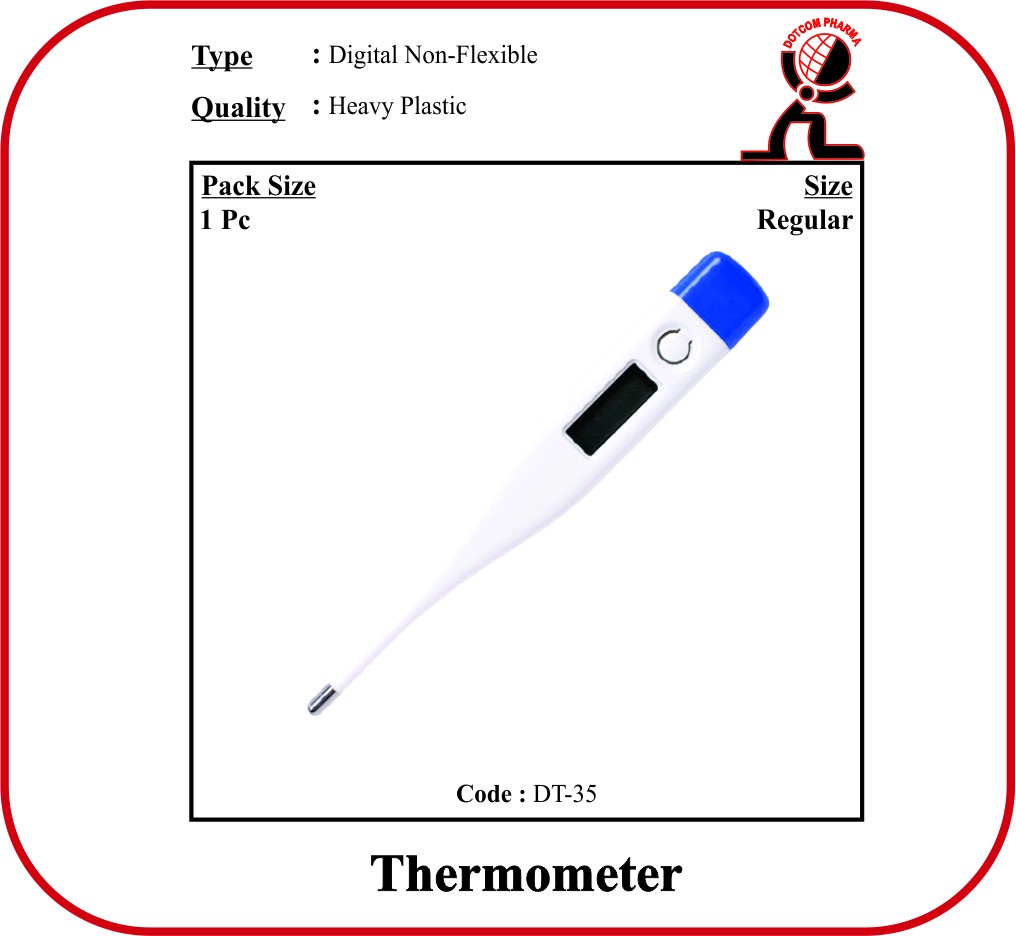
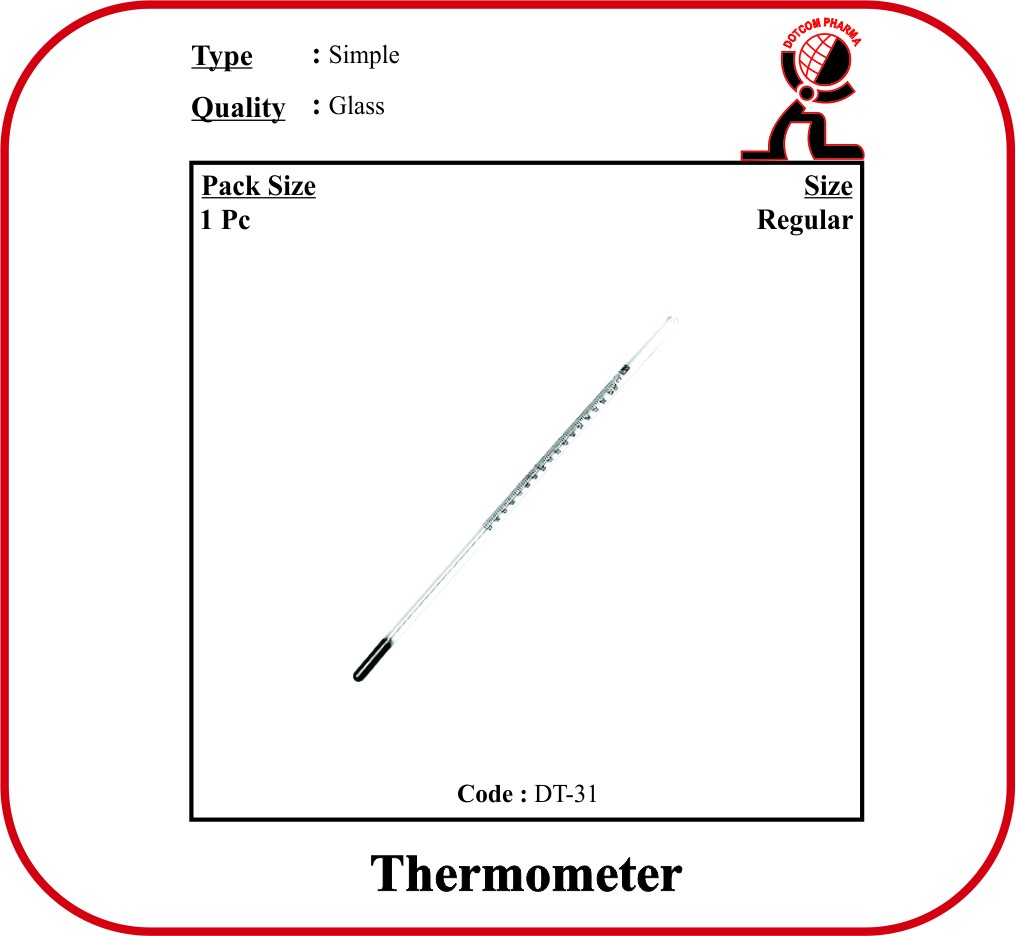
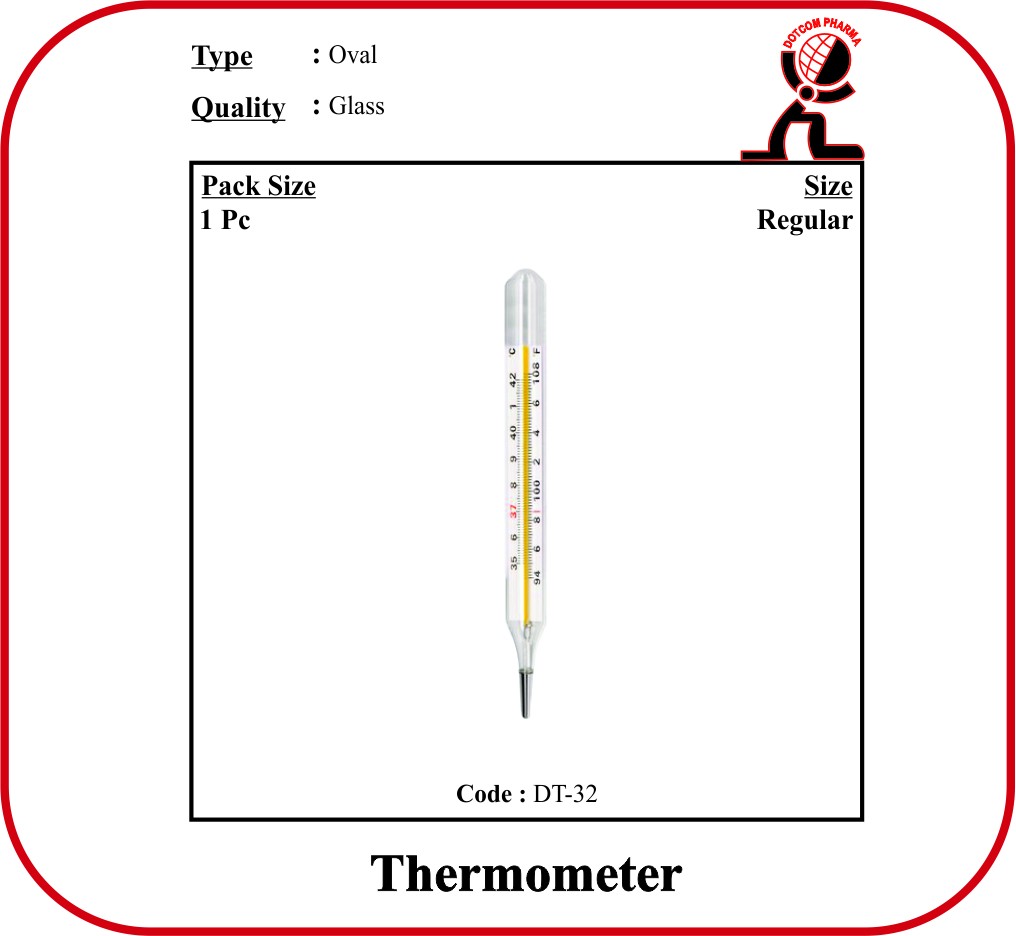

Thermometer
Drug Name
: NA
Drug Role
: Thermometers are essential medical devices used to measure body temperature. Various types serve different clinical needs.
NA
No
Ceritifcations:










Please login / register to buy or to get detailed information of the product
SKU:
Stock Available:
Batch / Lot. No:
Shelf life:
Manufacturing Date:
-
Expiry Date:
-
Minimum Pack Size:
Minimum Order Qty:
1
Pharma Categories:
• Medical Diagnostic Instruments • Thermometers
Product Form:
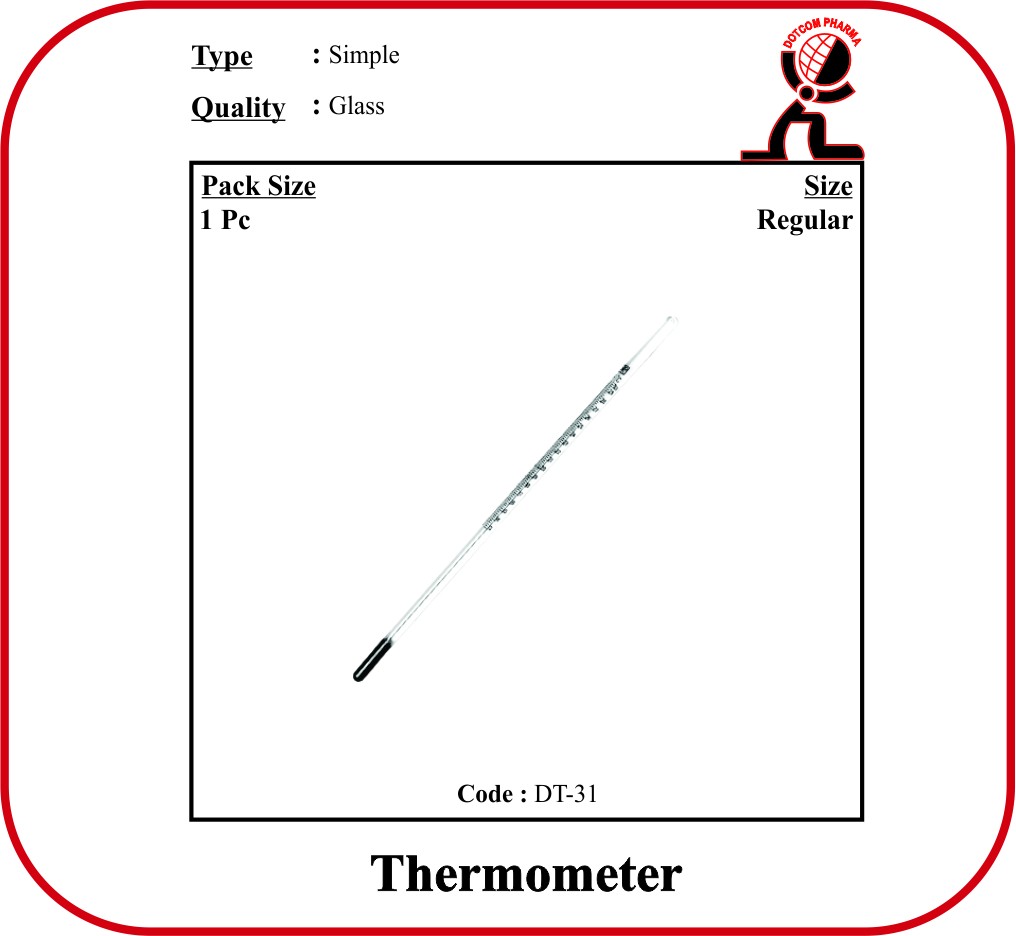
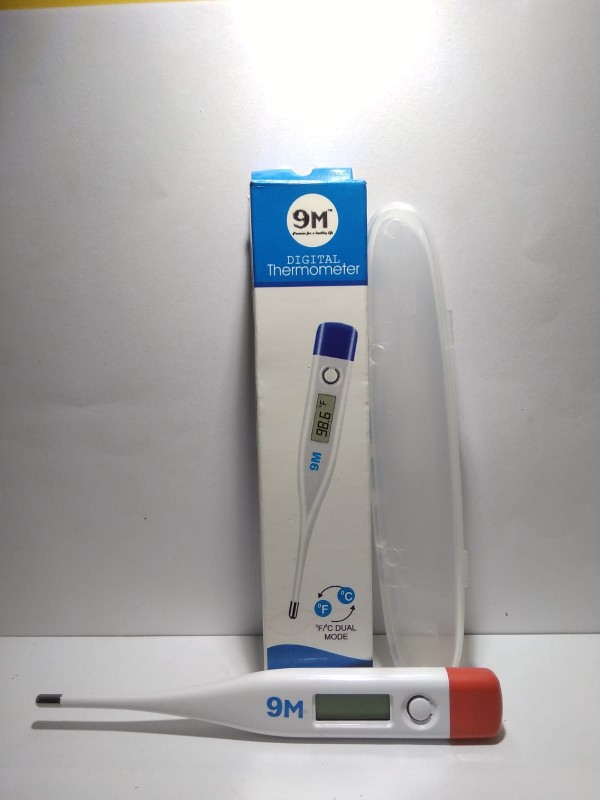
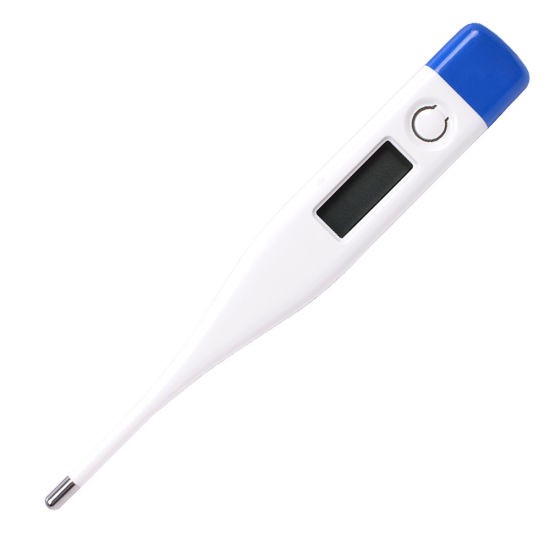
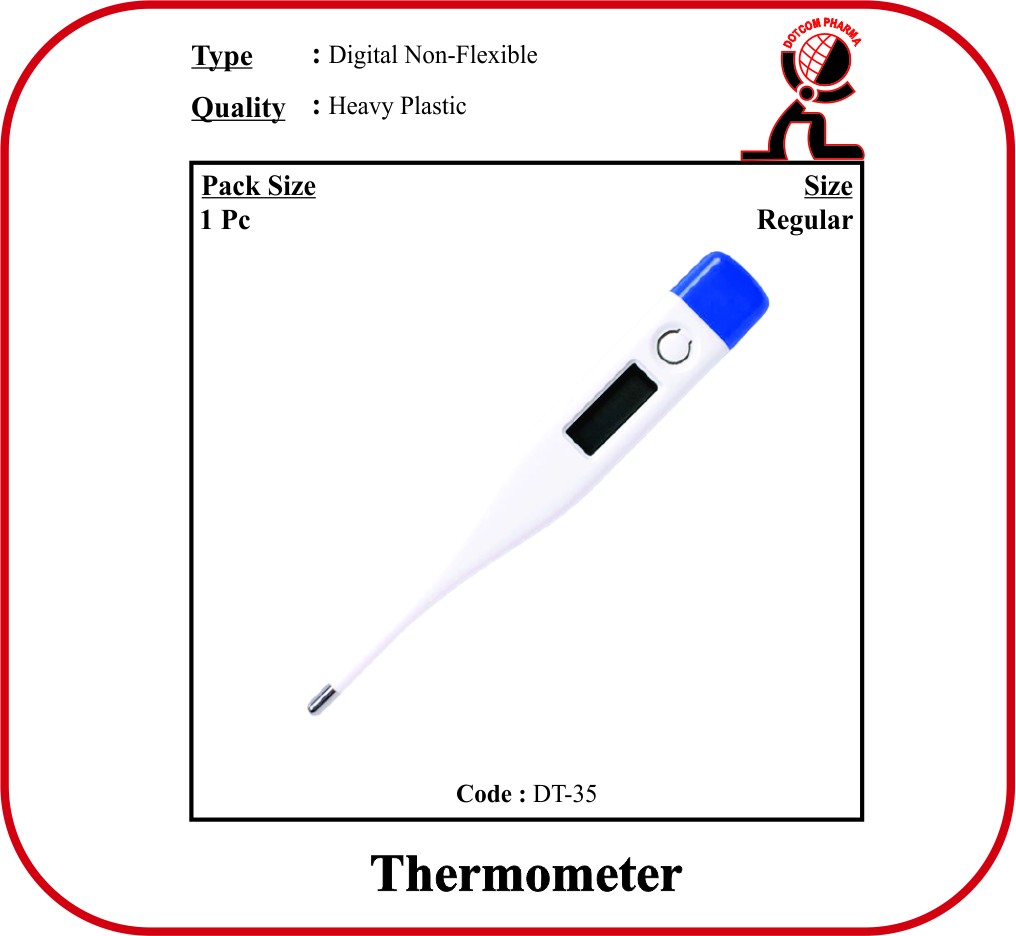
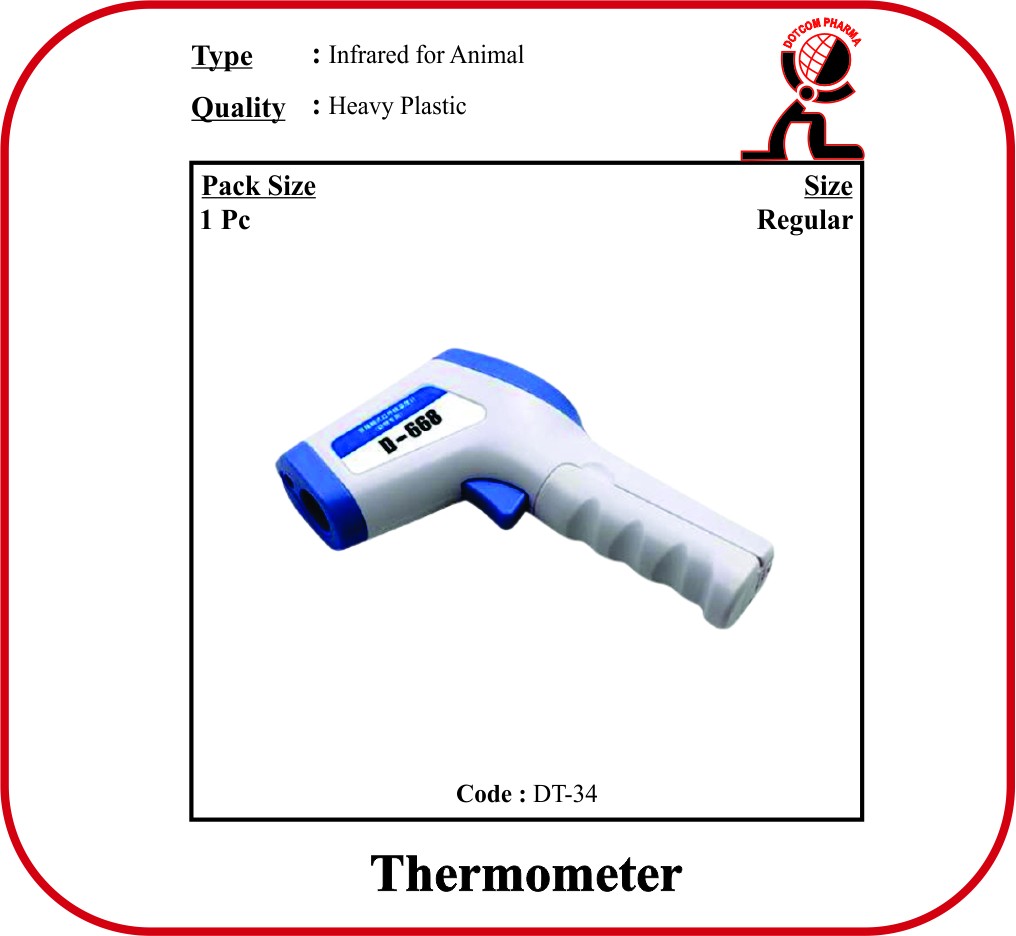
• Simple & oval: glass tube with temperature scale • Infrared: handheld device with sensor and digital display • Digital non-flexible: handheld with electronic sensor and digital display
Category:
Veterinary
Group:
N/A
Type:
Type Simple (Glass),Oval Clinical,Infrared (Forehead),Non-Flexible Digital
Material:
• Glass for simple and oval clinical thermometers • Plastic housing and electronic sensors for infrared and digital thermometers
HSN Code:
9025.19.90
HS Code:
9025.19
Country of Origin:
Indian
TAX:
5%
Qty per Piece:
Weight Of Each Piece(gm):
Piece Dimensions (L×W×H):
Qty per Buffer Box / Shrink Pack:
Weight of Buffer Box / Shrink Pack:
Buffer Dimensions (L×W×H):
Total Qty per Case:
Total Weight per Case:
Case Dimensions (L×W×H):
Weight / Volume:
Dimensions:
Inhouse product
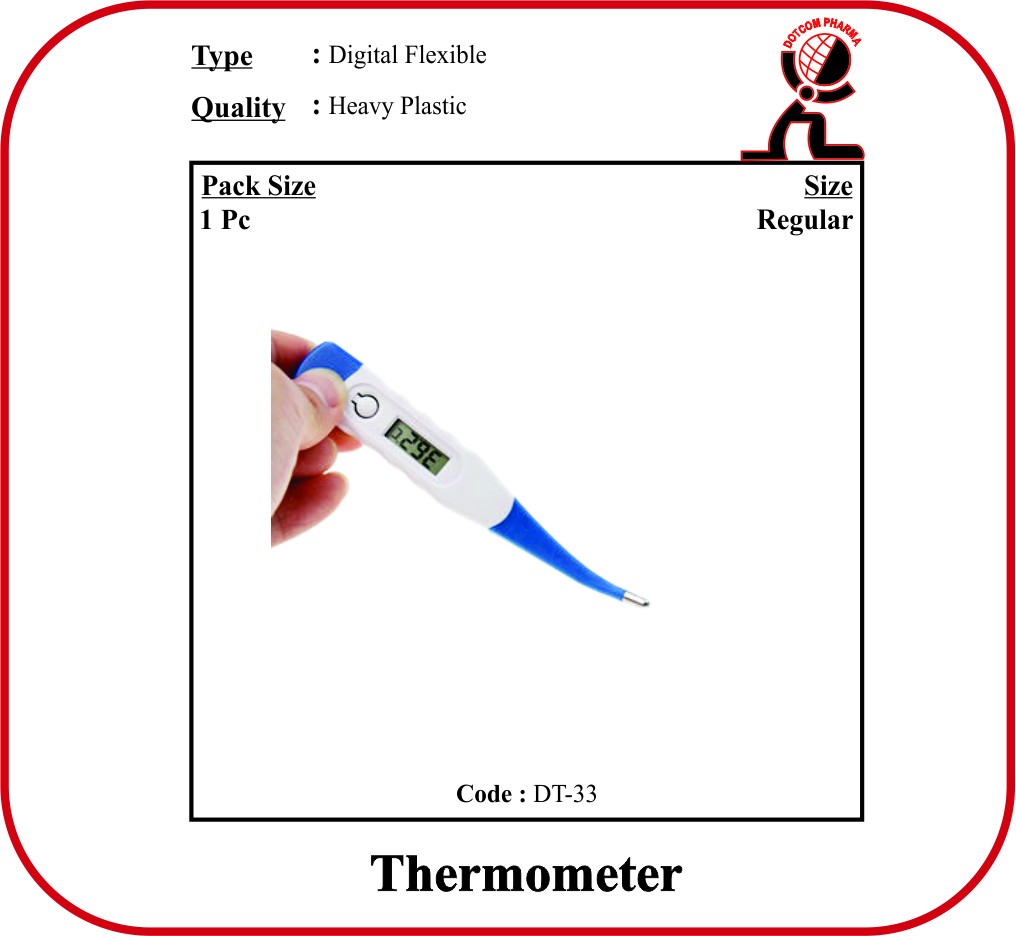
Thermometers are essential medical devices used to measure body temperature. Various types serve different clinical needs, including simple glass thermometers, oval clinical thermometers, infrared forehead thermometers for non-contact use, and digital non-flexible thermometers offering quick and accurate readings.
Type Measurement Material Display Type Features
Range
Simple (Glass) 35°C – 42°C Glass with mercury Analog Traditional, slow, mercury-
or alcohol based or alcohol-based
Oval Clinical 35°C – 42°C Glass Analog Clinical accuracy, oval shape for oral use
Infrared
(Forehead) 32°C – 43°C Plastic & electronic Digital LCD Non-contact, quick, hygienic components
Non-Flexible 32°C – 43°C Plastic & electronic Digital LCD Fast reading, easy to use,
Digital components no flexibility
• Glass for simple and oval clinical thermometers
• Plastic housing and electronic sensors for infrared and digital thermometers
• Medical Diagnostic Instruments
• Thermometers
• Simple & oval: glass tube with temperature scale
• Infrared: handheld device with sensor and digital display
• Digital non-flexible: handheld with electronic sensor and digital display
• Measuring body temperature orally, rectally, axillary, or via forehead (infrared)
• Used in clinics, hospitals, and home care for fever monitoring and diagnosis
• Simple and oval: reliable, no batteries required
• Infrared: non-contact, hygienic, fast results
• Digital: quick, easy-to-read, accurate
• Multiple options for different clinical needs
• Glass thermometers fragile and can contain mercury (environmental concern)
• Infrared devices may require calibration
• Digital thermometers require batteries
• Non-flexible digital thermometers less comfortable for some users
• Handle glass thermometers carefully to avoid breakage
• Keep digital and infrared thermometers clean and sanitized
• Follow manufacturer instructions for accurate readings
• Replace batteries in digital devices timely
• HS Code: 9025.19 (Instruments for measuring temperature)
• HSN Code: 9025.19.90
• For glass thermometers, shake before use to reset
• Place appropriately depending on type (oral, rectal, axillary, forehead)
• Clean after every use with alcohol wipes/ Store in protective case or dry place
• Clean with 70% isopropyl alcohol or disinfectant wipes after each use
• Avoid immersing digital/infrared thermometers in liquids
Veterinary Application
• Simple and digital thermometers are often used for measuring animal body temperature
• Infrared thermometers are preferred for non-contact temperature checks in sensitive or aggressive animals
Human Application
• All types are widely used for human clinical temperature monitoring in hospitals and homes
• Infrared thermometers gained popularity for quick, non-invasive screening especially during pandemics
Q1: What is the best thermometer for quick readings?
Infrared and digital thermometers.
Q2: Are glass thermometers safe?
They are safe if handled carefully but may contain mercury which is hazardous if broken.
Q3: Can infrared thermometers be used on animals?
Yes, for non-contact temperature readings.
Q4: How often should digital thermometer batteries be changed?
Typically every 6-12 months or as needed.
Q5: How to clean thermometers?
With 70% isopropyl alcohol or disinfectant wipes.
Secure Transaction
100% secure payment
Top Brand
Trusted quality
Non Return
Due to hygiene