 +91 88281
11034
+91 88281
11034
 Need Help?


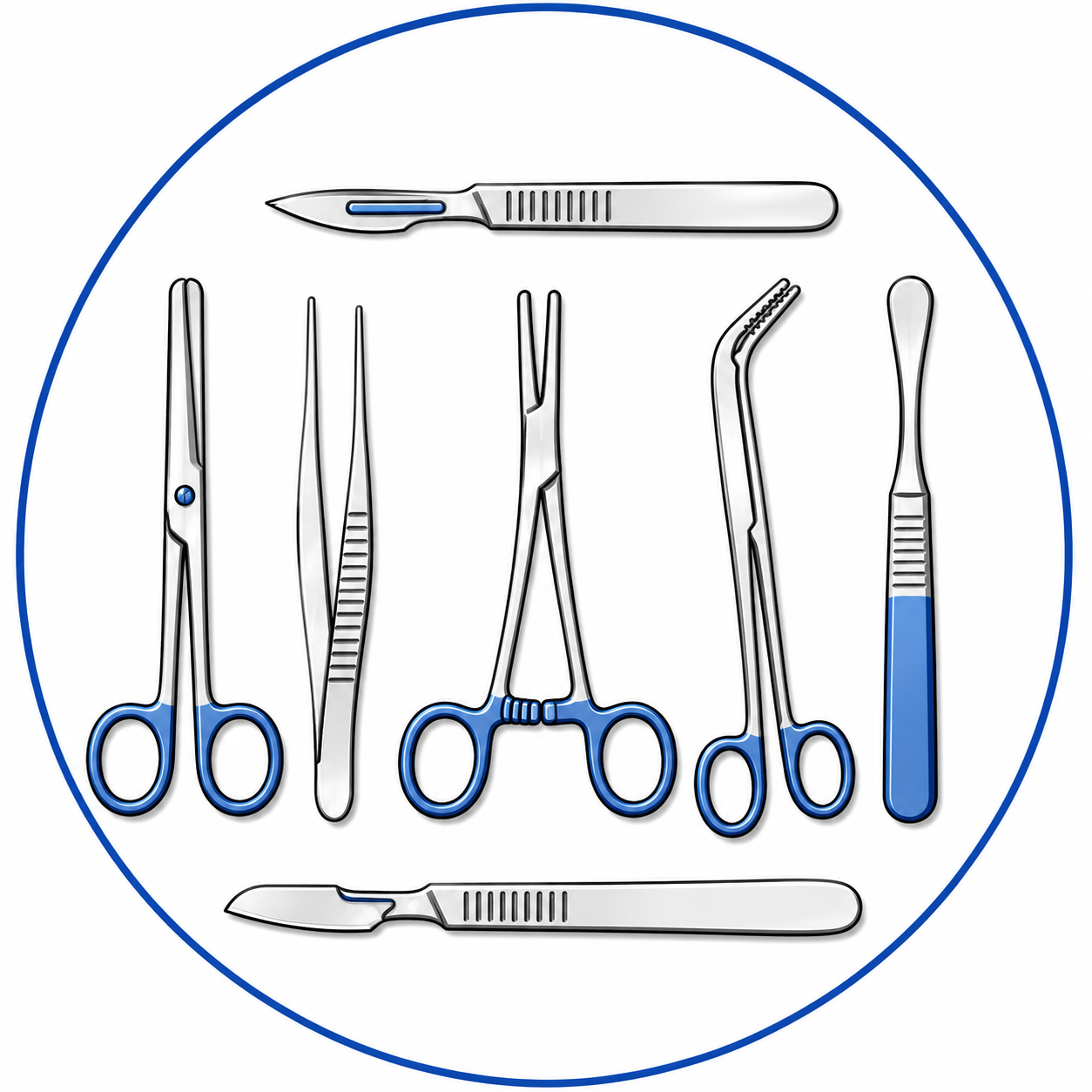
Tilley Nasal Dressing Forceps
Drug Name
: NA
Drug Role
: Tilley Nasal Dressing Forceps are specialised surgical forceps designed for packing, removing, and positioning nasal dressings, swabs, and tampons within the nasal cavity
NA
No
Ceritifcations:










Please login / register to buy or to get detailed information of the product
SKU:
Stock Available:
Batch / Lot. No:
Shelf life:
Manufacturing Date:
-
Expiry Date:
-
Minimum Pack Size:
Minimum Order Qty:
1
Pharma Categories:
• ENT Surgical Instruments • Nasal Dressing & Packing Tools
Product Form:
• Reusable, autoclavable forceps
Category:
Veterinary
Group:
N/A
Type:
• Straight Tilley nasal dressing forceps • Curved Tilley nasal forceps • Fine-tip variant • Wide-jaw variant for larger dressings
Material:
• Medical-grade stainless steel (corrosion-resistant) • Matte or polished finish depending on model
HSN Code:
90189099
HS Code:
9018
Country of Origin:
Indian
TAX:
5%
Qty per Piece:
Weight Of Each Piece(gm):
Piece Dimensions (L×W×H):
Qty per Buffer Box / Shrink Pack:
Weight of Buffer Box / Shrink Pack:
Buffer Dimensions (L×W×H):
Total Qty per Case:
Total Weight per Case:
Case Dimensions (L×W×H):
Weight / Volume:
Dimensions:
Inhouse product
Tilley Nasal Dressing Forceps are specialised surgical forceps designed for packing, removing, and positioning nasal dressings, swabs, and tampons within the nasal cavity. Their long, slender design with serrated jaws provides secure gripping without causing unnecessary trauma to delicate nasal tissues. These forceps are widely used in ENT (Ear, Nose, Throat) examinations, nasal surgeries, dressing changes, and nasal foreign-body removal. Crafted from high-grade stainless steel, they offer durability, precision, and corrosion resistance.
• Long, slim ENT design
• Serrated jaws for firm grip
• Straight or slightly curved blades
• Box-joint or screw-joint mechanism
• Anti-slip handle structure
• Lightweight for precision
• Reusable and autoclavable stainless steel
• Non-corrosive and rust-free build
• Common length: 15–18 cm
• Jaw width: fine ENT-size profile
• Grip: ergonomically designed handle
• Straight shaft
• Narrow, tapered working end
• Serrated jaw pattern
• Slight curvature available in some models
• Straight Tilley nasal dressing forceps
• Curved Tilley nasal forceps
• Fine-tip variant
• Wide-jaw variant for larger dressings
• Medical-grade stainless steel (corrosion-resistant)
• Matte or polished finish depending on model
• ENT Surgical Instruments
• Nasal Dressing & Packing Tools
•Reusable, autoclavable forceps
• Removing or placing nasal packs
• Handling nasal tampons and dressings
• Extracting debris or foreign bodies from the nasal cavity
• Supporting nasal examinations and surgical procedures
• Long reach for deep nasal access
• Secure grip with serrated tips
• Lightweight and easy to control
• Autoclavable and reusable
• Reduced chance of trauma due to refined tips
• Requires proper technique to avoid mucosal injury
• Stainless steel must be sterilised properly
• Not suitable for very small paediatric nasal cavities (use paediatric-specific models)
• Ensure sterilisation before use
• Apply gentle pressure to avoid nasal tissue damage
• Clean thoroughly after each procedure
• Inspect serrations for wear
• Use appropriate size depending on patient age
• HS Code: 9018
• HSN Code: 90189099 (Other surgical instruments)
• Hold with a precision two-finger grip
• Insert gently into the nasal cavity
• Use steady pressure for packing or removal
• Avoid twisting movement inside narrow passages
• Store in dry, sterile environment
• Compatible with Steam Autoclave (SA)
• Can also be sterilised using:
o Plasma sterilisation
o Chemical high-level disinfectants
• Keep dry to prevent spotting or corrosion
• ENT nasal packing
• Post-surgical nasal dressing changes
• Removal of nasal crusts or clots
• Foreign-body extraction from the nostrils
• Nasal examinations in hospitals and clinics
• Removal of nasal debris in small animals
• Assisting nasal examinations in dogs, cats, and rabbits
• Supporting minor veterinary ENT procedures
• Handling nasal dressings during wound care
Q1. What are Tilley Nasal Dressing Forceps? Tilley Nasal Dressing Forceps (TNDF) are long ENT forceps used to handle nasal dressings and assist in nasal procedures.
Q2. Are they reusable? Yes — they are autoclavable and made for long-term repeated use.
Q3. Are they available in curved versions? Yes — Straight (ST) and Curved (CT) models are available.
Q4. Can they be used for foreign-body removal? Yes — they are often used for Nasal Foreign Body Removal (NFBR) in clinics.
Q5. Are they suitable for veterinary use? Yes — they are commonly used in Veterinary ENT Examinations (VEE).
Secure Transaction
100% secure payment
Top Brand
Trusted quality
Non Return
Due to hygiene