 +91 88281
11034
+91 88281
11034
 Need Help?


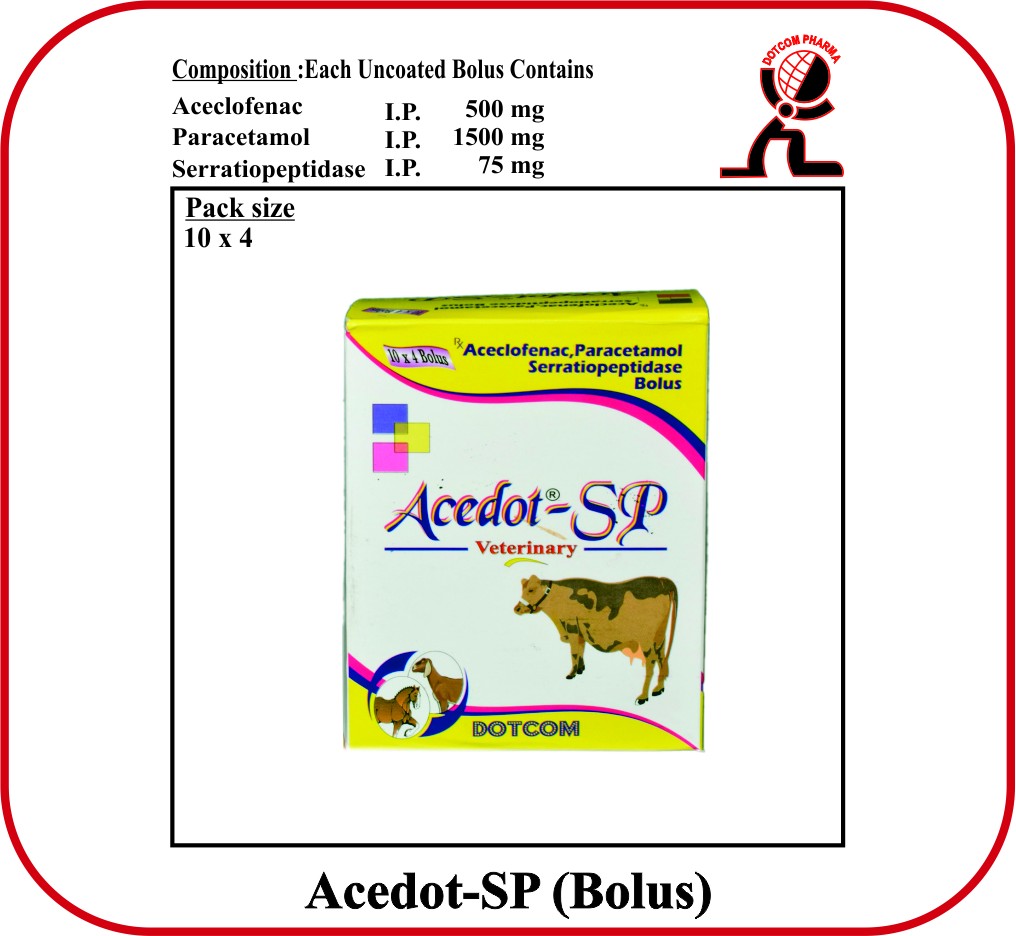
ACEDOT-SP
Drug Name
: ACECLOFENAC I.P. 300 MG + PARACETAMOL I.P. 1500 MG VETERINARY BOLUS
Drug Role
: Aceclofenac: Non-Steroidal Anti-Inflammatory Drug (NSAID) • Paracetamol: Antipyretic and Analgesic Therapeutic Class: • Antipyretic • Analgesic • Anti-inflammatory
H
Yes
DOTCOM PHARMA
Ceritifcations:










Please login / register to buy or to get detailed information of the product
SKU:
Stock Available:
Batch / Lot. No:
Shelf life:
Manufacturing Date:
-
Expiry Date:
-
Minimum Pack Size:
Minimum Order Qty:
10
Pharma Categories:
Pharmacological Class: • Aceclofenac: Non-Steroidal Anti-Inflammatory Drug (NSAID) • Paracetamol: Antipyretic and Analgesic Therapeutic Class: • Antipyretic • Analgesic • Anti-inflammatory
Product Form:
Solid Oral Veterinary Bolus
Category:
Veterinary
Group:
N/A
Type:
Veterinary Bolus
Material:
bolus
HSN Code:
30049099
HS Code:
3004.90
Country of Origin:
India
TAX:
5%
Qty per Piece:
Weight Of Each Piece:
Piece Dimensions (L×W×H):
Qty per Buffer Box / Shrink Pack:
Weight of Buffer Box / Shrink Pack:
Buffer Dimensions (L×W×H):
Total Qty per Case:
Total Weight per Case:
Case Dimensions (L×W×H):
Weight / Volume:
Dimensions:
Inhouse product
This veterinary bolus combines Aceclofenac I.P. (300 mg), a non-steroidal anti-inflammatory drug (NSAID), with Paracetamol I.P. (1500 mg), an analgesic-antipyretic. The formulation is designed for large animals to provide dual-action relief from pain, inflammation, and fever, particularly in conditions like musculoskeletal injuries, mastitis, pneumonia, and post-surgical recovery.
Composition per bolus:
• Aceclofenac I.P. – 300 mg
• Paracetamol I.P. – 1500 mg
• Excipients – q.s.
Excipients may include: Microcrystalline cellulose, maize starch, croscarmellose sodium, magnesium stearate, lactose, and film-coating agents, all I.P.-grade and suitable for veterinary use.
Dosage Form: Solid Oral Veterinary Bolus
Appearance: Oblong, white or off-white bolus; smooth surface; may be embossed or coated.
Pharmacological Class:
• Aceclofenac: Non-Steroidal Anti-Inflammatory Drug (NSAID)
• Paracetamol: Antipyretic and Analgesic
Therapeutic Class:
• Antipyretic
• Analgesic
• Anti-inflammatory
Indicated for:
• Fever (Pyrexia) of bacterial or viral origin
• Pain relief in musculoskeletal disorders (lameness, joint swelling)
• Inflammatory conditions such as mastitis, metritis, or pneumonia
• Post-surgical recovery (dehorning, castration, etc.)
• Supportive therapy in infectious diseases with inflammation or fever
Suitable for cattle, buffalo, sheep, goats, and other large ruminants under veterinary guidance.
• Dosage Form: Veterinary Oral Bolus
• Pack Size: 10 × 4 (40 boluses per box; 4 boluses per strip)
• Outer Box: Printed laminated carton with product info and storage conditions
• Target Species: Cattle, Buffalo, Large Ruminants
Route: Oral
Recommended Dosage:
• Large animals (Cattle, Buffalo): 1 bolus twice daily for 2–3 days, or as directed by the veterinarian
• Small ruminants (Sheep, Goat): Dosage adjusted based on body weight
• Administer whole bolus using a bolus applicator or manually
• Fast-acting pain relief and anti-inflammatory action
• Reduces fever, swelling, and general discomfort
• Improves feed intake, mobility, and recovery speed
• Combines two synergistic actives for broader therapeutic coverage
• Fewer side effects compared to standalone NSAIDs
Usually well tolerated. Possible rare side effects include:
• Gastrointestinal irritation or ulceration (especially with prolonged use)
• Reduced appetite or lethargy
• Hypersensitivity reactions (rash, swelling)
• Renal stress in dehydrated animals (use with caution)
• Use with caution in animals with liver or kidney disorders
• Avoid concurrent administration with other NSAIDs or corticosteroids
• Ensure animals are hydrated before and during treatment
• Do not exceed the recommended dose
• Not recommended for pregnant or lactating animals without veterinary supervision
• Meat: Minimum 7 days after last dose
• Milk: Minimum 3 days (Confirm based on local veterinary regulations)
Maintain proper treatment records and observe full withdrawal periods to ensure food safety compliance.
• Store in a cool, dry place, below 30°C
• Keep away from direct sunlight, heat, and moisture
• Keep out of reach of children and non-target species
• Do not use after the expiry date mentioned on the label
• Use gloves during administration
• Wash hands thoroughly after use
• Do not break or crush the bolus/ Dispose of unused bolus as per local veterinary waste management guidelines
• Schedule H equivalent (Prescription-only veterinary product)
• Regulated under the Drugs and Cosmetics Act, India, or respective country’s veterinary authority
• To be used only under the supervision of a registered veterinarian
• HS Code (International): 3004.90 – Medicaments for veterinary use
• HSN Code (India): 30049099 – Other veterinary medicaments not elsewhere classified
Veterinary Use Only
• Dosage and excipients tailored for ruminant physiology
• Not intended for human use under any condition
• Human exposure may lead to incorrect dosing, liver stress, or allergic reactions
• Always administer under veterinary direction
• Do not repeat treatment cycles without reassessment
• Ensure animals are eating and hydrated before treatment
• Combine with antibiotics or antiparasitic drugs if indicated for infection
Q: What is the role of Aceclofenac in this bolus?
A: Aceclofenac is an NSAID used to relieve inflammation and pain in animals, particularly in joint, muscular, or post-surgical conditions.
Q: What does Paracetamol do in veterinary use?
A: Paracetamol is a fast-acting antipyretic (fever reducer) and mild analgesic, enhancing the comfort and healing process.
Q: Can this bolus be used in pregnant animals?
A: Avoid use in pregnant or lactating animals unless absolutely necessary and prescribed by a veterinarian.
Q: How soon does it act?
A: Onset of action is typically within 1–2 hours, with peak relief in 4–6 hours post-administration.
Q: Can this be given along with antibiotics?
A: Yes — it is often prescribed alongside antibiotics to manage fever and inflammation during bacterial infections.
Q: Is this bolus safe for long-term use?
A: No — it is intended for short-term symptomatic relief. Prolonged use may risk GI irritation or renal stress.
Secure Transaction
100% secure payment
Top Brand
Trusted quality
Non Return
Due to hygiene