 +91 88281
11034
+91 88281
11034
 Need Help?


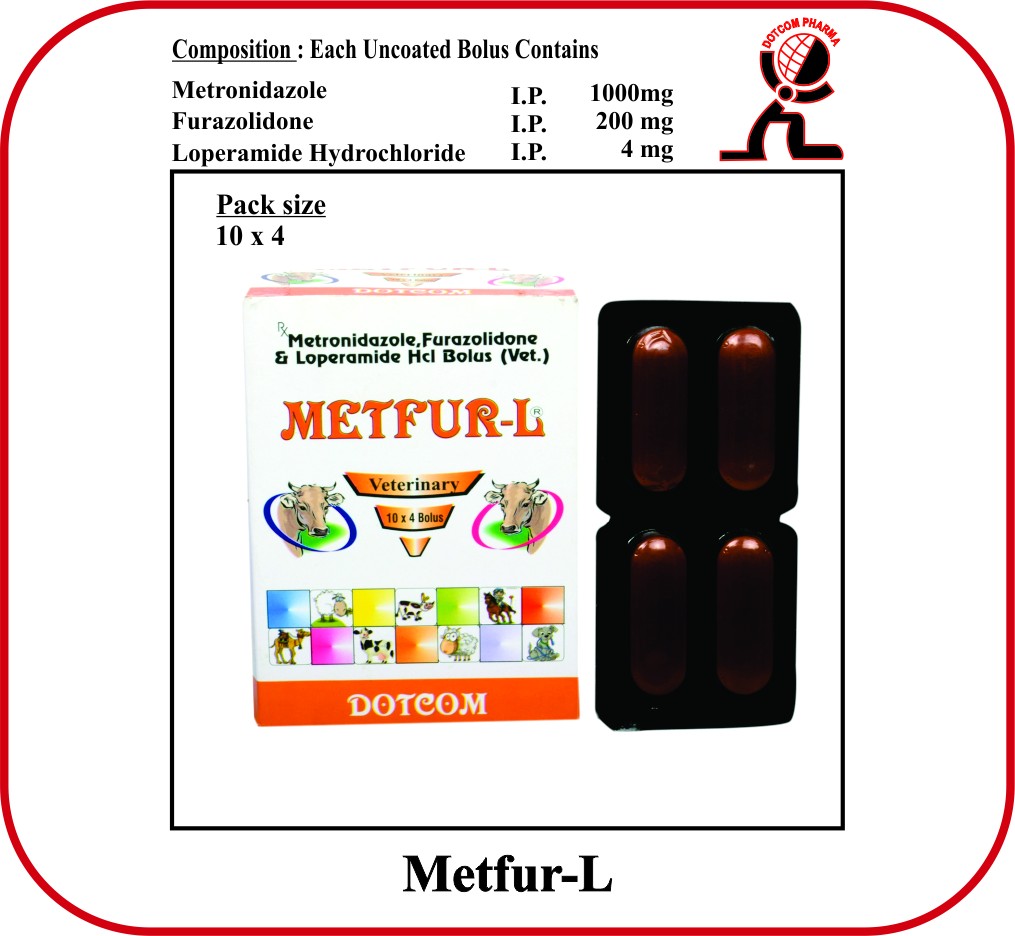
METFUR-L
Drug Name
: Metronidazole, Furazolidone & Loperamide Veterinary Bolus
Drug Role
: Therapeutic Class: Antibacterial Antidiarrheal Antiprotozoal • Indications: Gastrointestinal infections, diarrhoea, dysentery in livestock
NA
No
DOTCOM PHARMA
Ceritifcations:










Please login / register to buy or to get detailed information of the product
SKU:
Stock Available:
Batch / Lot. No:
Shelf life:
Manufacturing Date:
-
Expiry Date:
-
Minimum Pack Size:
Minimum Order Qty:
4
Pharma Categories:
• Therapeutic Class: Antibacterial Antidiarrheal Antiprotozoal • Indications: Gastrointestinal infections, diarrhoea, dysentery in livestock
Product Form:
• Form: Veterinary Bolus
Category:
Veterinary
Group:
N/A
Type:
Veterinary Bolus Tablet
Material:
Bolus Tablet
HSN Code:
30049091
HS Code:
3004.90
Country of Origin:
India
TAX:
5%
Qty per Piece:
Weight Of Each Piece:
Piece Dimensions (L×W×H):
Qty per Buffer Box / Shrink Pack:
Weight of Buffer Box / Shrink Pack:
Buffer Dimensions (L×W×H):
Total Qty per Case:
Total Weight per Case:
Case Dimensions (L×W×H):
Weight / Volume:
Dimensions:
Inhouse product
This triple-combination veterinary bolus offers broad-spectrum antimicrobial and antidiarrheal activity, tailored to control gastrointestinal infections and diarrheal episodes in livestock. It provides synergistic action:
• Metronidazole: Antibacterial & antiprotozoal (anaerobes, Giardia, etc.)
• Furazolidone: Broad-spectrum antimicrobial with antidiarrheal effect
• Loperamide: Gut motility regulator to reduce intestinal hyperactivity
Each bolus contains:
• Metronidazole I.P. – 1000 mg
• Furazolidone I.P. – 200 mg
• Loperamide Hydrochloride I.P. – 4 mg
• Excipients: q.s. to form a single bolus
• Appearance: Solid, smooth bolus (white to yellowish)
• Therapeutic Class: Antibacterial Antidiarrheal Antiprotozoal
• Indications: Gastrointestinal infections, diarrhoea, dysentery in livestock
• Form: Veterinary Bolus
• Route: Oral (using bolus gun)
• Shelf Life: 24 months
• Assay: Each active to comply with I.P. standards (95–105%)
• Packaging: 10 strips × 4 boluses per carton
Used for the treatment of:
• Acute or chronic diarrhoea
• Dysentery (bloody or mucous)
• Gastrointestinal bacterial infections
• Protozoal infections (e.g., Giardia, Entamoeba)
• Post-antibiotic loose motion
• Enteritis due to feed or water contamination
Applicable in:
• Cattle
• Buffaloes
• Goats
• Sheep
• Route: Oral, via bolus gun
• Dosage: 1 bolus per 50–60 kg body weight Administer once or twice daily for 2–3 days or as directed by the veterinarian
• Always provide clean drinking water during treatment
• Form: Veterinary Bolus
• Strength per Bolus:
o Metronidazole – 1000 mg
o Furazolidone – 200 mg
o Loperamide – 4 mg
• Pack Size: 10 strips × 4 boluses (40 boluses per outer box)
• Packaging: Strips or blisters in labelled outer carton
Rapid relief from bacterial/protozoal diarrhoea Reduces intestinal motility & fluid loss Enhances feed absorption post-treatment High efficacy against mixed infections Convenient single bolus format Reduces mortality in young or weak animals
• Rare in recommended doses
• Possible: Mild constipation, sedation, reduced appetite
• Overdose may lead to: ataxia, hepatic stress, CNS effects
• Discontinue if abnormal behaviour, vomiting, or neurological signs appear
• Meat: 28 days
• Milk: 7 days Strict adherence required to avoid residue issues
• Store below 30°C
• Keep in a cool, dry place, away from sunlight and moisture
• Do not refrigerate
• Keep out of reach of children and unauthorized handlers
• Administer using clean, dry hands or gloved hands
• Use a bolus gun for accurate placement
• Ensure full swallowing to avoid regurgitation
• Clean bolus gun after use
• HS Code: 3004.90
• HSN Code: 30049091 (Medicaments for veterinary use — combinations with antimicrobials)
• Do not use in animals with liver disease or chronic constipation
• Not to be used in calves under 1 month unless prescribed
• Ensure animal is well hydrated during treatment
• Always monitor fecal output during recovery
• Strictly for veterinary use only
• Not intended for human use — serious toxicity risk
• In case of accidental human ingestion, seek emergency care
Q: What does this bolus treat?
A: Diarrhoea, dysentery, protozoal infections, and GI bacterial infections in livestock.
Q: Is this a painkiller?
A: No. It is an antibacterial, antiprotozoal, and antidiarrheal combo — not a pain reliever.
Q: Can I use this in young calves?
A: Only under veterinary guidance. The dose may need adjustment.
Q: Will it stop diarrhoea immediately?
A: Loperamide acts fast to reduce motility, but full recovery may take 1–3 days depending on severity.
Q: Can this be used with electrolyte powder?
A: Yes — it’s recommended to support hydration during diarrheal illness.
Q: How many boluses should I give?
A: 1 bolus per 50–60 kg body weight, usually once or twice a day.
Q: Can it be given with milk or feed?
A: Best given on an empty stomach with clean drinking water for faster action.
Secure Transaction
100% secure payment
Top Brand
Trusted quality
Non Return
Due to hygiene