 +91 88281
11034
+91 88281
11034
 Need Help?


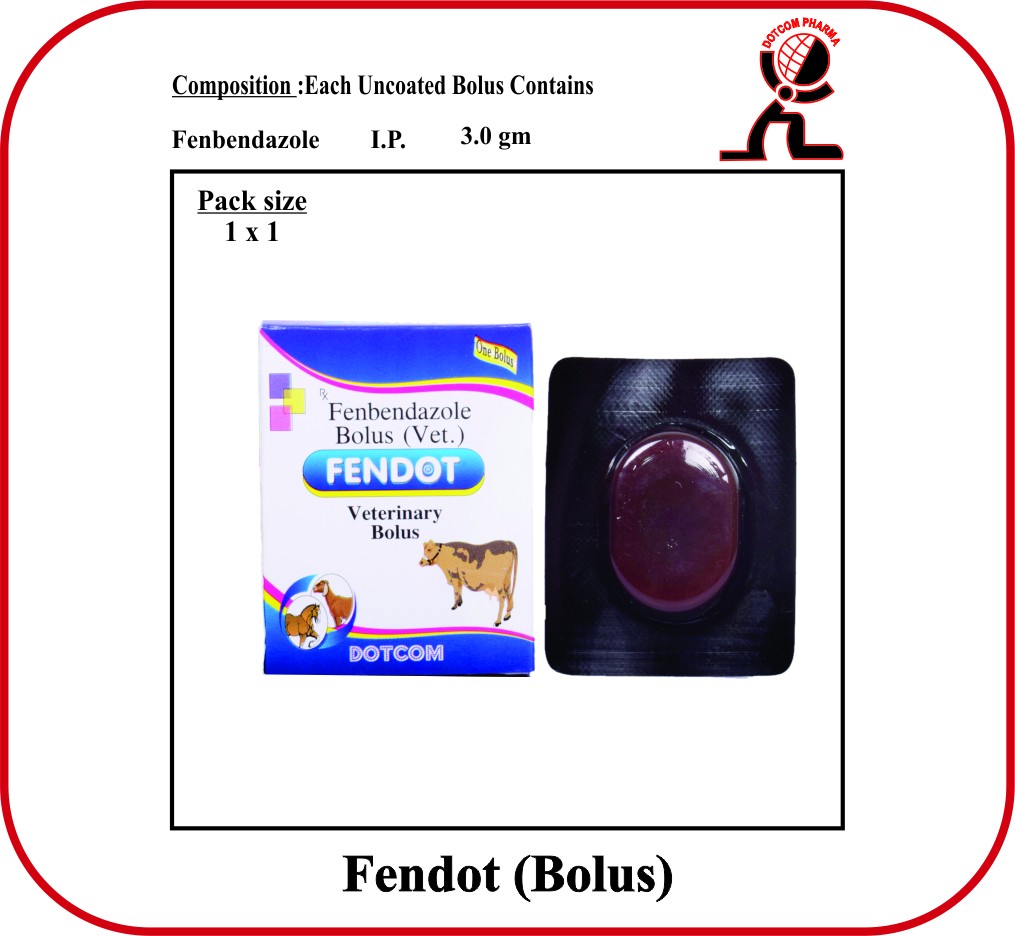
FENDOT
Drug Name
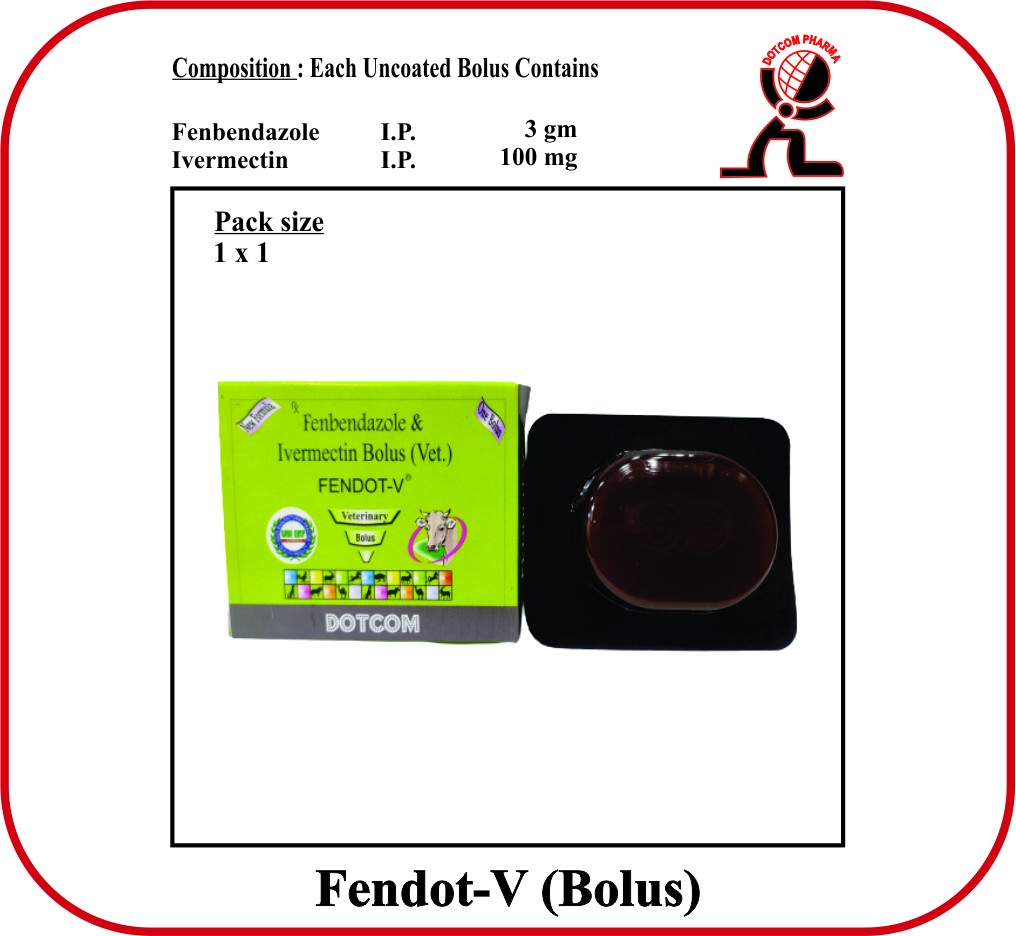
: Fenbendazole 3.0 g Veterinary Bolus
Drug Role
: Therapeutic Class: Anthelmintic • Pharmacological Class: Benzimidazole derivative • Use: Deworming of ruminants • Target Parasites: Nematodes, lungworms, some cestodes • Species: Cattle, Buffaloes, Sheep, Goats
NA
No
DOTCOM PHARMA
Ceritifcations:









Please login / register to buy or to get detailed information of the product
SKU:
Stock Available:
Batch / Lot. No:
Shelf life:
Manufacturing Date:
-
Expiry Date:
-
Minimum Pack Size:
Minimum Order Qty:
1
Pharma Categories:
• Therapeutic Class: Anthelmintic • Pharmacological Class: Benzimidazole derivative • Use: Deworming of ruminants • Target Parasites: Nematodes, lungworms, some cestodes • Species: Cattle, Buffaloes, Sheep, Goats
Product Form:
• Form: Veterinary Oral Bolus
Category:
Veterinary
Group:
N/A
Type:
Veterinary Bolus Tablet
Material:
Bolus Tablet
HSN Code:
30049091
HS Code:
3004.90
Country of Origin:
India
TAX:
5%
Qty per Piece:
Weight Of Each Piece:
Piece Dimensions (L×W×H):
Qty per Buffer Box / Shrink Pack:
Weight of Buffer Box / Shrink Pack:
Buffer Dimensions (L×W×H):
Total Qty per Case:
Total Weight per Case:
Case Dimensions (L×W×H):
Weight / Volume:
Dimensions:
Inhouse product
Fenbendazole is a broad-spectrum benzimidazole anthelmintic used for the treatment and control of gastrointestinal and pulmonary parasites in ruminants. It acts by inhibiting microtubule formation in parasite cells, disrupting glucose uptake, leading to energy depletion and death of the parasite.
This high-strength bolus is ideal for adult cattle and buffaloes, designed for single-dose oral administration.
Each bolus contains:
• Fenbendazole I.P. — 3.0 g (3000 mg)
• Excipients — q.s. to form a single bolus
• Appearance: Smooth, oblong white or off-white bolus
• Therapeutic Class: Anthelmintic
• Pharmacological Class: Benzimidazole derivative
• Use: Deworming of ruminants
• Target Parasites: Nematodes, lungworms, some cestodes
• Species: Cattle, Buffaloes, Sheep, Goats
• Dosage Form: Veterinary Bolus
• Route of Administration: Oral
• Assay: 95%–105% of labelled content
• Packaging: 1 strip × 1 bolus (Single-dose packaging)
• Shelf Life: 24 months from date of manufacture
Effective in treatment and control of:
Gastrointestinal parasites:
• Haemonchus spp.
• Ostertagia spp.
• Trichostrongylus spp.
• Nematodirus spp.
• Cooperia spp.
• Oesophagostomum spp.
• Strongyloides spp.
Pulmonary parasites:
• Dictyocaulus viviparus (lungworms)
Some tapeworms:
• Moniezia spp. (partial effect)
• Route: Oral (using bolus gun)
• Dosage:
o 5–10 mg/kg body weight of Fenbendazole
o This 3.0 g bolus is suitable for approx. 300–600 kg body weight
Suggested Use:
• 1 bolus for 1 adult cattle/buffalo
• Repeat as per deworming schedule or as directed by veterinarian
• Form: Veterinary Oral Bolus
• Strength: 3.0 g Fenbendazole per bolus
• Pack: 1 x 1 (Single bolus per strip)
• Outer Packaging: Boxes with multiple strips as per order requirement
1. Kills both immature and mature parasite stages
2. High potency single-dose treatment
3. Improves feed conversion, weight gain, and milk yield
4. Minimal resistance when used on schedule
5. Safe in pregnant and lactating animals
• Very well tolerated
• Rare: mild salivation, soft stool
• Overdose may cause lethargy or anorexia
• Avoid repeated overdosing
• Meat: 28 days
• Milk: 7 days
Do not use during withdrawal period for animals intended for human consumption.
• Store below 30°C
• Keep in dry, cool place
• Protect from moisture and sunlight
• Keep out of reach of children and unauthorized handlers
• Administer using a clean bolus gun
• Ensure the animal swallows the bolus completely
• Wash hands after administration
• Do not crush or break the bolus
• HS Code: 3004.90
• HSN Code: 30049091 (Medicaments for veterinary use — anthelmintic, single agent)
• Deworm all animals in the herd simultaneously
• Rotate anthelmintics every 6–12 months to avoid resistance
• Follow proper deworming intervals as per farm protocol
• Avoid under-dosing — always dose by body weight
• Monitor fecal load periodically for effectiveness
• Veterinary use only
• Not for human consumption
• In case of accidental ingestion, seek medical attention immediately
• Ensure no contamination of human-use equipment or feed
Q: What is this bolus used for?
A: Deworming livestock — especially adult cattle, buffaloes, goats, and sheep.
Q: How often should this be given?
A: Typically every 3–4 months, or as per your veterinarian’s advice.
Q: Can this be used in pregnant animals?
A: Yes, Fenbendazole is generally considered safe in pregnancy.
Q: Can I use this for small animals or pets?
A: No — this 3 g dose is too high for small animals. Only use under veterinary prescription and guidance.
Q: Will it treat tapeworms?
A: It has some efficacy against tapeworms (Moniezia), but is primarily for roundworms and lungworms.
Q: What if the bolus is not swallowed properly? A: Re-administer using a bolus gun. Ensure correct placement at the back of the tongue.
Secure Transaction
100% secure payment
Top Brand
Trusted quality
Non Return
Due to hygiene