 +91 88281
11034
+91 88281
11034
 Need Help?


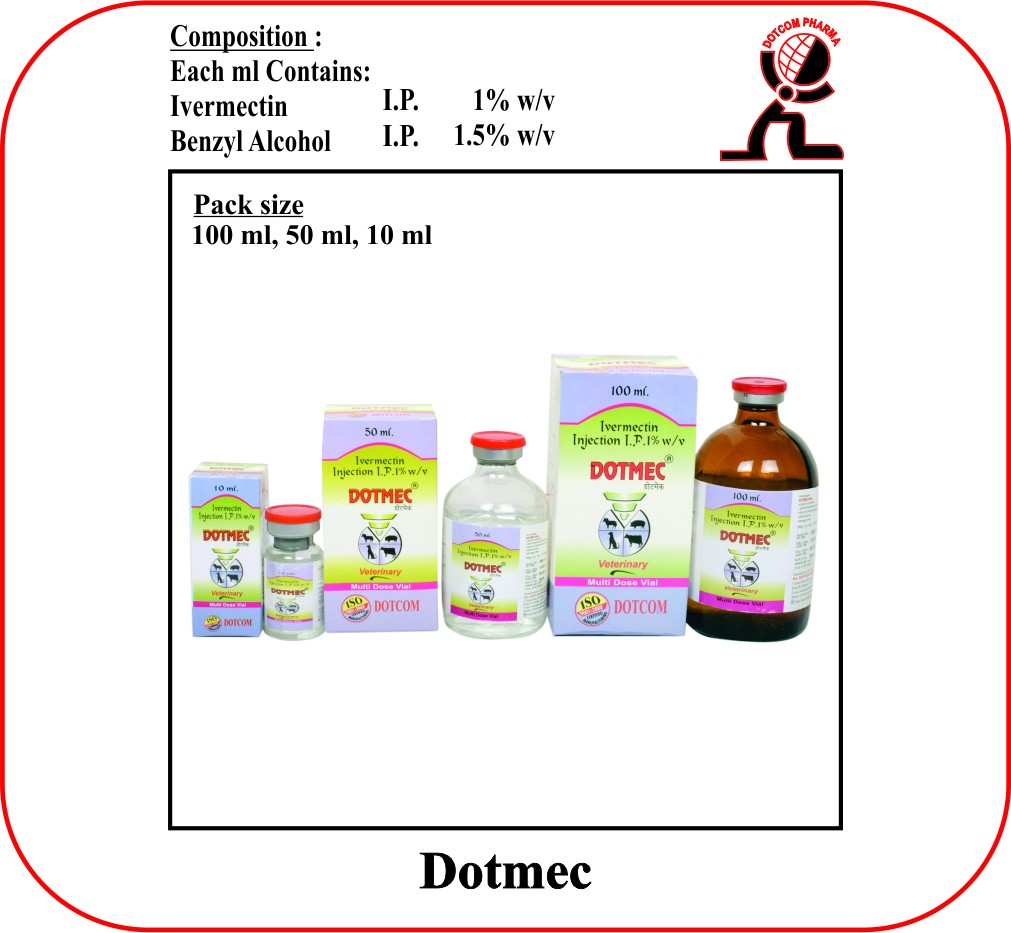
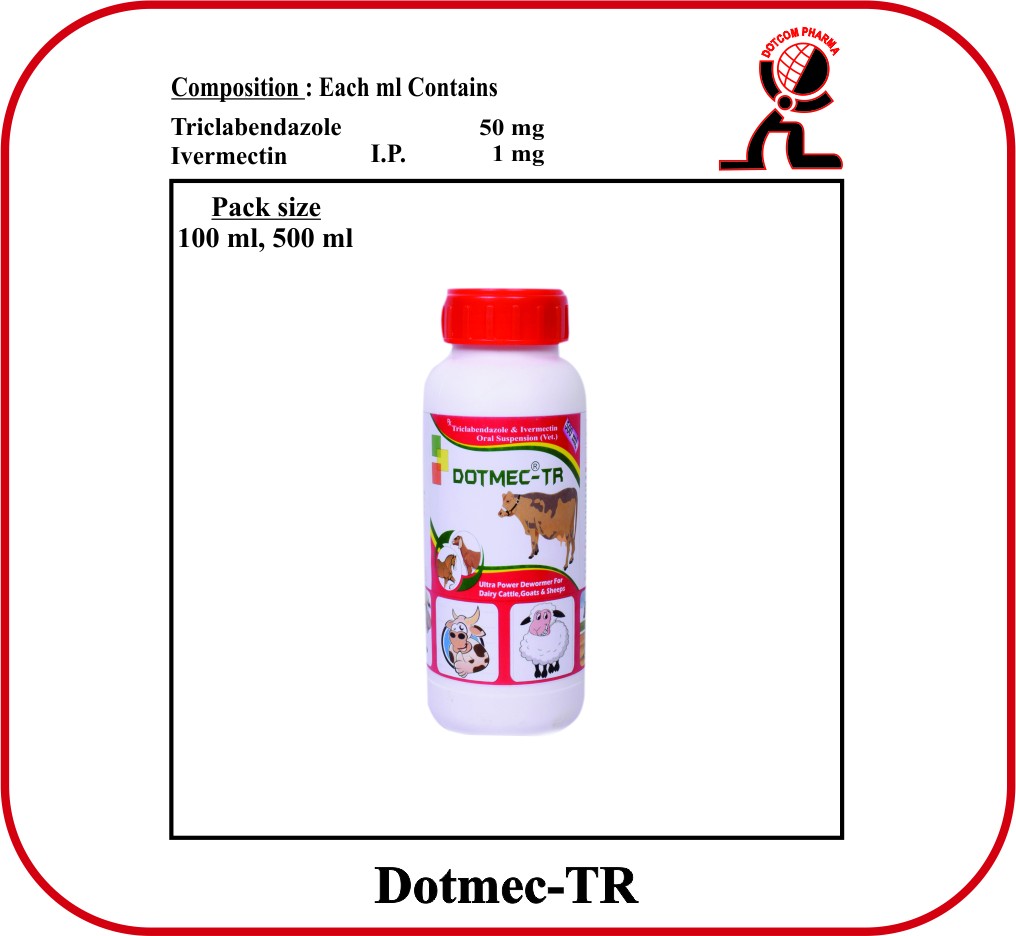
DOTMEC
Drug Name
: Ivermectin I.P 0.08% w/v Oral Suspension For Veterinary Use Only
Drug Role
: Anthelmintic / Endectocide – Macrocyclic lactone derivative (Ivermectin)
H
Yes
DOTCOM PHARMA
Ceritifcations:

Please login / register to buy or to get detailed information of the product
SKU:
Stock Available:
Batch / Lot. No:
Shelf life:
Manufacturing Date:
Jan 2026
Expiry Date:
Dec 2026
Minimum Pack Size:
Minimum Order Qty:
1
Pharma Categories:
Anthelmintic / Endectocide – Macrocyclic lactone derivative (Ivermectin)
Category:
Veterinary
Group:
N/A
Type:
Veterinary oral suspension
Material:
Oral Suspension
HSN Code:
3004.90.99
HS Code:
3004.90
Country of Origin:
India
TAX:
5%
Qty per Piece:
Weight Of Each Piece:
Piece Dimensions (L×W×H):
Qty per Buffer Box / Shrink Pack:
Weight of Buffer Box / Shrink Pack:
Buffer Dimensions (L×W×H):
Total Qty per Case:
Total Weight per Case:
Case Dimensions (L×W×H):
Weight / Volume:
Dimensions:
Inhouse product
This is a broad-spectrum antiparasitic oral suspension containing Ivermectin I.P 0.08% w/v formulated for veterinary use.
Ivermectin is a member of the macrocyclic lactone class of endectocides, derived from avermectins. It exhibits potent systemic activity against a wide range of internal parasites (mainly nematodes) and external parasites (mites, lice, some ticks).
Designed for the oral treatment of parasitic infections in cattle, buffaloes, sheep, goats, and other ruminants.
• Composition per mL: • Ivermectin I.P — 0.08% w/v (0.8 mg/mL) • Excipients — q.s. to 1 mL
• Appearance: Milky white or slightly opalescent oral suspension. Homogenous upon shaking.
• Formulation Type: Ready-to-use oral suspension
• pH Range: Optimally maintained between 4.5–6.5 for stability
• Preservatives: May contain preservatives permitted under IP standards to ensure product stability
• Packaging: HDPE bottles with tamper-evident closures; available in 100 mL and 1 Litre
• Shelf Life: 24 months from the date of manufacture under recommended storage conditions
Anthelmintic / Endectocide – Macrocyclic lactone derivative (Ivermectin)
Indicated for the treatment and control of the following parasitic conditions in livestock (cattle,buffaloes, sheep, goats):
• Gastrointestinal roundworms (nematodes): Haemonchus, Trichostrongylus, Ostertagia,
Cooperia, Oesophagostomum, etc.
• Lungworms (Dictyocaulus spp.)
• Mange mites (Sarcoptes, Psoroptes)
• Lice
• Nasal bots (Oestrus ovis) in sheep
• Myiasis (to an extent)
• Route: Oral (by mouth)
• Recommended Dosage:
• Cattle & Buffaloes: 1 mL per 4 kg body weight
• Sheep & Goats: 1 mL per 2 kg body weight
• Or as prescribed by a registered veterinary practitioner
• Administration Notes:
• Shake well before use
• Ensure full dose is swallowed
• Do not administer by injection or mix with feed/water
• Highly effective at low concentration
• Single dose treatment for internal and some external parasites
• Rapid onset of action and long-lasting efficacy
• Oral delivery is non-invasive and practical in field conditions
• Cost-effective for herd treatment programs
• Mild, temporary diarrheal or lethargy in sensitive animals
• Rare allergic or hypersensitivity reactions/ Do not use in severely ill or debilitated animals
• Signs of neurotoxicity (tremors, uncoordinated gait) in case of overdose
• Veterinary supervision required for dosing and frequency
• Do not exceed recommended dosage
• Avoid use in animals producing milk for human consumption unless approved by local
authorities
• Shake bottle well before each use
• Use calibrated dosing equipment to ensure accuracy
• Meat and Offal: 28 days after the last dose
• Milk: Not to be used in lactating animals unless milk withdrawal period is clearly established and
approved
• Store below 30 °C
• Protect from direct light and freezing
• Keep container tightly closed after use
• Store out of reach of children and unauthorized persons
• Do not reuse empty container — discard according to local regulations
• Veterinary Prescription Product
• Schedule H (India) or equivalent regulatory classification
• Not to be sold without prescription from a registered veterinary practitioner
• For animal treatment only — not for human use
• HS Code (International): 3004.90 – Other medicaments containing two or more constituents
• HSN Code (India): 3004.90.99 – Veterinary Medicaments (Others)
Note: Subject to classification updates by customs or regulatory authorities
• Use only in target species and only as directed
• Ensure accurate dosing by weighing animals
• Avoid environmental contamination during disposal
• Shake thoroughly before each use
• Do not dilute or mix with other products unless advised
• Maintain withdrawal periods strictly to avoid residue contamination
Q: What is Ivermectin and how does it work?
A: Ivermectin is a macrocyclic lactone antiparasitic that binds to glutamate-gated chloride ion channels
in parasites, causing paralysis and death.
Q: Can this product be used in all livestock?
A: It is approved for use in cattle, buffaloes, sheep, and goats. Not for use in species not listed unless
advised by a veterinarian.
Q: How often should the treatment be repeated?
A: Generally, one dose is sufficient. In endemic areas or heavy infestations, repeat after 3–4 weeks or as
per veterinary recommendation.
Q: Is it safe for pregnant or lactating animals?
A: Use with caution during pregnancy. Not recommended in lactating animals unless withdrawal period
for milk is established.
Q: What should I do if I accidentally overdose an animal?
A: Contact a veterinarian immediately. Monitor for signs of neurotoxicity such as tremors or
incoordination.
Q: Can this product be mixed with feed or water?
A: No. It must be administered directly as an oral dose.
Q: Does it work against flukes or tapeworms?
A: No. Ivermectin is not effective against trematodes (flukes) or cestodes (tapeworms). Consider
combination therapy if mixed infections are suspected.
Secure Transaction
100% secure payment
Top Brand
Trusted quality
Non Return
Due to hygiene