 +91 88281
11034
 Need Help?




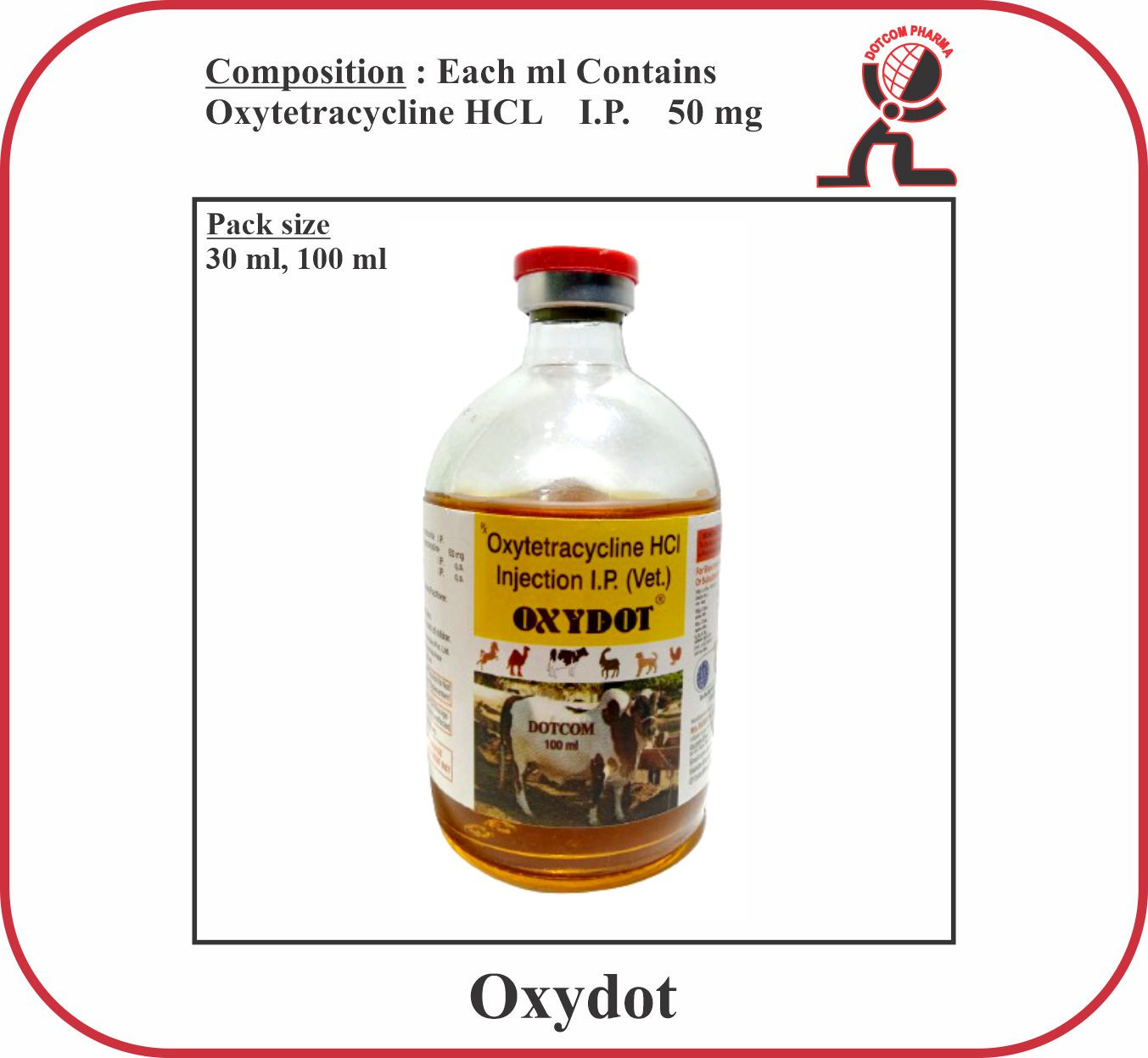
Oxydot-LA
Drug Name : Oxytetracycline Dihydrate I.P. Injection
Drug Role : Antibiotic • Antibacterial
NA
No
OXYDOT-LA
Price on request Send us an enquiry and our team will share the price.
Certifications:









Please login / register to buy or to get detailed information of the product
SKU:
Stock Available:
Batch / Lot. No:
Shelf life:
Manufacturing Date:
-
Expiry Date:
-
Minimum Pack Size:
Minimum Order Qty:
1
Product Form:
• Sterile injectable solution • Concentrations: 10%, 20%, or 30% w/v (manufacturer dependent) • Pack sizes: 30 mL, 50 mL & 100mL vials
Category:
Liquid Injection
Group:
N/A
Type:
Liquid Injection
Material:
Injection
Tags
HSN Code:
3004
HS Code:
3004
Country of Origin:
India
TAX:
5%
Qty per Piece:
Weight Of Each Piece(gm):
Piece Dimensions (L×W×H):
Qty per Buffer Box / Shrink Pack:
Weight of Buffer Box / Shrink Pack:
Buffer Dimensions (L×W×H):
Total Qty per Case:
Total Weight per Case:
Case Dimensions (L×W×H):
Weight / Volume:
Dimensions:
Inhouse product
Oxytetracycline Dihydrate is a broad-spectrum, bacteriostatic antibiotic belonging to the tetracycline class. It is widely used in veterinary medicine to treat a variety of bacterial infections caused by susceptible Gram-positive and Gram-negative organisms. This injectable formulation contains Oxytetracycline Dihydrate conforming to Indian Pharmacopoeia (I.P.) standards, intended for intramuscular or intravenous administration in animals.
• Active Ingredient: Oxytetracycline Dihydrate I.P.
• Concentration: Usually available as 10%, 20%, or 30% w/v injectable solutions (manufacturer-specific)
• Appearance: Clear, yellowish to amber sterile injectable solution
• pH: Generally, between 2.5 – 4.5
• Sterile and pyrogen-free
• Packaging: Supplied in sterile glass vials or ampoules
• Oxytetracycline Dihydrate I.P.: Concentration varies (10-30% w/v)
• Excipients: Sterile water for injection, preservatives, stabilizers (may vary by manufacturer)
• Treatment of infections caused by susceptible strains of bacteria in cattle, sheep, goats, pigs, horses, and poultry
• Respiratory tract infections (e.g., pneumonia, bronchitis)
• Genitourinary infections
• Wound infections and septicaemia
• Foot rot and other bacterial skin infections
• Mastitis in dairy animals (when indicated
• Dose: Typically, 5-10 mg/kg body weight, depending on infection severity and species
• Route: Intramuscular (IM) or intravenous (IV) injection; IM preferred for slow absorption
• Frequency: Usually every 24 hours; duration depends on clinical response and veterinary advice
• Avoid intravascular injection, if possible, for IM formulations
• Sterile injectable solution
• Concentrations: 10%, 20%, or 30% w/v (manufacturer dependent)
• Pack sizes: 30 mL, 50 mL & 100mL vials
•
Use aseptic technique during administration
• Shake well before use
• Use appropriate-sized needles and syringes for dosing
• Dispose of needles and syringes safely after use
• Follow recommended withdrawal periods
• Broad-spectrum activity against many bacterial pathogens/ Cost-effective treatment option
• Effective against both Gram-positive and Gram-negative bacteria
• Long clinical history and proven efficacy/ Suitable for multiple species
• Possible local irritation or pain at injection site
• Allergic reactions (rare) including anaphylaxis
• Superinfection due to prolonged use or broad-spectrum activity
• Possible nephrotoxicity and hepatotoxicity in overdose or prolonged use
• Avoid use in animals with known tetracycline hypersensitivity
• Meat: Minimum 28 days (species dependent)
• Milk: Typically, 72 hours or as per local regulations
• Ensure compliance with local withdrawal guidelines for food safety
• Wear gloves when handling
• Avoid skin contact and inhalation
• In case of accidental exposure, wash affected area immediately
• Dispose of unused product and packaging according to hazardous waste protocols
• HS Code: 3004.20 (Antibiotics)
• HSN Code (India): 3004.20.10
• For veterinary use only
• Use strictly as prescribed by a licensed veterinarian
• Do not use in animals with liver or kidney dysfunction without veterinary consultation
• Monitor for signs of adverse reactions during therapy
• Veterinary Use: Widely used in food-producing and companion animals to treat bacterial infections
• Human Use: Human pharmaceutical preparations of oxytetracycline are distinct; veterinary formulations must not to be used in human
Q1: What is Oxytetracycline Dihydrate? A: It is a broad-spectrum tetracycline antibiotic used in animals to treat bacterial infections.
Q2: How is the injection administered? A: Intramuscular or intravenous injection, with IM being the preferred route.
Q3: What is the usual dose?
A: 5-10 mg/kg body weight once daily, adjusted by veterinary advice.
Q4: Are there side effects?
A: Mild local irritation, allergic reactions, and rarely nephrotoxicity with overdose.
Q5: How should I store the product?
A: Between 15°C and 30°C, protected from light and freezing.
Q6: What is the withdrawal period?
A: Meat: ~28 days; Milk: ~72 hours; follow local regulations.
Q7: Can veterinary Oxytetracycline be used in humans?
A:No, only veterinary-labelled formulations should be used for animals.
Secure Transaction
100% secure payment
Top Brand
Trusted quality
Non Return
Due to hygiene