 +91 88281
11034
+91 88281
11034
 Need Help?



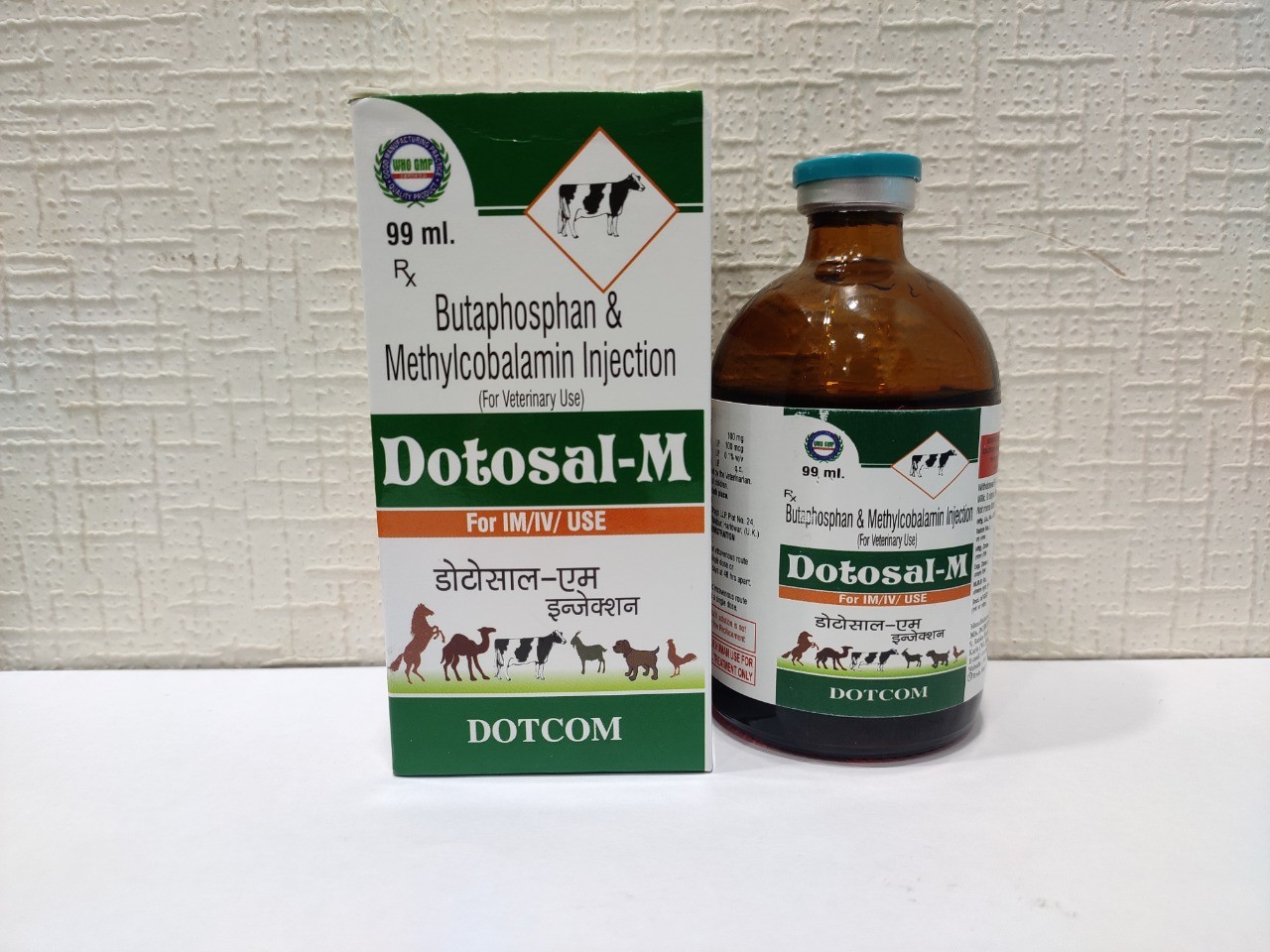
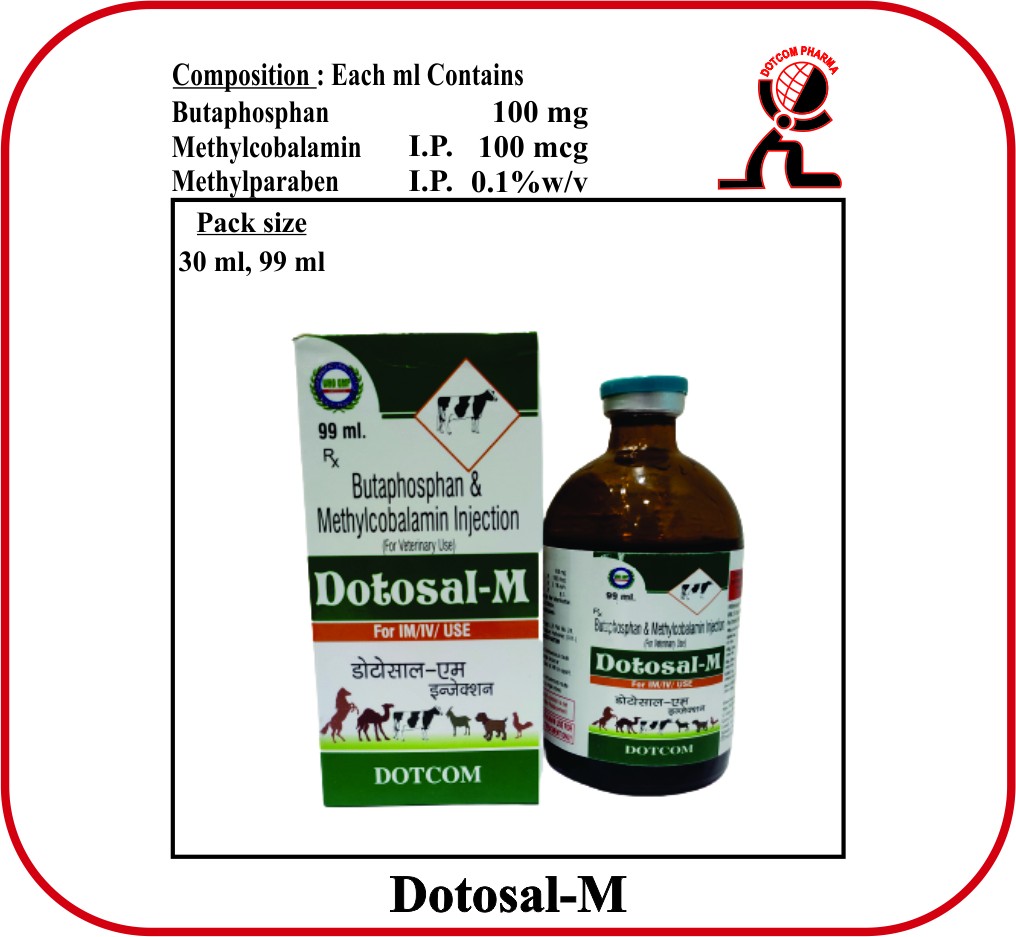
DOTOSAL-M
Drug Name
: Butaphosphan 10% , Methycobalamine 50 mcg Liquid Injection
Drug Role
: Metabolic Stimulant . Nutritional Supplement
H1
Yes
Ceritifcations:





Please login / register to buy or to get detailed information of the product
SKU:
Stock Available:
Batch / Lot. No:
Shelf life:
Manufacturing Date:
-
Expiry Date:
-
Minimum Pack Size:
Minimum Order Qty:
1
Pharma Categories:
Metabolic Stimulant
Product Form:
• Pharmaceutical Form: Injectable solution
Category:
Liquid Injection
Group:
N/A
Type:
Liquid Injection
Material:
Liquid
Tags
HSN Code:
3004.90.99
HS Code:
3004.90
Country of Origin:
India
TAX:
5%
Qty per Piece:
Weight Of Each Piece(gm):
Piece Dimensions (L×W×H):
Qty per Buffer Box / Shrink Pack:
Weight of Buffer Box / Shrink Pack:
Buffer Dimensions (L×W×H):
Total Qty per Case:
Total Weight per Case:
Case Dimensions (L×W×H):
Weight / Volume:
Dimensions:
Inhouse product
A sterile, aqueous injectable solution containing Butaphosphan, a phosphorus-containing organic compound, and Methylcobalamin, the active coenzyme form of vitamin B12. This preparation is intended for use in animals to support metabolic functions, enhance recovery, stimulate appetite, and improve overall performance during disease, stress, or deficiency states.
• Appearance: Clear to slightly pink sterile solution
• pH Range: 4.0 – 6.0
• Sterility: Must comply with veterinary pharmacopoeia standards
• Pyrogen Status: Pyrogen-free
• Osmolarity: Within acceptable parenteral administration limits
• Preservative (if included): As per manufacturer specifications (e.g., benzyl alcohol or phenol)
• Butaphosphan: 100 mg
• Methylcobalamin: 50 μg
• Excipients: q.s. (buffering agents, stabilizers, preservatives)
• Water for Injection: q.s. to 1 mL
Pharmacological Class: Metabolic Stimulant / Veterinary Nutritional Support Therapeutic Class: Metabolic Tonic / Roborant / Supportive Agent ATCvet Code: QA16QA (Alimentary Tract and Metabolism)
• Correction of phosphorus and vitamin B12 deficiencies
• Support during metabolic or reproductive disorders
• Recovery from illness, weakness, or fatigue
• Postpartum support in dairy and breeding animals
• Increased demands during rapid growth or high production
• Improved feed efficiency and weight gain
• Use in stress conditions (transport, vaccination, dietary change)
Route of Administration:
Intramuscular (IM), Subcutaneous (SC), or Intravenous (IV), as advised by a veterinarian.
Recommended Dosages:
• Cattle / Horses: 10 – 25 mL
• Calves / Foals: 5 – 12 mL
• Sheep / Goats / Swine: 2.5 – 10 mL
• Lambs / Kids / Piglets: 1.5 – 3 mL
• Dogs: 0.5 – 5 mL
• Cats: 0.5 – 2.5 mL
• Poultry: 1 – 3 mL per litre of drinking water
Frequency:
Administer once daily for 1 to 3 days, or as directed by a registered veterinary practitioner.
• Pharmaceutical Form: Injectable solution
• Container: Amber glass vial
• Pack Sizes: 30 mL and 99 mL
• Closure: Rubber stopper with aluminium seal
• Label: Must include composition, batch number, expiry date, and usage instructions
• Rapid improvement in metabolic activity
• Enhances recovery post-illness or stress
• Improves appetite and nutrient utilization
• Boosts energy and stamina
• Reduces recovery time in production animals
• Useful as both preventive and curative support in veterinary care
• Localized swelling or soreness at the injection site
• Hypersensitivity or allergic reactions (rare)
• Overdosage may cause hyperphosphatemia or soft tissue mineralization
• Gastrointestinal discomfort in case of systemic reaction
• Do not administer to animals with known hypersensitivity to any component
• Use cautiously in animals with kidney dysfunction or electrolyte imbalances
• Avoid excessive phosphorus dosing in susceptible species
• Use sterile techniques to prevent contamination
• Do not mix with other injectables unless compatibility is confirmed
• Known hypersensitivity to Butaphosphan or Methylcobalamin
• Pre-existing hyperphosphatemia or calcium-phosphorus imbalance
• Do not use in animals with impaired renal phosphate excretion
• Meat: Nil
• Milk:Nil
Subject to variation based on national regulatory guidelines. Always follow label instructions.
• Store below 30°C
• Protect from direct sunlight
• Do not freeze
• Keep out of reach of children
• Use within the specified period after vial opening under aseptic conditions
• Use appropriate protective equipment during administration
• Dispose of unused product and empty vials as per local pharmaceutical waste regulations
• Do not reuse container
HS Code: 3004.90
HSN Code (India): 3004.90.99
(Medicaments consisting of mixed or unmixed products for veterinary use)
• Veterinary use only
• Administer only under supervision of a registered veterinarian
• Maintain recommended dosage and duration
• Do not combine with other injectable formulations without confirmation of compatibility
• Observe animals post-administration for any adverse signs
This formulation is strictly for veterinary use. Butaphosphan is not indicated for use in humans. Methylcobalamin is available for human use but in different dosage forms and concentrations. This veterinary product must not be used in humans under any circumstance.
Q1: What is Butaphosphan used for?
Butaphosphan is used in animals to support energy metabolism, correct phosphorus deficiency, and aid recovery during disease or metabolic stress.
Q2: What is Methylcobalamin (MeCbl)?
Methylcobalamin is the bioactive coenzyme form of vitamin B12 that plays a role in red blood cell formation, DNA synthesis, and nervous system function.
Q3: Can this be used in all types of animals?
Yes, it is widely used in large animals (cattle, horses), small ruminants (goats, sheep), pigs, poultry, and pets like dogs and cats — but only under veterinary supervision.
Q4: Does it require a withdrawal period for meat or milk?
Generally, no withdrawal period is needed. However, always check national regulatory requirements and label instructions.
Q5: Can it be used with calcium injections?
Yes, it is often co-administered with calcium or magnesium injections during postpartum metabolic disorders, but only under veterinary guidance.
Q6: How is it different from cyanocobalamin?
Methylcobalamin is the active form of vitamin B12, while cyanocobalamin is a precursor. Methylcobalamin may be more readily usable in metabolic processes.
Q7: Can this be used preventively?
Yes, it may be used in advance of stress events such as transportation, heavy production demands, or recovery periods as a supportive tonic.
Secure Transaction
100% secure payment
Top Brand
Trusted quality
Non Return
Due to hygiene