 +91 88281
11034
+91 88281
11034
 Need Help?


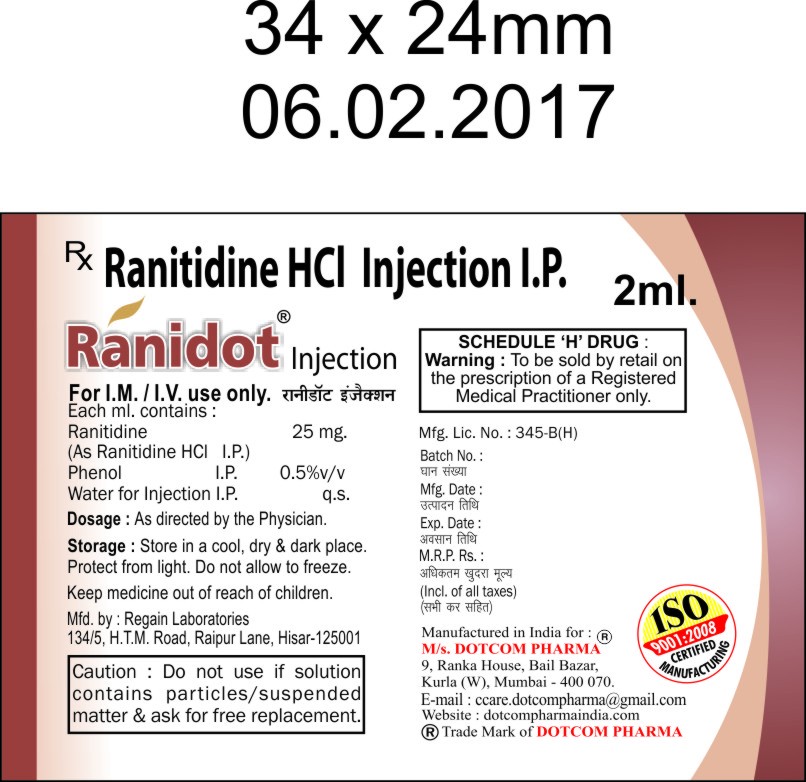
RANIDOT
Drug Name
: Ranitidine 25 mg Injection Veterinary Use
Drug Role
: Pharmacological Class: Histamine H2-Receptor Antagonist • Therapeutic Use: Anti-ulcer, Gastroprotective agent • Regulatory Classification: Veterinary medicinal product
NA
No
DOTCOM PHARMA
Ceritifcations:










Please login / register to buy or to get detailed information of the product
SKU:
Stock Available:
Batch / Lot. No:
Shelf life:
Manufacturing Date:
-
Expiry Date:
-
Minimum Pack Size:
Minimum Order Qty:
99
Pharma Categories:
• Pharmacological Class: Histamine H2-Receptor Antagonist • Therapeutic Use: Anti-ulcer, Gastroprotective agent • Regulatory Classification: Veterinary medicinal product
Product Form:
• Sterile injection solution for veterinary use • Packaged in a 100 mL amber glass vial to protect from light • Single-dose or multi-dose vial depending on formulation • Preservative-free or preserved based on formulation
Category:
Veterinary
Group:
N/A
Type:
Veterinary Liquid Injection
Material:
Liquid
HSN Code:
3004
HS Code:
3004.90
Country of Origin:
India
TAX:
5%
Qty per Piece:
Weight Of Each Piece:
Piece Dimensions (L×W×H):
Qty per Buffer Box / Shrink Pack:
Weight of Buffer Box / Shrink Pack:
Buffer Dimensions (L×W×H):
Total Qty per Case:
Total Weight per Case:
Case Dimensions (L×W×H):
Weight / Volume:
Dimensions:
Inhouse product
Ranitidine hydrochloride is a histamine H2-receptor antagonist that inhibits stomach acid production by blocking H2 receptors on gastric parietal cells. This reduces gastric acid secretion, promoting healing of ulcers and managing conditions caused by excessive stomach acid. This injectable formulation is specifically designed for veterinary use to treat acid-related gastrointestinal conditions in animals.
• Active Ingredient: Ranitidine Hydrochloride — 25 mg/mL
• Excipients: Sterile Water for Injection, Sodium Chloride (to adjust tonicity), Hydrochloric Acid and/or Sodium Hydroxide (for pH adjustment), Preservatives (if applicable)
• Appearance: Clear, colourless to pale yellow sterile solution
• pH Range: Approximately 4.5 - 6.0
• Assay: 98% - 102% of labelled amount
• Sterility: Must comply with sterility test standards
• Pyrogenicity: Must be non-pyrogenic
• Particulate Matter: Complies with pharmacopoeia limits
• Sterile injection solution for veterinary use
• Packaged in a 100 mL amber glass vial to protect from light
• Single-dose or multi-dose vial depending on formulation
• Preservative-free or preserved based on formulation
• Pharmacological Class: Histamine H2-Receptor Antagonist
• Therapeutic Use: Anti-ulcer, Gastroprotective agent
• Regulatory Classification: Veterinary medicinal product
• Treatment and prevention of gastric ulcers and erosions in animals
• Management of hypersecretory conditions such as gastritis or gastroesophageal reflux
• Adjunct therapy for treatment of esophagitis and gastric acid-related disorders in veterinary patients
• Dosage: Typically, 1-2 mg/kg body weight administered intravenously or intramuscularly every 12 to 24 hours depending on the condition and veterinary recommendation.
• Route of Administration: Intravenous (IV) or Intramuscular (IM) injection only
• Duration: According to clinical response, usually 3-5 days or as prescribed
• Administer slowly IV to avoid adverse reactions
• Should be used under veterinary supervision
• Use with caution in animals with renal impairment
• Avoid extravasation during injection to prevent local tissue irritation
• Do not mix with other drugs unless compatibility is assured
• Use only as directed by a qualified veterinarian
• Not recommended for use in animals with known hypersensitivity to ranitidine or related compounds
• Local irritation or pain at injection site
• Rarely, hypersensitivity reactions including anaphylaxis
• Transient changes in heart rate or blood pressure if administered rapidly IV
• Gastrointestinal disturbances such as diarrhoea or constipation may occur
• Allergic reactions including rash, swelling
• Prescription-only veterinary medicine (POM-V)
• Use strictly under veterinary guidance
• Store below 25°C (room temperature)
• Protect from light (hence amber vial)
• Keep vial tightly closed when not in use
• Do not freeze
• Discard unused contents after opening as per sterility guidelines
• Use aseptic techniques during preparation and administration
• Use disposable sterile syringes and needles
• Avoid contamination of the vial
• Dispose of sharps and waste as per biomedical regulations
• HS Code: 3004.90 (Medicaments consisting of mixed or unmixed products for therapeutic or prophylactic uses, put up for retail sale, not elsewhere specified)
• HSN Code (India): 3004 (Medicaments consisting of mixed or unmixed products for therapeutic or prophylactic uses, put up in measured doses or in forms or packings for retail sale)
• Always verify the animal’s weight before dosing
• Avoid rapid IV injection to minimize risk of cardiovascular side effects
• Monitor the animal for any allergic reactions post-injection
• Follow withdrawal periods strictly in food-producing animals (see below)
• Do not use beyond expiration date
• Veterinary Use: Approved and formulated specifically for veterinary use in various animals including companion animals and livestock.
• Human Use: Ranitidine has been used in human medicine but this formulation is intended for veterinary use only and not to be administered to humans.
• Meat: Minimum 3 days after last dose
• Milk: Minimum 2 days (48 hours) after last dose
• Adherence to withdrawal periods is essential to prevent drug residues in animal products
Q1: What is Ranitidine?
A1: Ranitidine is a histamine H2-receptor antagonist (H2RA) that reduces stomach acid production.
Q2: What conditions does Ranitidine Injection treat in animals?
A2: It is used for gastric ulcers, gastritis, and acid reflux-related conditions in veterinary patients.
Q3: How is Ranitidine administered in animals?
A3: Via intravenous (IV) or intramuscular (IM) injection as per veterinary prescription.
Q4: Can Ranitidine be given to food-producing animals?
A4: Yes, but strict withdrawal periods must be followed to avoid drug residues in meat and milk.
Q5: What are common side effects?
A5: Local irritation, rare allergic reactions, and mild gastrointestinal upset.
Q6: Can Ranitidine Injection be mixed with other drugs?
A6: Only if compatibility is confirmed by a veterinarian or pharmacist.
Q7: How should Ranitidine Injection be stored?
A7: Store in a cool, dark place below 25°C in its original amber vial to protect from light.
Secure Transaction
100% secure payment
Top Brand
Trusted quality
Non Return
Due to hygiene